
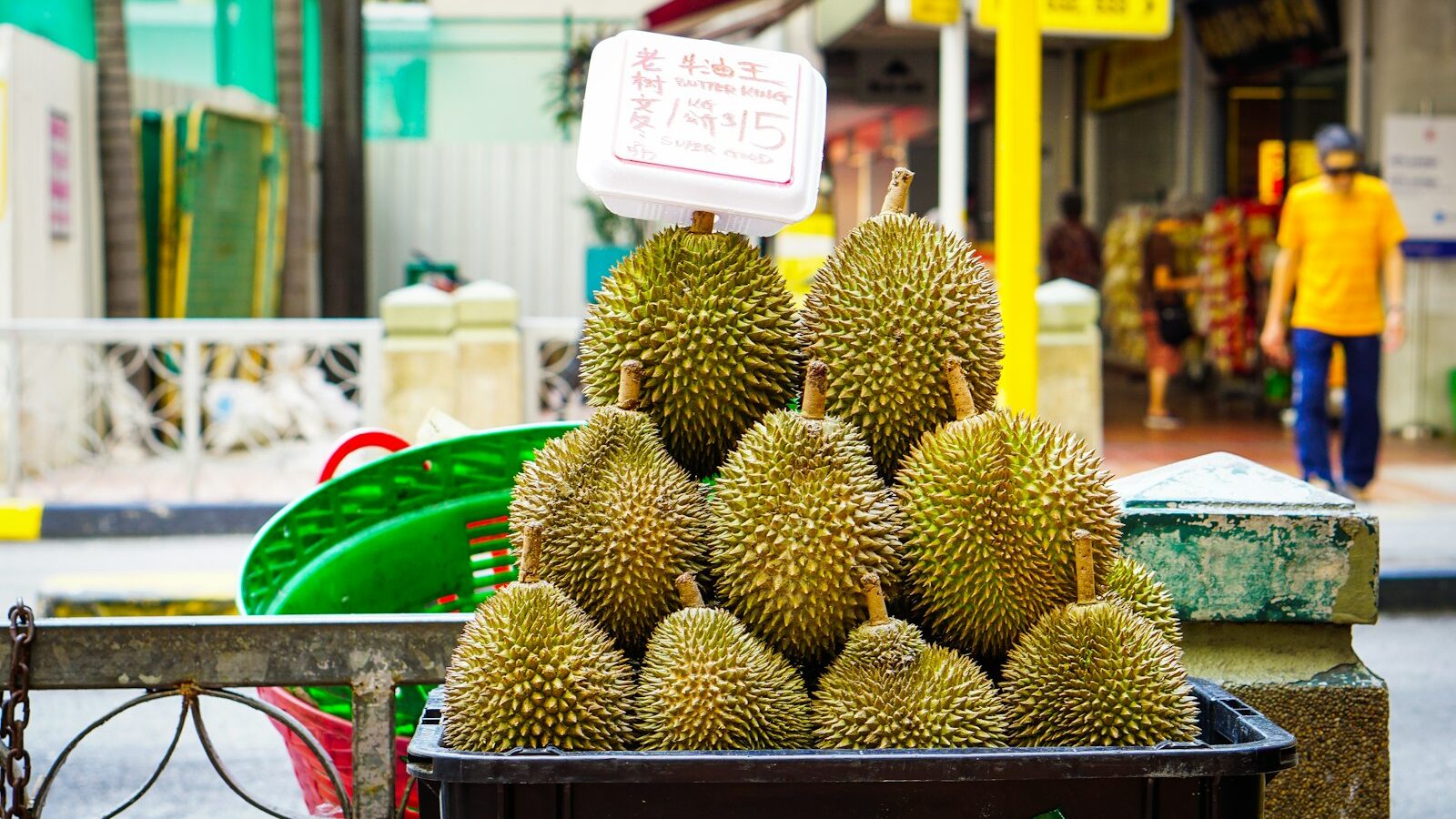
When durian season arrives, Singapore knows it: stalls pile high with the spiky fruit, and enthusiasts flock to feast on the king of fruits. Loved and loathed in equal measure, durian is a seasonal obsession for many. This guide covers when durian season happens, the varieties to know, and how to choose and enjoy it.
When durian season happens
Durian is a seasonal fruit, and its availability peaks at certain times of the year, largely driven by harvests in the region, particularly neighbouring Malaysia. There are typically peak periods when durians are most abundant and prices more favourable, and quieter times when they are scarcer and pricier. Because the season depends on weather and harvests, exact timing varies from year to year, so durian lovers keep an eye out for when the fruit starts flooding the stalls. When a good season hits, it is cause for genuine excitement among fans, who plan durian feasts accordingly.
The king of fruits
Durian is nicknamed the king of fruits for its imposing spiky shell, its rich, custardy flesh, and its powerful, unmistakable aroma. That aroma is famously divisive: devotees find it intoxicatingly fragrant, while others find it overwhelming, which is why durian is banned in many enclosed spaces like public transport and hotels. For fans, though, the reward is a uniquely rich, creamy, complex flesh unlike any other fruit, ranging from sweet to bittersweet depending on the variety. It is an experience as much as a food, and trying it is something of a rite of passage.
Varieties to know
Durian comes in many varieties, each with its own character, and part of the fun is discovering your preference.
- Mao Shan Wang, one of the most prized and premium varieties, known for its rich, bittersweet, intense flavour.
- D24, a popular classic, well-balanced and beloved.
- Red Prawn, prized for its sweet, creamy flesh.
- Black Thorn, another sought-after premium variety.
- Various others, each with distinct flavour profiles and price points.
Prices vary considerably by variety and quality, with premium types like Mao Shan Wang commanding higher prices, especially early in the season.
How to choose and buy
| Consideration | What to look for |
|---|---|
| Variety | Choose based on your taste and budget |
| Freshness | Freshly opened is best; ask the seller |
| Flesh quality | Creamy, well-developed flesh is ideal |
| Trust the seller | Reputable stalls help you pick a good one |
| Season timing | Peak season offers better value and abundance |
Many stalls will open the durian on the spot so you can see the flesh, and experienced sellers can guide you to a good one based on your preferences, such as sweeter or more bitter. Do not be afraid to tell them what you like.
How to enjoy it
Durian is typically eaten fresh, the flesh scooped straight from the opened fruit, often communally as friends gather around a spread. It is rich, so it is easy to overindulge, and it is traditionally considered heaty, so many pair it with cooling drinks. Beyond eating it fresh, durian also appears in countless treats, from cakes and pastries to ice cream and the local dessert scene, offering a gentler introduction for the curious. However you approach it, sharing a durian feast with fellow fans during the season is one of the great communal food experiences here.
A note for the curious and cautious
If you are new to durian, it is worth approaching with an open mind but realistic expectations, since the aroma and rich texture can be surprising at first. Starting with a milder variety or a durian-flavoured dessert can ease you in before tackling a pungent Mao Shan Wang. And remember the etiquette: because of its strong smell, do not bring durian onto public transport or into hotels and many enclosed spaces where it is not allowed. Enjoy it at the stall, at home, or at a durian feast, and be considerate of those around you who may not share your enthusiasm.
The takeaway
Durian season is a highlight of the food calendar for many in Singapore, a time to feast on the king of fruits at its most abundant and affordable. Learn the varieties, from the prized Mao Shan Wang to the balanced D24, choose based on your taste with help from a trusted seller, and enjoy the rich, creamy flesh fresh and shared with friends. Mind the timing for the best value, respect the etiquette around its powerful aroma, and whether you are a devoted fan or a curious first-timer, durian season offers a uniquely memorable taste of the region.
Common mistakes to avoid when buying
Even seasoned fans slip up, and a few habits can turn an exciting durian run into a disappointing one. Knowing the pitfalls in advance helps you get better fruit for your money, especially when stalls are busy and you feel rushed to decide.
- Buying purely on price: the cheapest durians early or late in the season are often less developed or nearing the end of their freshness. A slightly higher price for well-ripened flesh usually gives far better value per bite.
- Skipping the on-the-spot inspection: if a stall opens the fruit for you, look before you commit. Watery, pale, or underdeveloped flesh is a sign to ask for another one rather than accepting it out of politeness.
- Assuming heavier means better: a heavy durian can simply mean thicker husk and more moisture, not more flesh. Let an experienced seller help you judge, since they handle hundreds of fruit a day.
- Over-ordering on the first visit: durian is rich and filling, and it does not keep well once opened. Buy a modest amount, taste the variety, and go back for more rather than ending up with leftovers you cannot finish.
- Ignoring the variety name: labels like Mao Shan Wang carry a premium, so buy from stalls you trust and do not be shy about asking the seller to confirm what you are actually getting.
Storing durian and eating it sensibly
Durian is best eaten fresh on the day it is opened, but if you have extra, the flesh can be deseeded, sealed in an airtight container, and frozen, which many fans do to enjoy it well past the season. Frozen durian keeps its creaminess and is lovely eaten semi-thawed, almost like ice cream. Sealing it well also keeps the powerful aroma from spreading through your fridge and the rest of your home, which matters in a flat where smells travel between rooms.
On the enjoyment side, remember that durian is dense and high in natural sugars and calories, so pace yourself, particularly if you are watching your intake or managing a health condition. There is a long-standing local belief that pairing durian with alcohol is risky, and while views differ, moderation is sensible either way. If you have concerns about durian and diet, blood sugar, or any medication you take, check with a doctor or a qualified professional rather than relying on hearsay. Enjoyed in reasonable portions and shared with friends, durian remains one of the great seasonal treats here without any need to overdo it.
Explore more: Durian for beginners in Singapore · Tropical fruits in Singapore · Singapore desserts guide