
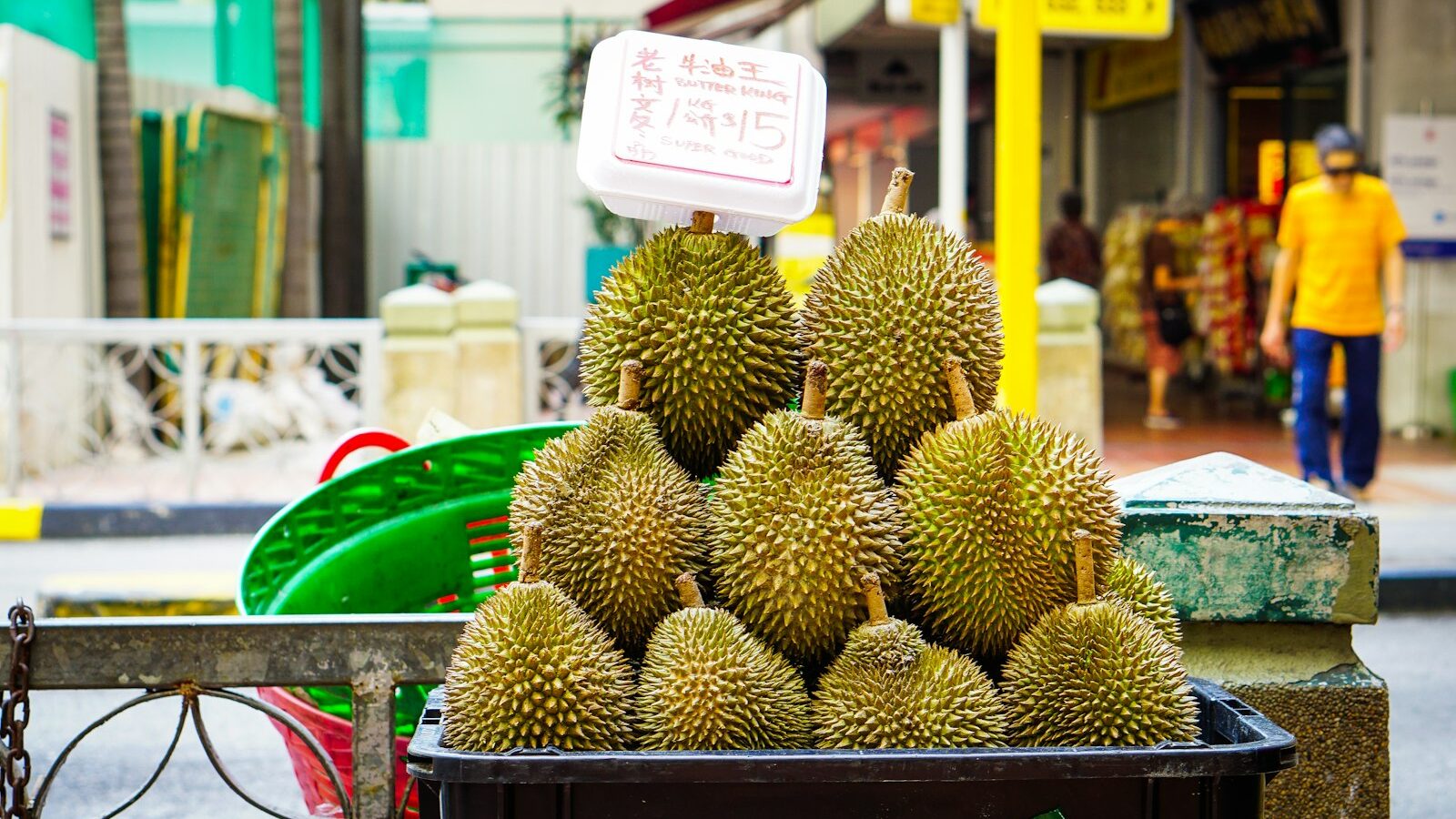
Few things say “you are properly in the tropics now” like a table piled high with fruit you have never seen before. The world of tropical fruits in Singapore is colourful, fragrant and, for a newcomer, a little bewildering: spiky red shells, purple orbs, giant green pods and pink skins with green flames. For locals, it is the taste of childhood. This guide walks you through the fruits you are most likely to meet, how to choose and open each one, when they are in season, where to buy them, and the gentle beliefs that shape how Singaporeans eat them.
The fruits you will meet
Start with the greatest hits. Once you can recognise these, a market stall stops looking like a puzzle.
Rambutan
The rambutan is the friendly one: a small oval fruit in a leathery red (sometimes yellow) shell covered in soft, hairy spines. The name comes from the Malay word for hair. To open it, hold it in both hands and either squeeze until the skin splits or nick it with a thumbnail along the middle and twist the two halves apart. Inside is a translucent white grape-like flesh, sweet and lightly floral, wrapped around a single seed. Do not eat the seed. Pick fruit with bright, springy hairs; brown, dried-out spines mean it is past its best.
Mangosteen
Often called the queen of fruits, the mangosteen hides its treasure well. It is a round, deep-purple fruit the size of a small apple, with a thick, woody rind. Press gently: a good one gives slightly, like a firm rubber ball. To open it, either score around the middle with a knife (not too deep) and twist, or press down on the top with both thumbs until the rind cracks. Inside sit snow-white segments, soft and juicy, tasting like a blend of lychee, peach and citrus. Count the little petals on the base; that number usually matches the segments inside. The purple rind stains clothes badly, so eat over a plate.
Jackfruit
The jackfruit is the giant of the group, a green, knobbly pod that can grow bigger than a rugby ball. Whole ones are a serious project involving oil on your hands and knife (the sap is sticky), so most people buy it pre-cut, packed as golden bulbs in trays. Each bulb is chewy, intensely sweet and smells of banana and bubble gum. Remove the smooth seed inside before eating, though the seeds are edible once boiled. Young, unripe jackfruit is a different thing entirely, cooked as a savoury vegetable in curries and increasingly as a plant-based meat substitute.
Dragon fruit
Dragon fruit is the photogenic one: a bright pink, oval fruit with soft green fins, grown on a cactus. The flesh comes in white or a vivid magenta, both dotted with tiny black seeds you eat, like a kiwi. The flavour is mild, mellow and refreshing rather than intensely sweet. To eat it, simply halve it and scoop with a spoon, or quarter it and peel the skin back. Choose fruit that is evenly coloured and yields a little to a gentle squeeze. The red-fleshed variety is famous for temporarily tinting things pink, which is harmless.
Longan and lychee
These two cousins often share a stall. Lychee is larger, with rough pink-red bumpy skin, while longan (the name means “dragon eye”) is smaller, smooth and tan. Both peel with a thumbnail to reveal sweet, glassy flesh around a dark seed. Lychee is perfumed and rose-like; longan is milder and a touch musky. Look for firm, unblemished fruit still on the twig, and avoid any that are leaking or fermenting.
Papaya and guava
Two everyday staples that anchor many a breakfast. Ripe papaya has orange-yellow skin that gives to a gentle press; halve it, scoop out the round black seeds, and eat with a squeeze of lime to lift the flavour. Guava here is usually the crunchy green variety, eaten firm, sliced and often dipped in a tangy sour-plum powder. Both are widely sold, affordable and reliably good.
Soursop, chiku and snake fruit
Now for the characters. Soursop is a large, spiky green fruit with soft, custardy white flesh that tastes tart and creamy, like pineapple crossed with strawberry; it is more often drunk as a blended juice than eaten whole. Chiku (sapodilla) is a small brown fruit with grainy, malty flesh that tastes of brown sugar and pear; eat it only when it gives easily, as unripe ones are unpleasantly astringent. Snake fruit (salak) wears a reddish-brown scaly skin that peels off like a snake shedding; inside are firm, sweet cloves with a crisp, apple-like bite.
Durian, briefly
No fruit stirs stronger feelings than durian, the spiky, pungent king of them all. It deserves, and has, its own guide, so we will only wave at it here: adored by many, banned on public transport, and worth approaching with an open mind. For everything on choosing, opening and eating it, see our full durian guide linked at the end.
How to pick, in one glance
A quick cheat sheet for the stall:
- Smell first. Ripe tropical fruit is fragrant. No smell often means no flavour.
- Feel the give. Mangosteen, papaya, chiku and dragon fruit should yield slightly. Hard usually means unripe.
- Check the surface. Springy rambutan hairs, unbroken guava skin and un-cracked mangosteen rind are good signs.
- Look at the stem. Fresh, green twigs on longan and lychee beat dried brown ones.
- Ask. Stallholders will happily tell you what is sweet today and even let you taste. This is normal and welcome.
Seasonality
Because Singapore imports fruit from across the region, something is always available. That said, the tropics do have seasons, and prices and quality swing with them.
Rambutan, mangosteen, durian and lychee cluster into a mid-year peak, roughly around June to August, when stalls overflow and prices soften. This is the classic season to gorge. Longan tends to follow a similar rhythm. Dragon fruit, papaya, guava and jackfruit are near year-round, with gentle ups and downs. Snake fruit and chiku appear more irregularly. As a rough guide, if a fruit is suddenly piled high and cheap, it is in season and at its best, so buy then.
Where to buy fruit
Knowing where to buy fruit shapes both your budget and your experience.
Wet markets
The wet market is the heart of it. Prices are keen, turnover is fast so fruit is fresh, and vendors will pick a ripe one for tonight or a firmer one for the weekend if you ask. It is also the most fun: noisy, fragrant and full of things you will not find shrink-wrapped. If markets are new to you, our wet markets guide (linked below) walks you through the etiquette.
Supermarkets
Supermarkets, from the big chains to premium grocers, offer convenience, air-conditioning, fixed prices and pre-cut trays of jackfruit or durian for the squeamish. Selection is reliable if a little tamer, and produce is graded and labelled, which helps when you are still learning names.
Fruit stalls and roadside vendors
Dedicated fruit stalls, including the seasonal durian stalls that pop up mid-year, sit between the two. They specialise, so the person behind the counter genuinely knows their stock and will often crack something open for you to try.
Cooling, heaty, and fruit as a gift
Two cultural threads are worth understanding, because they quietly govern how Singaporeans eat fruit.
The first is the idea of “heaty” and “cooling” foods, drawn from traditional Chinese and Malay wellness beliefs. Durian, jackfruit, longan and lychee are considered “heaty” and are eaten in moderation, especially in hot weather or when you feel a sore throat coming on. Mangosteen, in a neat piece of folk wisdom, is thought to be “cooling” and is often eaten alongside durian to balance it. Whether or not you subscribe to the theory, you will hear it constantly, and it makes for good conversation at the table.
A local saying frames durian as the king and mangosteen as the queen, eaten together so the cooling queen tempers the heaty king. It is affectionate lore rather than medicine, but it captures how these fruits live in pairs in the local imagination.
The second thread is fruit as a gift. Bringing a nice box of fruit when visiting someone’s home is a warm, appreciated gesture, particularly during festivals and when visiting elders or the unwell. Mandarin oranges around Chinese New Year are the best-known example, exchanged in pairs for good fortune, but a well-chosen basket of seasonal fruit is welcome any time. Choose fruit that looks generous and fresh, and you can hardly go wrong.
A gentle way to start
You do not need to conquer all of these at once. Pick two or three that catch your eye this week, ask the stallholder to choose ripe ones, and eat them the same day. Next week, try something spikier. Before long the strange pile at the market becomes a familiar cast of friends, and you will have your own favourites and your own view on whether durian truly is the king.
Explore more: Durian for beginners in Singapore · A guide to wet markets in Singapore