

Most hikes in Singapore start early. People head to the Southern Ridges, MacRitchie, Bukit Timah or Pulau Ubin before the sun gets fierce, which means breakfast is either rushed, skipped or a plate of something oily grabbed at the kopitiam on the way. Knowing what to eat before a hike makes a real difference here. Our heat and humidity make you sweat far more than on a cool mountain trail, and a heavy stomach on a steep, sticky climb is a miserable combination.
This guide looks at timing, local food choices and drinks so you can start the trail fuelled but light. It is general information. If you have diabetes, a heart condition or other health needs, ask your doctor how to plan food around exercise.
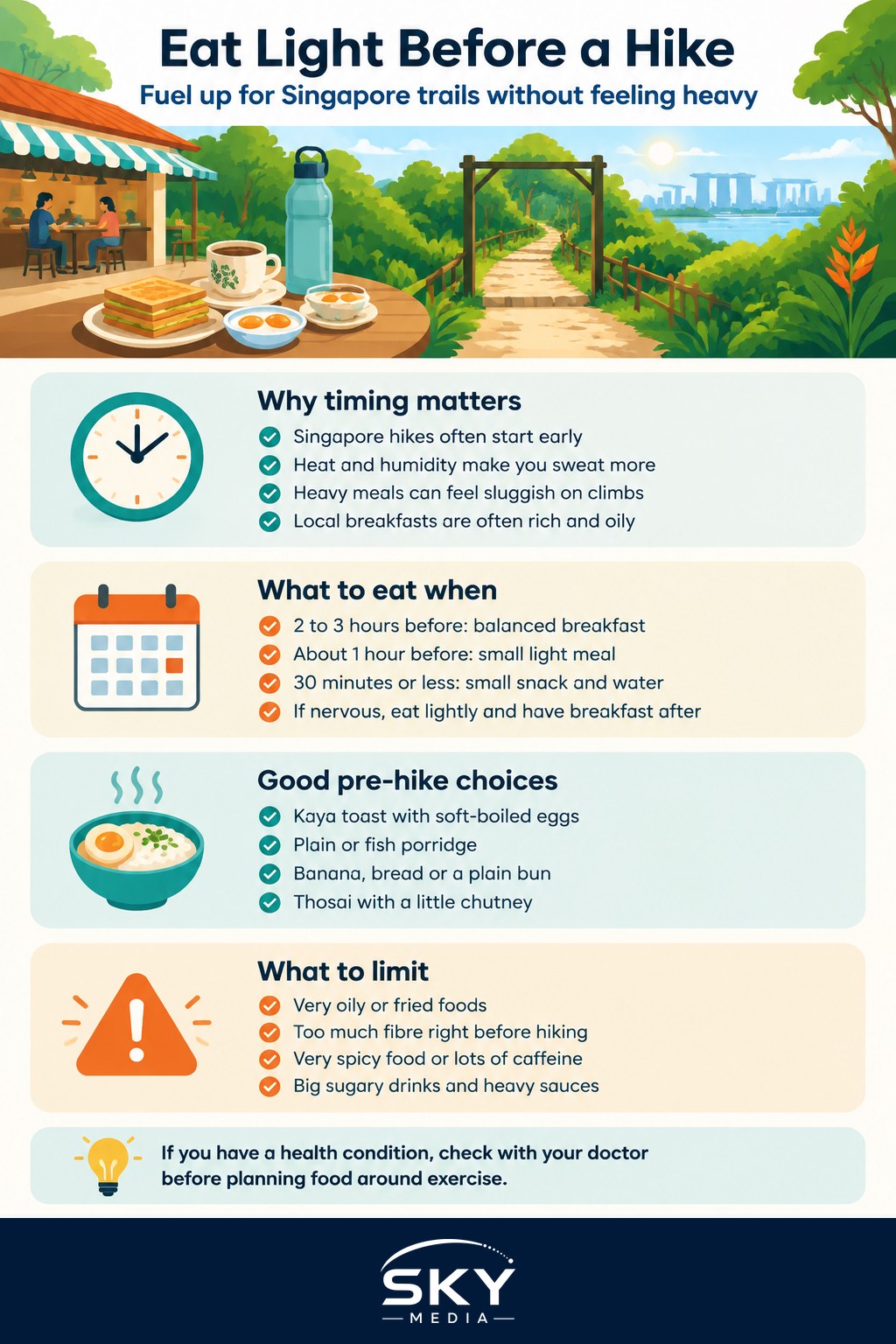
Why Pre-Hike Eating Is Different in Singapore
General exercise nutrition advice was often written for cooler climates. A few local factors change the picture.
- You lose more fluid and salt. Even a short morning walk in Singapore’s humidity can leave you drenched. What you drink, and whether you replace some salt, matters as much as what you eat.
- Heat makes heavy meals harder to handle. When it is hot, blood is diverted to your skin to help you cool down. A large, fatty meal sitting in your stomach can make you feel sluggish or nauseous on inclines.
- Breakfast culture leans rich. Many favourite local breakfasts, such as nasi lemak, prata with curry or fried carrot cake, are delicious but heavy on oil and fat, which take longer to digest.
- Hikes start early. A 7am start may leave you only 30 to 60 minutes between waking and walking, so meal size and timing need to fit that window.
Timing: How Long Before You Set Off
The closer you eat to the start, the smaller and simpler the meal should be. Use this as a rough guide and adjust to how your own stomach feels.
- Two to three hours before: a normal, balanced breakfast with carbohydrates, some protein and modest fat. This suits later starts or longer hikes.
- About one hour before: a smaller, lighter meal that is mostly easy carbohydrates with a little protein.
- Thirty minutes or less before: a small snack such as a banana, a slice of bread or a couple of biscuits, plus water.
If you get nervous or queasy in the morning, a small snack plus a proper meal after the hike can work better than forcing down a full breakfast.
Light Choices From the Kopitiam and Convenience Store
You do not need special sports food for a typical Singapore hike. Familiar local options work well if you choose carefully. The table compares common breakfasts by how they tend to sit before a trail.
| Breakfast option | Before a hike | Why |
|---|---|---|
| Kaya toast with soft-boiled eggs | Good choice | Easy carbs from the bread with protein from the eggs, a moderate portion |
| Plain or fish porridge (congee) | Good choice | Gentle on the stomach and adds fluid, though go easy on fried toppings |
| Bananas, bread or a plain bun | Good choice | Quick, light energy that suits a very early start |
| Thosai with a little chutney | Fair choice | Lighter than prata, but keep curry and portion modest |
| Nasi lemak or mee rebus | Better after | Rich sauces and coconut rice can feel heavy on climbs |
| Roti prata with curry or fried carrot cake | Better after | Higher in oil and fat, which digest more slowly |
A few more pointers:
- At a kopitiam, ask for kopi or teh with less sugar (“siew dai”) if you want to avoid a sugar spike and dip. Plain toast with a thin layer of kaya is lighter than a thick butter slab.
- At a convenience store, look for bread rolls, bananas, yoghurt, a packet of soy milk or wholemeal sandwiches.
- At home, overnight oats, a peanut butter sandwich, or yoghurt with fruit are simple and easy to prepare the night before.
Foods and Drinks to Go Easy On
Some choices are not “bad”, just poorly timed for the hour before a hike.
- Very oily or fried food: goreng pisang, fried bee hoon with luncheon meat and curry puffs are better saved for after.
- Large amounts of fibre right before: a big bowl of beans, lots of raw vegetables or high-fibre cereal can upset some stomachs on the trail. Fibre is good for you at other meals.
- Very spicy food: sambal and chilli can cause discomfort or heartburn when you start climbing.
- Lots of caffeine: a normal kopi is fine for most people, but extra-strong coffee on an empty stomach can make some people jittery or need the toilet. Toilets are limited on many trails.
- Big sugary drinks: bubble tea or a large sweetened drink may give a quick lift followed by a slump.
Hydration Before and During the Hike
Fluids matter more than food on most local hikes.
- Start hydrated. Drink a glass or two of water when you wake and sip more before starting. Pale yellow urine is a common sign of being reasonably hydrated.
- Carry enough water. Water points can be sparse on trails, so bring more than you think you need, especially on Pulau Ubin or longer routes.
- Consider electrolytes on long or very sweaty hikes. Isotonic drinks or electrolyte tablets help replace salt lost through sweat. For a short walk, water is usually enough.
- Do not overdrink. Sip steadily rather than gulping large amounts at once.
Watch for heat exhaustion signs such as dizziness, headache, nausea, cramps or unusual tiredness. Stop in the shade, drink and cool down, and seek medical help if symptoms do not ease. NParks and the Health Promotion Board share general heat safety advice worth reading before you set off.
Snacks to Pack for Longer Trails
For hikes over two hours, bring small snacks to top up energy.
- Bananas or other easy-to-carry fruit
- Dried fruit such as raisins or dates
- Nuts or trail mix in small portions
- Wholemeal crackers or rice crackers
- Peanut butter sandwiches or onigiri from a convenience store
- Muesli or cereal bars
Pack snacks in a sealed bag, since monkeys at some nature reserves are known to snatch food. Do not eat in front of them or feed them, as NParks rules prohibit feeding wildlife.
After the Hike: When to Enjoy the Heavy Stuff
The good news is that the post-hike meal is when Singapore’s richer breakfasts make sense. Many hikers end at a hawker centre or kopitiam near the trail exit, which is the perfect time for that plate of nasi lemak, prata or a bowl of noodles. Pair it with plenty of water or a cold drink, and include some protein to help your muscles recover.
For a broader look at fuelling workouts of all kinds, see our guide on what to eat before and after exercise. The simple rule for hike mornings is easy carbs, a little protein, plenty of water, and save the indulgence for the finish line.
Explore more: Hiking Singapore: The Best Trails and Nature Walks and Trail Running in Singapore.