
Organising cleaning supplies is about far more than a tidy cupboard. Done well, it keeps your household safer, saves money by stopping you buying duplicates, and makes cleaning quicker because everything is to hand. In a compact Singapore home, where storage is precious and children or pets are often nearby, a thoughtful system matters. This guide covers safety, zones, containers, labelling and a routine to keep it all in order.
Safety first with chemicals
Cleaning products are useful but many contain strong chemicals, so safety leads every decision.
The golden rule is to never mix products, especially anything containing bleach with anything containing ammonia or acids, as the fumes can be dangerous. Keep products in their original bottles wherever possible, since the label carries the safety instructions and warnings. If you must decant, label the new container clearly and never reuse a food or drink bottle, which invites a terrible mistake.
Store all cleaning supplies out of the reach of children and pets. A high shelf or a cupboard with a childproof latch is ideal. The common under sink cabinet is convenient but is exactly where a curious toddler explores, so latch it if young children are around. Keep the area ventilated too. A cupboard that traps fumes is unpleasant and unhealthy, so open it now and then and avoid storing strong products in a sealed, airless box.
Sort and group by task
Take everything out, check for leaks and hardened caps, and be ruthless with the near empty bottles you keep meaning to finish. Then group what remains by where or how you use it.
- Kitchen: dish soap, surface spray, degreaser and cloths.
- Bathroom: toilet cleaner, limescale remover, scrubbing brush and gloves.
- Floors: mop, bucket, floor cleaner and a broom.
- Laundry: detergent, fabric softener and stain remover.
- General and tools: microfibre cloths, sponges, rubbish bags and dusters.
Grouping by task means you grab a small set for each job rather than rummaging through everything. Store each group near where it is used if you can, so bathroom products live near the bathroom and kitchen ones in the kitchen.
Build a portable cleaning caddy
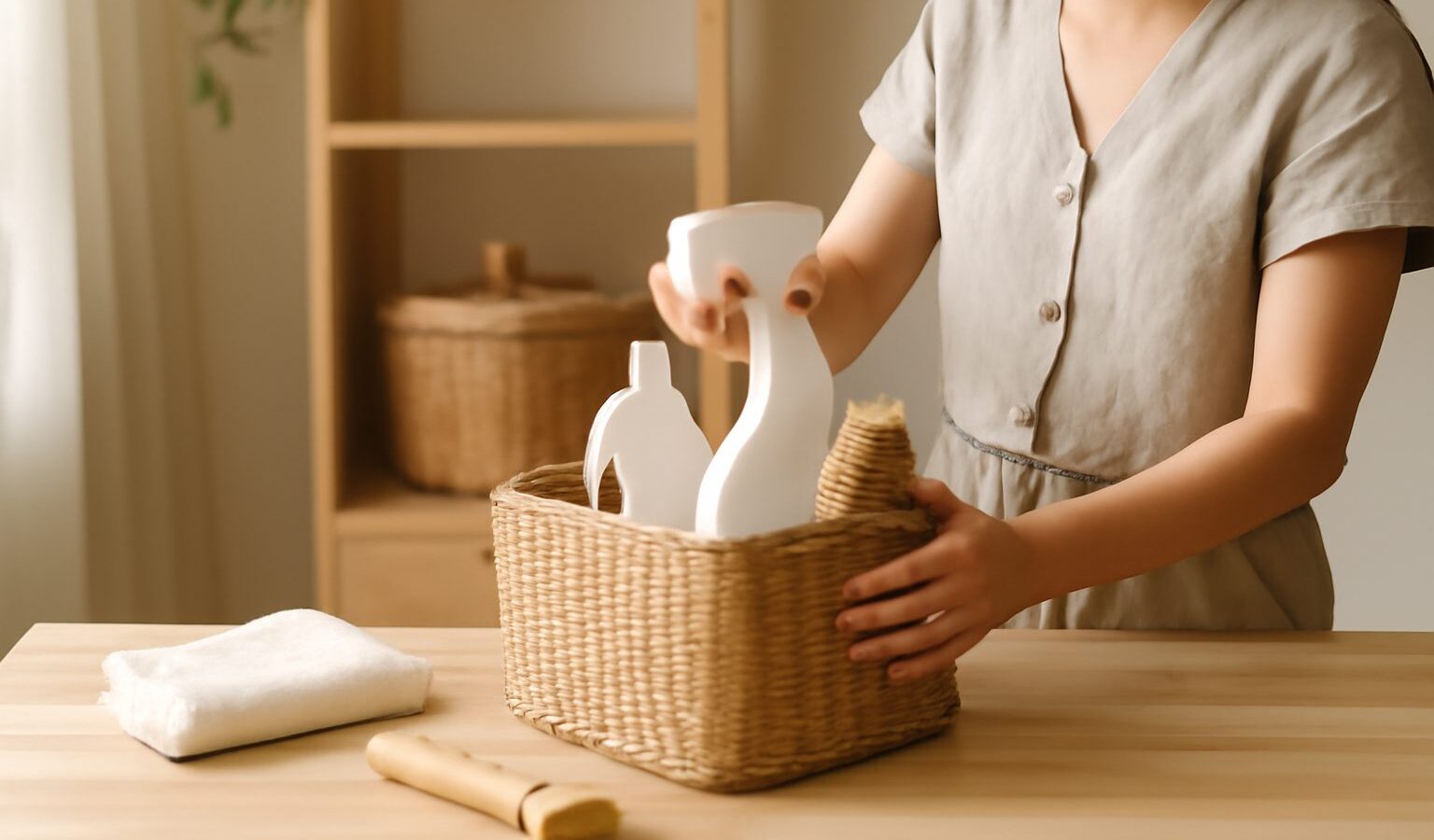
A cleaning caddy is the single best upgrade for a small home. Fill a sturdy carry basket with your everyday all purpose spray, a couple of cloths, a scrubber and gloves, then carry the whole lot from room to room. You clean faster because you are not walking back and forth, and everything returns to one place afterwards.
Keep bulk refills and rarely used specialist products in the main cupboard, and only the working essentials in the caddy. This keeps it light and stops it becoming a jumble.
Smart storage in a small space
Singapore homes reward vertical thinking and the clever use of doors and gaps.
- Tension rods across an under sink cabinet let you hang spray bottles by their triggers, freeing the floor of the shelf.
- A caddy or turntable corrals bottles so you can spin to the one you need without knocking others over.
- Over the door racks on a cupboard hold cloths, gloves and small bottles.
- Adhesive hooks inside a cabinet door hang brushes and dusters off the floor to dry.
- Slim baskets group loose items such as sponges and refills so they pull out like a drawer.
Keep heavy items such as bulk refills low so they are easy to lift and cannot fall. Store mops and brooms hung up rather than leaning, so heads dry properly and do not grow musty in our humidity.
Labelling and quantities
Labelling matters most for anything decanted or for homemade mixes. Write the contents and the date clearly on the front, and add a simple safety note if it is a strong product. A marker and masking tape are all you need.
Labelling shelves or baskets by category also helps everyone put things back in the right place, including a helper or family members. When each basket says what belongs in it, the system survives busy weeks.
Storage at a glance
| Product type | Best storage | Safety note |
|---|---|---|
| Everyday sprays | Portable caddy | Keep triggers off, lids on |
| Bleach and strong cleaners | High, latched shelf | Never mix, store upright |
| Bulk refills | Low shelf | Heavy, so keep low and stable |
| Cloths and sponges | Open basket | Let them dry to avoid mould |
| Mops and brooms | Hung on a rack | Dry head down or hung up |
| Gloves and brushes | Door hooks | Air dry between uses |
Avoid buying duplicates
One quiet benefit of organising cleaning supplies is that you stop over buying. When everything is visible and grouped, you can see at a glance that you already have three surface sprays and no toilet cleaner. Keep a short list on your phone or a note on the cupboard door of what is running low, and shop from that list. This saves money and stops the cupboard overflowing with half used bottles.
Consider whether you need quite so many specialist products too. A good all purpose cleaner, a bathroom cleaner and a floor cleaner handle most jobs in an average home. Fewer, well chosen products mean less to store and less to keep track of.
Keep it going
A cleaning cupboard drifts back into chaos without a light routine, so build one in.
- When you finish cleaning, return everything to its home and the caddy to its shelf.
- Once a month, wipe the shelves, check for leaks and top up the caddy.
- Add low items to your shopping list rather than buying on impulse.
- Every few months, review what you actually use and pass on or safely discard the rest.
With chemicals stored safely and separately, clear labelling, a handy caddy and good ventilation, cleaning becomes quicker and your home becomes safer. Spend half an hour setting it up this weekend, and every clean after that will feel lighter. Start by pulling everything out of one cupboard and grouping it by task.
Explore more: Storage and Organisation Solutions · Bathroom Storage and Organisation · Kitchen Organisation and Storage