
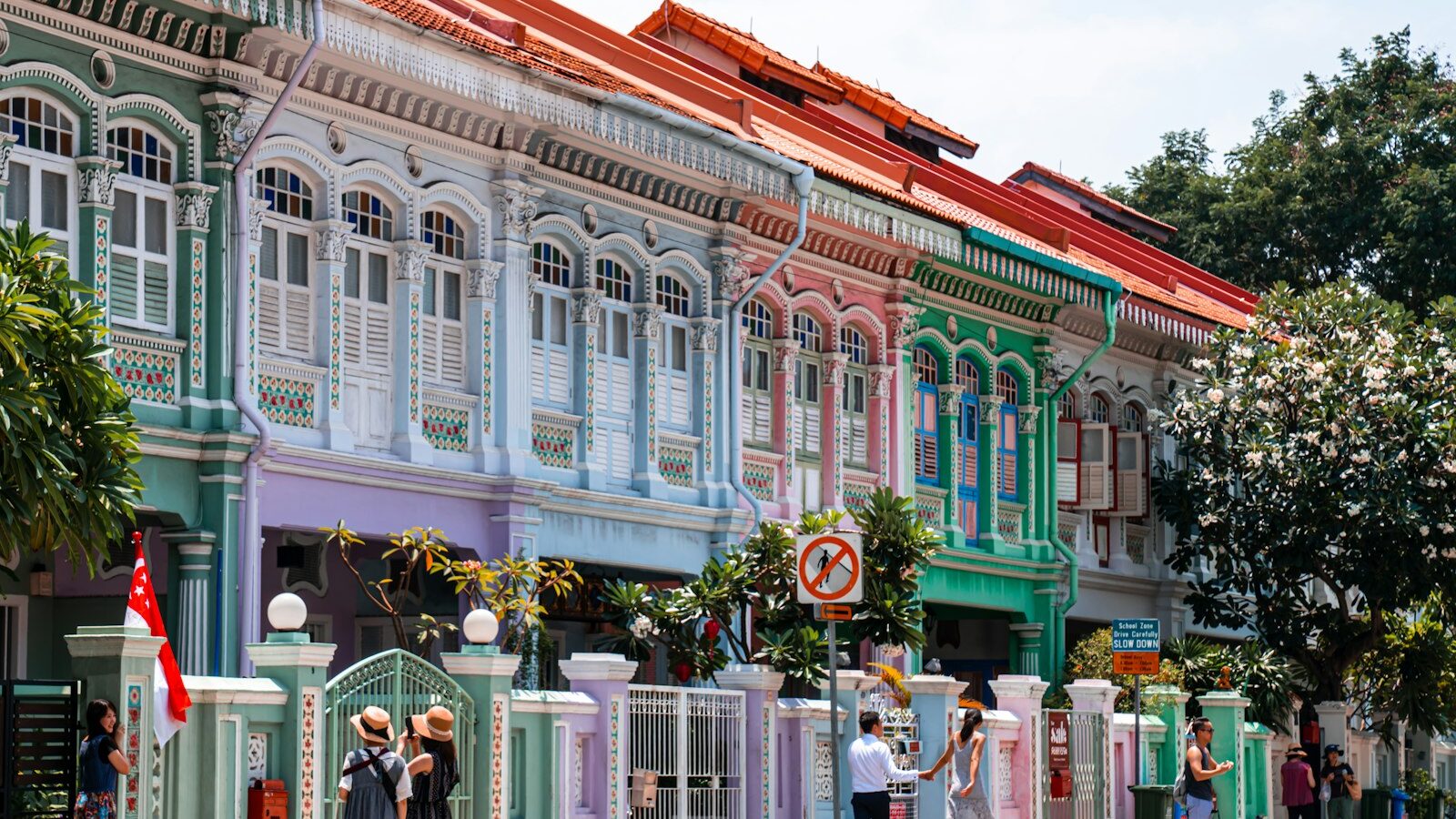
The Eurasian Heritage Gallery is one of Singapore’s smaller and less crowded heritage spaces, and that is part of its charm. Housed inside the Eurasian Community House in the Katong area, it tells the story of the Eurasian community: people of mixed European and Asian ancestry whose families have been part of Singapore since its early colonial days. If you have already visited the larger ethnic heritage centres, this gallery fills in an important piece of the picture.
This guide focuses on the visit itself: what you will see, how to plan your time, and how to pair it with the neighbourhood. For background on customs and identity, read our explainer on understanding Eurasian culture.
Where It Is and How It Is Run
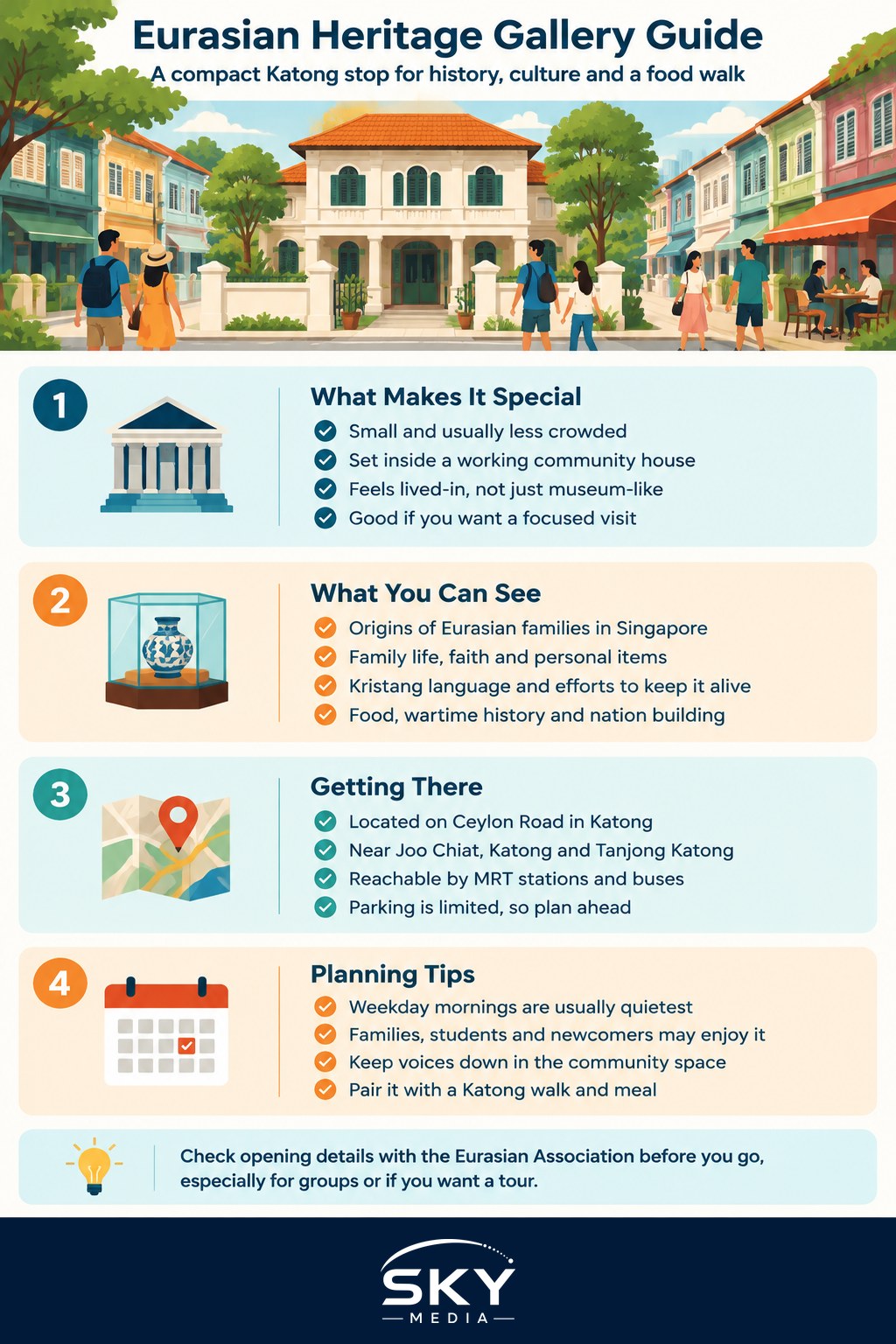
The gallery is located within the Eurasian Community House on Ceylon Road, in the residential streets between Joo Chiat, Katong and Tanjong Katong. The building serves as the home of the Eurasian Association, the community organisation that manages the gallery and runs cultural, welfare and social activities.
Because it sits in an active community building, you may notice classes, meetings or events happening around you. That gives the visit a lived-in feel rather than a purely museum one.
Opening days, hours, admission arrangements and guided tour options can change, and the gallery may close for private events or refurbishment. Check the Eurasian Association’s official website or contact them before you go, especially if you are bringing a group.
What You Will See Inside
The gallery is compact, so expect a focused visit rather than a full day out. Exhibits are typically organised around themes that trace the community’s journey.
Origins and arrival. Displays explain how Eurasian families came to Singapore, with roots linked to Portuguese, Dutch, British and other European ancestry mixed with Malay, Indian, Chinese and other Asian heritage. Many families arrived via Malacca and other ports in the region.
Family life and faith. Photographs, household objects and personal items show how Eurasian families lived, worked and celebrated. Catholic and other Christian traditions feature strongly for many families, alongside customs that blended European and Asian practices.
Language. You can learn about Kristang, a Portuguese-based creole historically spoken by some Eurasians in Malacca and Singapore, and efforts to keep it alive today.
Food. Eurasian cuisine, with dishes such as devil’s curry and other family recipes, is a recurring theme. If this interests you, our guide to Eurasian Kristang cuisine goes deeper.
Wartime and nation building. Exhibits often touch on the Japanese Occupation and on Eurasians’ contributions to Singapore’s public life, sport, education, the arts, the civil service and defence after the war.
Exhibit content is refreshed from time to time, so what you see may differ from earlier visitors’ accounts.
How It Compares With Other Heritage Centres
| Feature | Eurasian Heritage Gallery | Larger ethnic heritage centres |
|---|---|---|
| Size | Compact, within a community building | Purpose-built or restored standalone buildings |
| Time needed | Around 45 minutes to an hour | Often one to two hours or more |
| Crowds | Usually quiet | Busier on weekends and school holidays |
| Setting | Residential Katong streets | Kampong Gelam, Little India and other heritage districts |
| Best for | A focused visit plus a Katong food walk | A longer half-day outing |
If you enjoy this format, the Malay Heritage Centre and the Indian Heritage Centre make good next stops on a heritage trail.
Getting There
The Eurasian Community House is in the east, within reach of the Thomson-East Coast Line stations around Katong and Marine Parade and several bus routes along East Coast Road and Joo Chiat Road. Use a journey planner app for the best route from your starting point, as the walk from the nearest station can take several minutes along residential roads.
If you drive, parking around the area is limited, so check the community house’s arrangements before you set off or use nearby public carparks.
Planning Your Visit
Best time to go. Weekday mornings and early afternoons tend to be the quietest. Weekends can be livelier if there are community events, which can be a bonus if you want a sense of the community today.
Who will enjoy it.
- Families with primary school children. The gallery is small enough to hold attention. Ask children to spot old photographs, find a recipe or learn a Kristang word.
- Students. It is useful for projects on Singapore’s multiracial history and on how CMIO (Chinese, Malay, Indian and Others) categories have shaped identity.
- Newcomers. If you have recently moved to Singapore, the gallery helps explain why “Eurasian” is a recognised community here and how it fits into the country’s story.
- Heritage lovers. Pair it with a Katong walk to see shophouses and conservation terraces.
Etiquette. Remember that this is a working community space. Keep voices down near classes or meetings, follow any photography rules posted, and supervise young children around display cases.
Make It a Katong Half Day
The gallery pairs naturally with the surrounding neighbourhood:
- Walk Joo Chiat and Koon Seng Road to see the colourful Peranakan-style shophouses.
- Eat nearby. The area is known for its mix of local food, including some eateries serving Eurasian dishes. Check current menus and opening hours before going, since small restaurants change often.
- Visit a church or two. Several churches in the east have long ties to the Catholic and wider Christian communities. Visitors should dress modestly and avoid service times unless attending.
- End at East Coast Park for an evening stroll if you have time.
Tips for a Better Visit
- Read the panels slowly; much of the value is in personal stories and family photographs.
- Ask staff or volunteers if guided tours or talks are available for your visit date.
- Look out for community events around Christmas and other festive periods, which some visitors enjoy as a way to see living traditions.
- Bring a small notebook if you are researching family history; the Eurasian Association may be able to suggest where to look next.
Why It Is Worth the Trip
The Eurasian Heritage Gallery is a short, rewarding stop that tells a story many Singaporeans know only in outline. In under an hour, you come away understanding how a small community helped shape the country, and you can round off the visit with a walk and a meal in one of Singapore’s most characterful neighbourhoods.
Explore more: The Eurasian Community and Culture.
Further reading: Civil Defence Heritage Gallery: A Visitor Guide for Families