
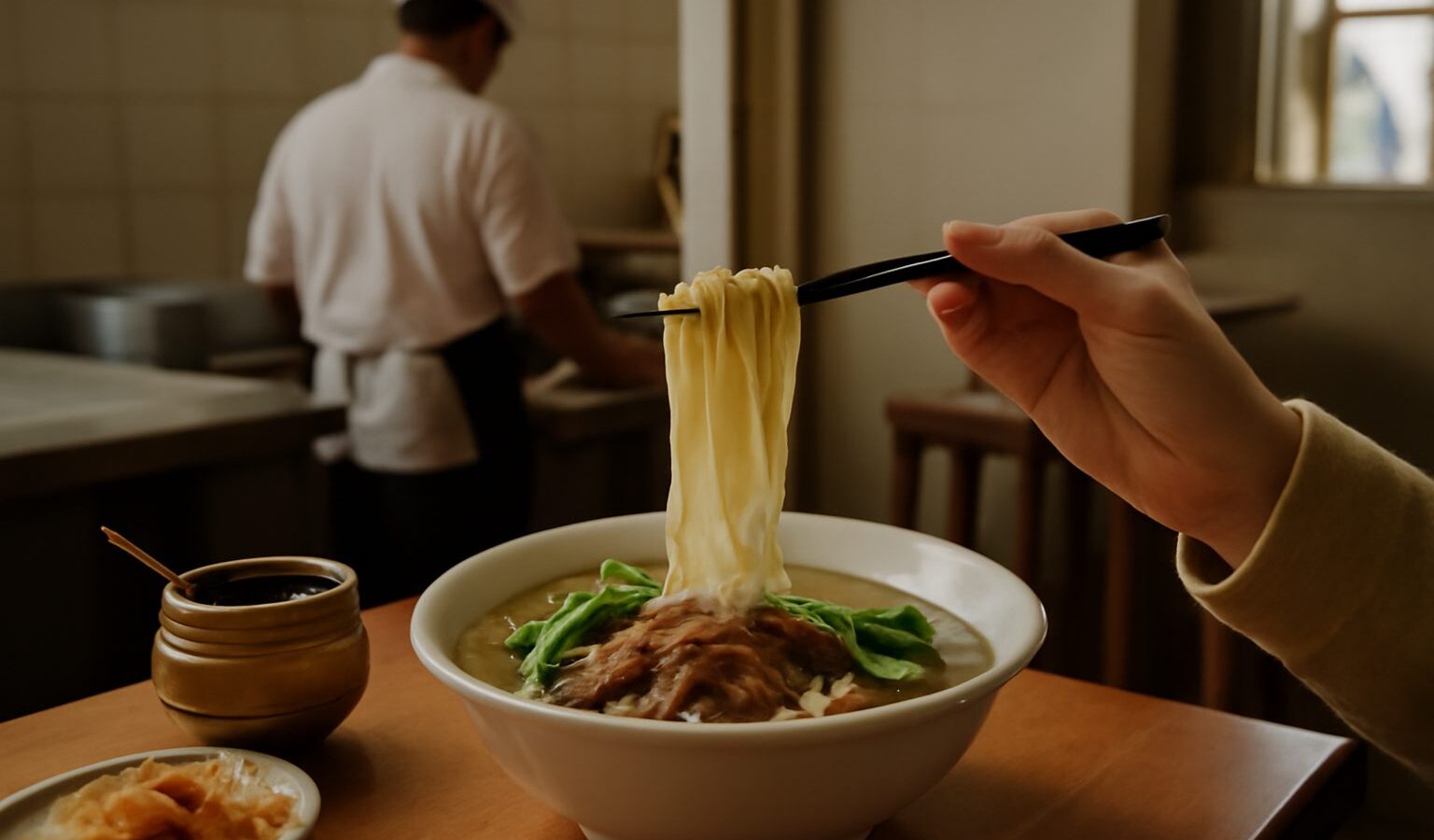
Few bowls comfort a homesick appetite quite like beef noodle soup, and the search for lanzhou noodles singapore has become a small quest for many newcomers. This is the famous Lanzhou lamian, the hand pulled beef noodles of Gansu province, prized for a broth so clear you can read a menu through it and noodles stretched to order right in front of you. This guide explains what makes the dish special, how to order it, and how to check the halal status that is so central to its heritage.
Lanzhou beef noodles are a signature of Hui Muslim cuisine, and the dish carries real culinary rules. Locals speak of five things that define a proper bowl. The broth should be clear, the sliced radish white, the chilli oil red, the fresh coriander and garlic sprouts green, and the noodles a bright, glossy yellow. Get all five right and you have a bowl that tastes of Lanzhou itself. Because the dish comes from the Hui tradition, authentic versions are typically halal, using beef rather than pork, though you should always verify certification rather than assume.
The Broth and the Noodle Pull
The soul of the dish is the broth. It is simmered for hours from beef bones with a careful blend of spices, then clarified so that it stays light and clean rather than heavy or greasy. A good broth is savoury and warming, with a gentle aromatic depth that lets the beef shine. This is not a thick, dark soup. Its beauty is in its clarity and balance, and once you taste a proper one you understand why the clear broth is a point of pride.
The noodles are the theatre. A skilled noodle puller takes a single piece of dough and stretches, folds, and stretches it again, doubling the strands each time until they reach the width you asked for. Done well, it looks effortless, and the fresh noodles have a springy, chewy bite that packaged noodles cannot match. Watching this happen is part of the pleasure, and many shops pull to order so your bowl is as fresh as it gets.
One detail that delights newcomers is choosing your noodle width. Traditional Lanzhou shops offer a whole family of shapes, and knowing the names helps you order like a local.
| Noodle type | Rough meaning | Shape and bite | Good with |
|---|---|---|---|
| Xi (thin) | Fine round strands | Delicate, quick to soak up broth | A lighter, cleaner bowl |
| Er xi (medium thin) | Slightly thicker round | Balanced, everyday choice | First timers |
| San xi (medium) | Standard round | Satisfying chew | Most appetites |
| Da kuan (wide) | Broad flat ribbons | Bold, hearty, chewy | Hungry diners |
| Jiu ye (leek leaf) | Flat like a chive leaf | Slippery, silky | Soaking up chilli oil |
How to Order and What to Expect
Ordering is simple once you know the parts. You choose your noodle width, then decide how much chilli oil you want, since the red chilli oil is added to taste and can range from a gentle warmth to a serious kick. The classic bowl comes topped with thin slices of braised beef, white radish, and a scatter of coriander and garlic sprouts. Some diners add extra beef, an egg, or side dishes such as cold cut beef or pickles. A splash of the shop vinegar can brighten the whole bowl, so try a little if it is on the table.
Etiquette back home is to eat it fresh and fast, while the noodles are at their best and the broth is piping hot. Do not wait too long, or the noodles will soften. Slurping is perfectly acceptable and even a sign you are enjoying it. If you like heat, ask for more chilli oil rather than adding a different sauce, since the chilli oil is designed to match the broth.
Because Lanzhou beef noodles come from a Muslim culinary tradition, the question of halal status matters to many diners, and not only to Muslim ones. Some outlets here are genuinely halal and display certification, while others serve the dish in a general Chinese restaurant that is not certified. If halal food is important to you, look for the official certificate on display or ask the staff directly, and do not rely on the dish name alone. This respect for certification is part of honouring where the dish comes from.
Tracking Down a Good Bowl
Lanzhou beef noodles have grown more visible here as more mainland newcomers arrive, and you can find them in dedicated noodle shops as well as in some broader northern Chinese restaurants. Searching for terms like Lanzhou beef noodles, Lanzhou lamian, or hand pulled beef noodles will surface the most relevant spots. Because outlets open and close and move, treat any address as a snapshot and check a current listing or a delivery app before you travel across town.
Reading recent reviews from other mainland diners is a reliable way to judge authenticity. Look for comments on the clarity of the broth, whether the noodles are truly hand pulled to order, and whether the chilli oil has real fragrance rather than just heat. A shop that gets these right is worth returning to, since a great bowl of Lanzhou noodles is one of the most restorative meals a newcomer can find.
Whether you crave a thin strand bowl on a light day or a wide ribbon feast when you are truly hungry, the pleasure of fresh pulled noodles in a clear, fragrant broth is hard to beat. Learn the widths, ask about halal if it matters to you, and you will always have a warm bowl of home within reach.
Explore more
Where to Find Northern Chinese Food
Finding Dongbei Northeastern Chinese Food
Where to Find Yunnan and Guizhou Food in Singapore
Where to Find Sichuan and Mala Food