
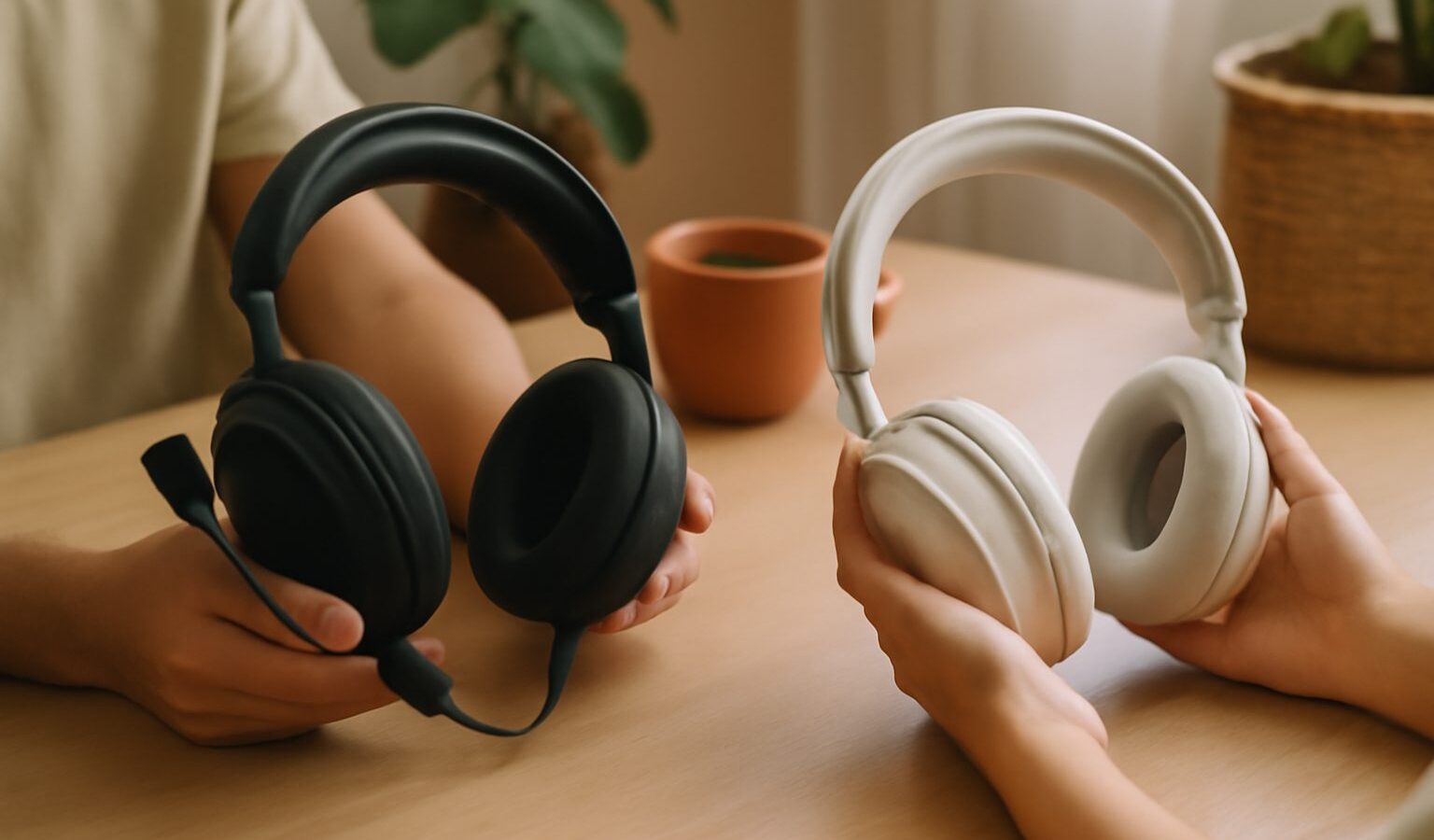
Walk into any electronics store in Singapore and you will see two very different walls of headgear. One side is covered in chunky, glowing gaming headsets with big boom mics. The other holds sleeker music headphones aimed at listeners and home producers. If you only have the budget for one pair, the gaming headsets vs headphones question can feel surprisingly hard. The good news is that once you understand what each type is actually built to do, choosing becomes a lot easier. This guide walks through the real differences so you can spend your money on the thing that matches how you listen and play.
What Each One Is Built For
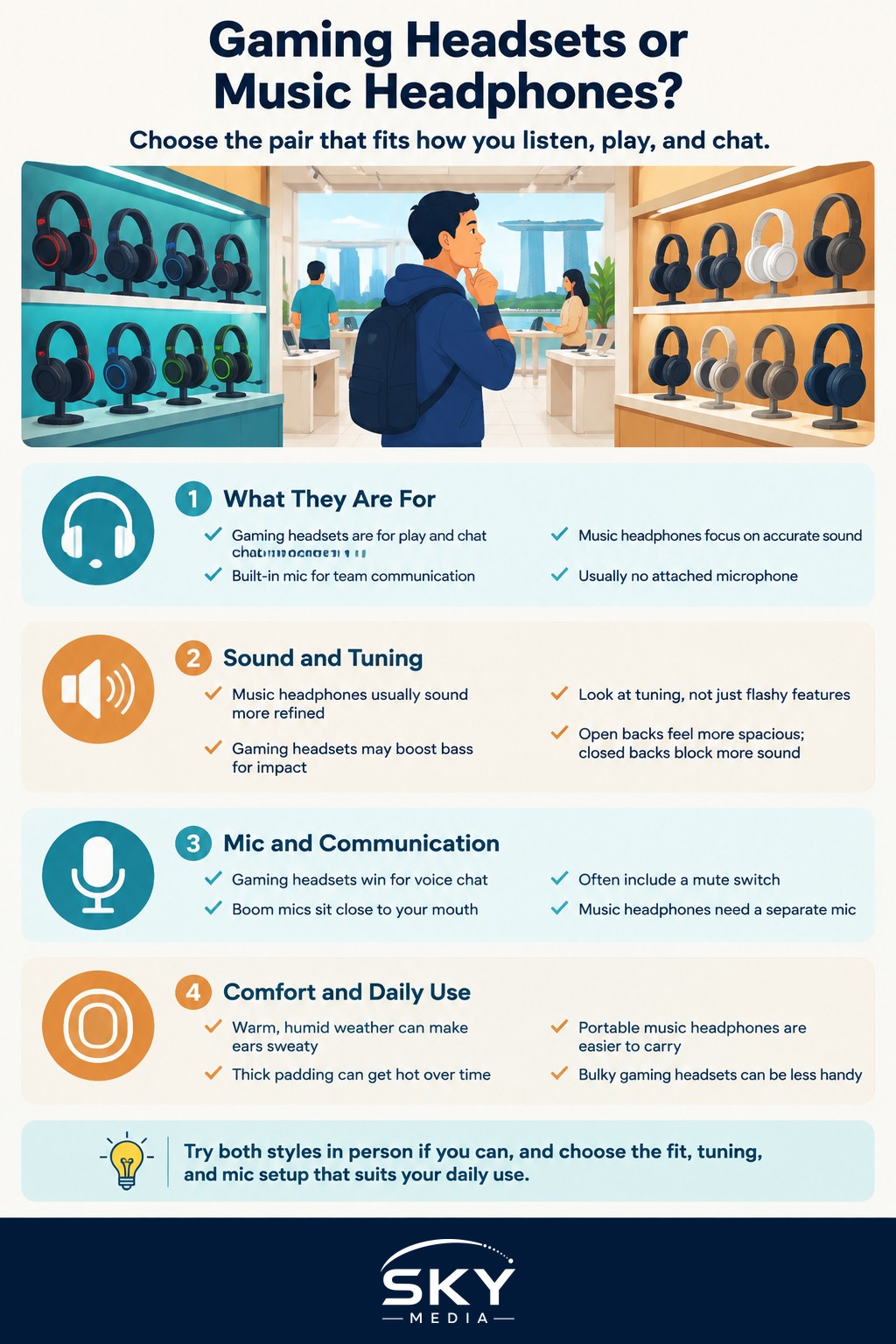
A gaming headset is designed as an all in one communication and gaming tool. The priority is a built in microphone for team chat, a comfortable fit for long sessions, and a sound signature that helps you hear footsteps, gunfire, and directional cues. Many models lean into a boosted low end and a scooped midrange, which can feel exciting in games and action films. Some include virtual surround features that try to simulate a wider soundstage from stereo drivers.
Music headphones, on the other hand, are built first and foremost for how music sounds. The goal is usually a balanced, accurate presentation where vocals, guitars, and cymbals all sit in a natural place. There is normally no attached microphone, because the design assumes you are listening rather than talking. If you care about hearing a mix the way the artist intended, or you are learning to produce, this accuracy matters a lot. Our guide to headphones for audiophiles explained goes deeper into what “accurate” really means for keen listeners.
Sound Quality and Tuning
Here is the honest truth: at similar price points, dedicated music headphones will usually sound more refined for actual music. Gaming headsets often trade some fidelity for that boomy, cinematic thump, and their microphones add cost that does not go toward the drivers. That is not a flaw, it is a design choice for a different job.
If you plan to critically listen, mix, or just enjoy albums closely, look at how headphones are tuned rather than at flashy features. You may also want to understand the difference between open back and closed back headphones, since open designs tend to sound more spacious while closed designs block more noise. For gaming and calls in a shared HDB flat, closed back designs are often more practical because they leak less sound and keep more of the outside world out.
Microphone and Communication
This is where gaming headsets clearly win. A good boom mic sits near your mouth, picks up your voice cleanly, and often includes a mute switch. If you play online games with friends, join voice calls, or hop into Discord, that convenience is genuinely useful. Trying to replicate it with music headphones means adding a separate microphone, which costs more and takes up desk space.
If you only ever need a mic occasionally, a modest clip on or standalone option can pair with music headphones. But if voice chat is a daily part of your life, factor the built in mic into your decision honestly.
Comfort, Build, and Daily Life in Singapore
Both categories can be comfortable, but they emphasise different things. Gaming headsets often use thick padding for marathon sessions, though the extra plastic and lighting can add weight. Music headphones range from featherlight portable pairs to larger studio style cans. Since Singapore is warm and humid, breathability matters. Heavily padded earcups can get sweaty during long sessions, so try before you buy if you can, and give your gear time to air out. Our piece on caring for your audio gear in the humidity has practical tips on keeping earpads and cables in good shape here.
Consider portability too. If you take your headphones on the MRT or to a cafe to study, a foldable music pair is easier to carry than a bulky gaming headset with a fixed mic.
How to Decide
Ask yourself what you do most:
- If you game online and chat constantly, and music is a secondary hobby, a gaming headset is the sensible all in one pick.
- If music listening, learning, or home production is your main love, choose music headphones and add a separate mic only if you need one.
- If you do a bit of everything, think about which activity you would be sad to compromise on, and buy for that.
You do not have to overthink brands or chase the “best” model in a review. Focus on the fit for your ears, whether the tuning suits your taste, and whether the microphone situation matches your life. Everyone hears slightly differently, so trust your own ears in the shop over marketing claims.
The Bottom Line
The gaming headsets vs headphones debate is not about one being better than the other. It is about matching the tool to the task. Gaming headsets bundle communication and comfort for play, while music headphones prioritise faithful sound for listening and creating. Be honest about how you spend your hours, set a budget you are comfortable with, and let your ears make the final call. Whichever way you go, take breaks and keep the volume sensible so you can enjoy your music and games for years to come.
Frequently Asked Questions
Can I use a gaming headset for music and mixing? You can listen to music on one, but gaming headsets often boost the bass and scoop the midrange, which is exciting for games but less accurate. For critical listening or mixing, dedicated music headphones usually give a more balanced picture.
Can I add a microphone to music headphones for gaming? Yes, a clip-on or standalone microphone can pair with music headphones, which suits occasional voice chat. It costs extra and takes up desk space, so if you talk online every day, a gaming headset with a built-in mic may be more convenient.
Are open-back headphones suitable for gaming or calls in a flat? Usually not. Open-back designs sound spacious but leak sound in and out, which disturbs people nearby and lets room noise in. Closed-back headphones are more practical for gaming and calls in a shared flat because they contain sound better.
Do virtual surround sound features really help in games? They can help some players judge direction, but they are simulated from stereo drivers, and effectiveness varies between games and people. Treat them as a bonus, not the reason to buy. Test a headset with games you play before committing.
Which is more comfortable for long sessions in a warm climate? It depends on the model. Gaming headsets often have thick padding for marathon sessions but can get warm and sweaty, while lightweight music headphones may be more breathable. Try them on in the shop if you can, and take breaks.
Further reading: How to Clean and Maintain Your Headphones