
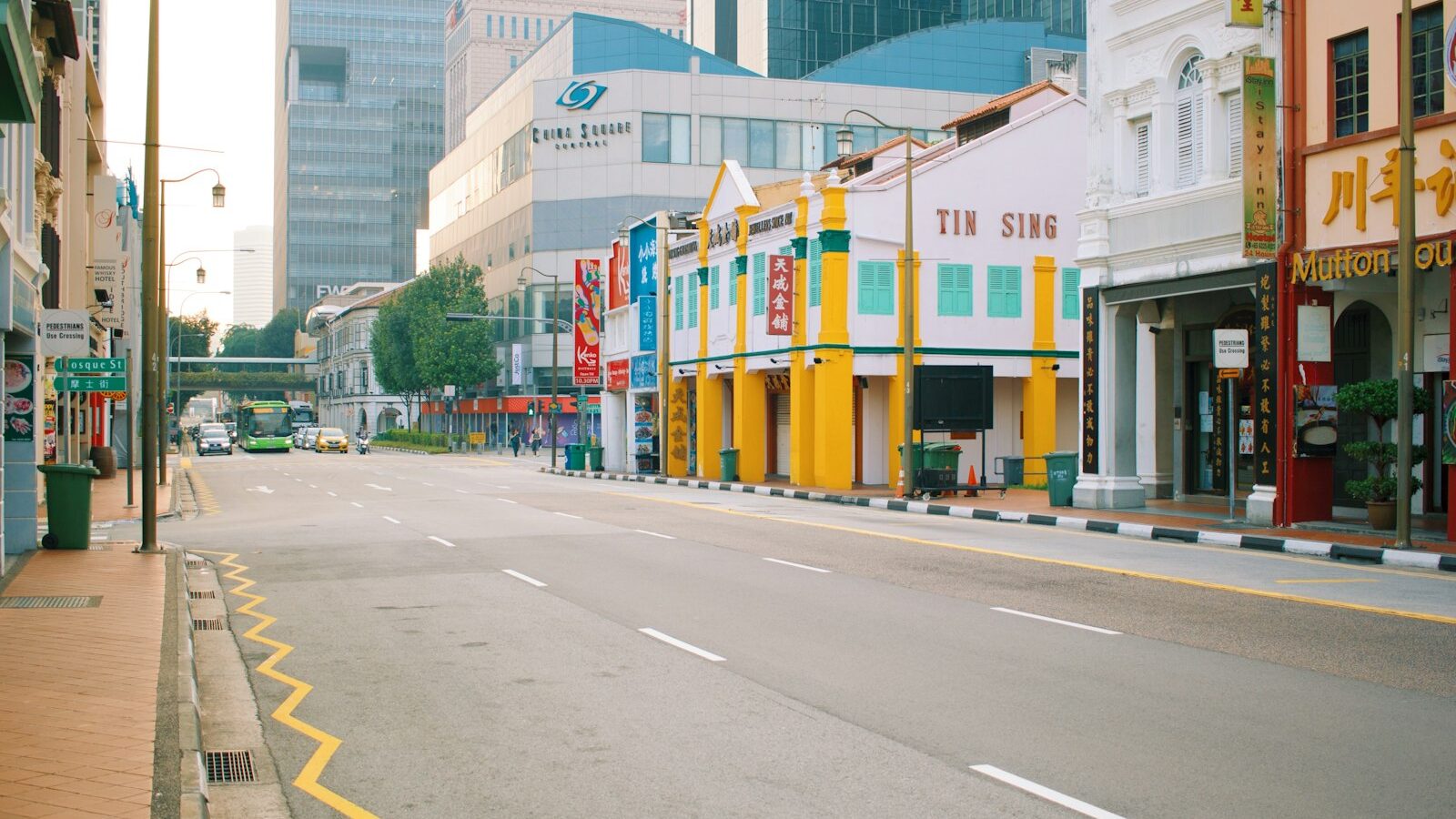
There is something quietly magical about shooting on film. You slow down, you compose with care, and you wait to see what you captured. If you have been curious about film photography singapore style, the good news is that getting started is easier and more affordable than many people assume. You do not need rare gear or deep knowledge to begin. You just need a working camera, a roll of film, and a bit of patience. This guide walks you through the basics so you can load your first roll with confidence and start enjoying the process.
Why Shoot Film in the First Place
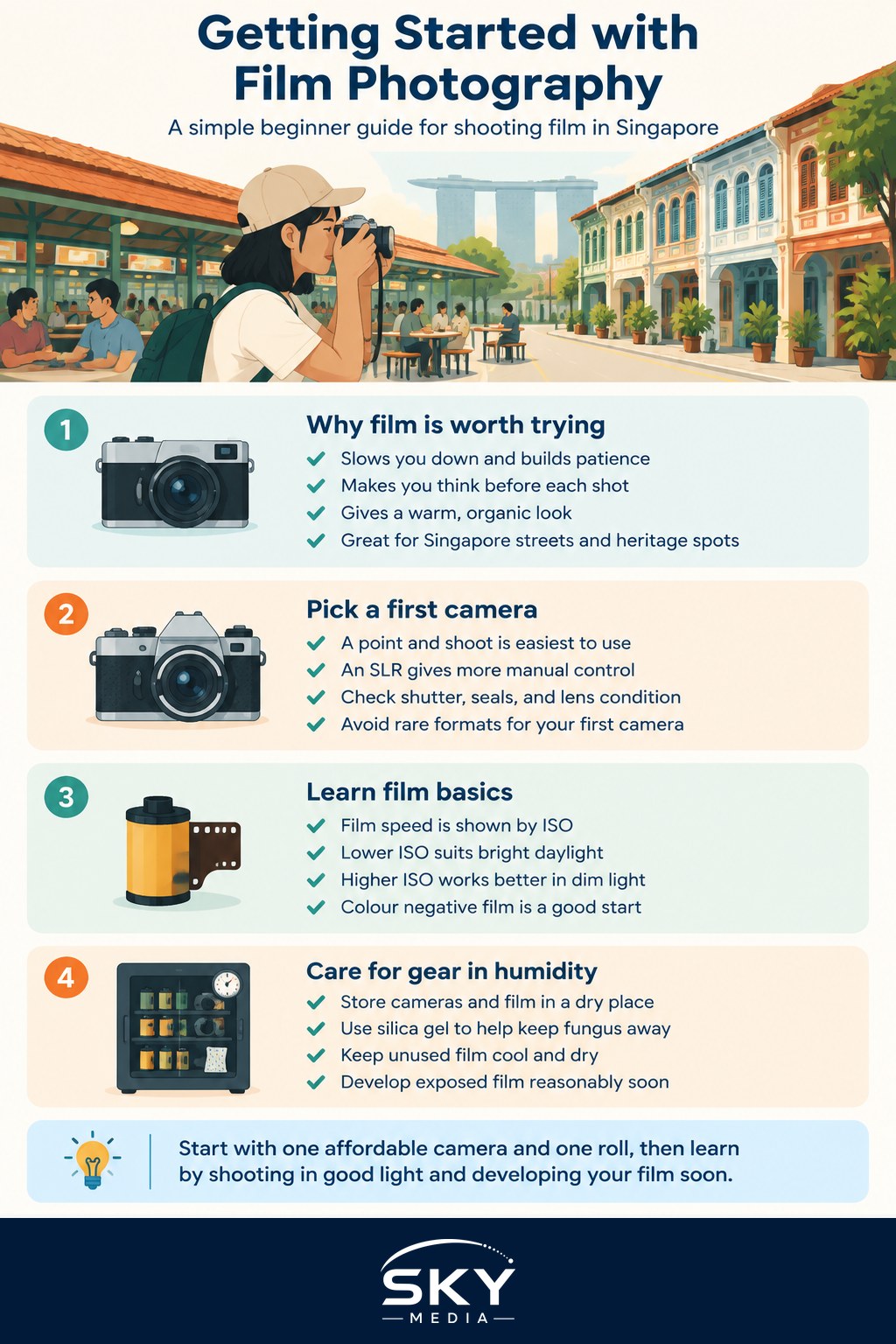
Film gives you a different way of seeing. Because a roll usually holds a limited number of frames, you tend to think harder before you press the shutter. That habit alone can make you a stronger photographer, even when you go back to digital. Film also has a look that many people love, with soft highlights, gentle grain, and colours that feel warm and organic straight out of the roll.
For beginners in Singapore, film is a fun way to explore our streets, hawker centres, void decks, and heritage corners with fresh eyes. You are not chasing perfection. You are collecting little moments. If you already enjoy composition, you might like our notes on the rule of thirds and composition basics, which apply just as well to film as they do to a phone or a mirrorless body.
Choosing Your First Film Camera
You have a few sensible routes. A simple point and shoot handles focus and exposure for you, so you can just aim and shoot. A manual SLR gives you full control over aperture and shutter speed, which is great if you want to learn the fundamentals. Either can be a joy.
When buying a used film camera, check that the shutter fires at different speeds, the light seals are not crumbling, and the lens is free of fungus, which is a real concern in our humid climate. Bring a fresh battery if the meter needs one. If you are new to buying second hand gear in general, our buying a used camera guide covers the checks that keep you from paying for a dud.
Stick to well known, widely available formats so film and developing are easy to find. Avoid rare or discontinued formats for your first camera, since sourcing film for them can be frustrating and costly.
Understanding Film and Basic Settings
Film comes in different speeds, described by an ISO number. Lower speed film is finer and suits bright daylight, which we have plenty of. Higher speed film copes better with dim interiors and evening light but shows more grain. Colour negative film is forgiving and a friendly place to start. Slide film and black and white are wonderful too, though they can be less forgiving of exposure mistakes.
Learn to read light and set exposure sensibly. If your camera has a built in meter, trust it while you learn, then experiment. Understanding how aperture, shutter speed, and ISO work together will help enormously here, and it carries straight over from digital, so a refresher on understanding aperture shutter speed and iso is time well spent.
Here are a few habits that help beginners:
- Note the film speed you loaded and set your camera to match it.
- Shoot in good light while you build confidence.
- Keep the sun behind or to the side of you when you start.
- Bracket important shots by taking one a little brighter and one a little darker.
Caring for Film Gear in Our Humidity
Singapore humidity is hard on cameras and film alike. Store your camera and lenses in a dry cabinet or an airtight box with silica gel to keep fungus away. Keep unused film cool and dry, and avoid leaving rolls baking in a hot car or on a sunny windowsill. Once exposed, get your film developed reasonably soon rather than letting it sit for months in the heat.
Wipe down your gear after a sweaty day out, and let a cold camera adjust gently when you move between air conditioned malls and the warm outdoors, since condensation can form on cold glass.
Getting Your Film Developed
You do not need to develop film yourself to enjoy the hobby. Plenty of labs will develop and scan your rolls for you, and getting digital scans back is the easiest way to share your shots online. Ask about turnaround, scan resolution, and whether they return your negatives, which are worth keeping safely.
If you catch the bug and want to try processing at home later, read our guide on how to develop film at home in singapore first, since it involves chemicals that must be handled safely and disposed of responsibly.
Your First Roll, Step by Step
Load your film in soft light or shade following your camera manual. Confirm the film is advancing by watching the rewind knob turn as you wind on. Shoot through the roll at a relaxed pace, giving each frame a moment of thought. When you reach the end, rewind fully before opening the back, or you risk exposing your shots to light.
Then simply hand the roll to a lab and wait. That little wait is part of the charm. When your scans arrive, review them honestly, keep what you love, and note what you would do differently next time.
A Gentle Encouragement to Begin
Film rewards curiosity more than expensive gear. Start with one affordable camera, one roll, and one afternoon. Walk a neighbourhood you know, look for light and small stories, and let yourself enjoy not knowing the result straight away. Over a few rolls you will develop a feel for exposure, a steadier eye, and a real fondness for the process. Film photography is not about being perfect. It is about slowing down and truly looking, and Singapore gives you no shortage of things worth looking at.
Frequently Asked Questions
Is film photography expensive to keep up as a hobby? It costs more per shot than digital, because you pay for film, developing and often scanning each time. That cost also encourages you to shoot thoughtfully. Compare current prices from a few labs and film sellers, and start with one affordable camera and a few rolls before committing further.
Where can I buy film and find labs to develop it? Look at local camera shops, online sellers and photography communities, then check which labs offer developing and scanning. Stock and services change, so call or message ahead. Ask about turnaround time, scan quality and whether negatives are returned before you hand over a roll.
Is it safe to take film through airport security when travelling? Airport scanners can affect film, especially faster film and rolls that pass through repeatedly. Many photographers pack film in a clear bag in their cabin luggage and ask for a hand inspection. Check the airport’s and airline’s current rules before you fly.
What are the most common mistakes beginners make with film? Typical slip-ups include forgetting to match the camera’s ISO setting to the film, underexposing in dim light, and rushing through the roll. Others are opening the camera back before rewinding and storing film in heat. Shooting in good light helps you learn faster.
Is shooting film still worth it when digital is so convenient? It depends on what you want. Film suits people who enjoy the slower process, the look of the grain and colour and the surprise of seeing results later. If you only want quick, flexible shots, digital is simpler. Many photographers enjoy using both.
Further reading: How to Scan Film Negatives at Home · Fujifilm Film Simulations and Recipes Explained