
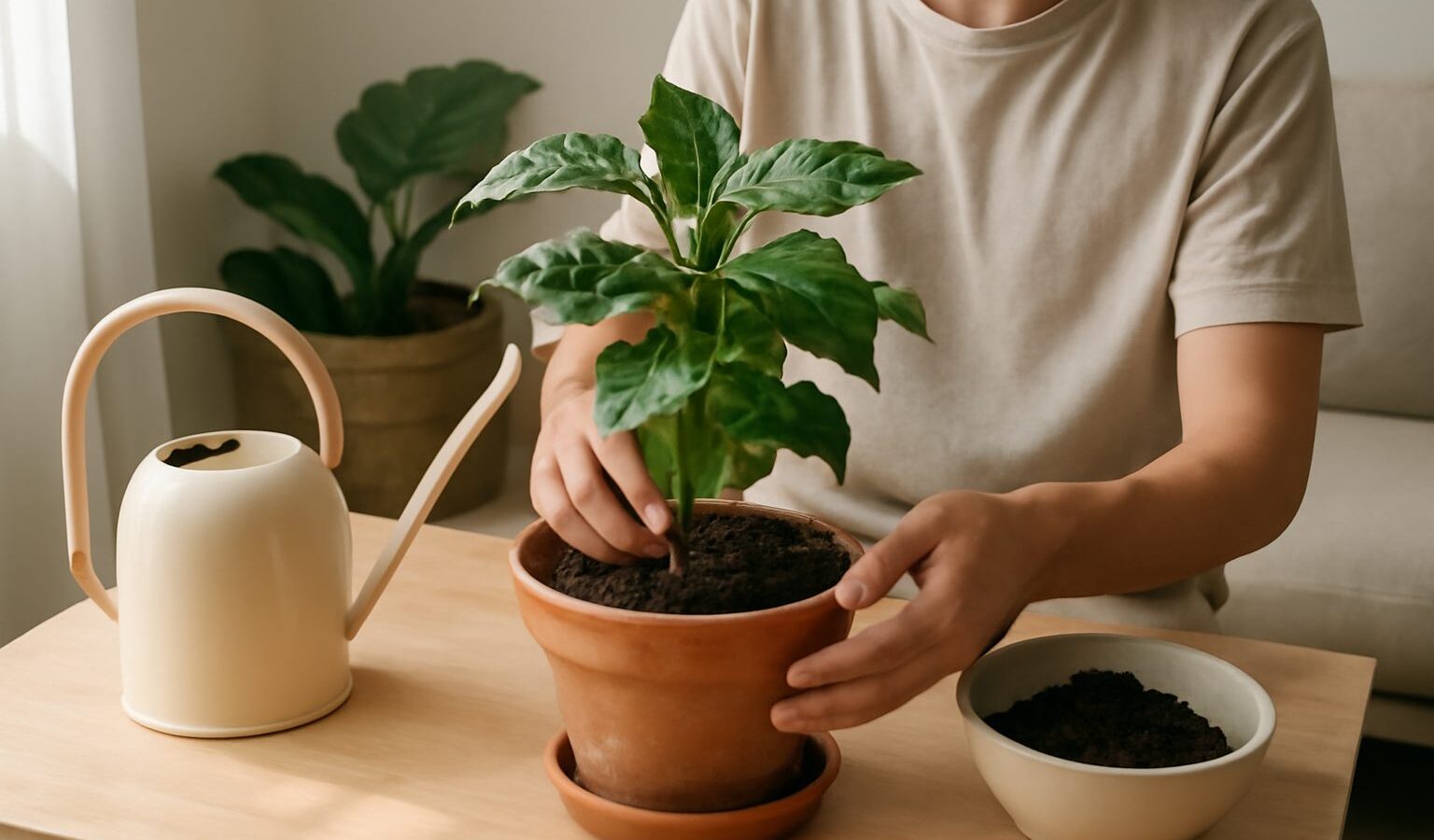
There is something quietly charming about growing a coffee plant singapore gardeners can keep on a balcony or in a bright indoor corner. With their glossy, deep-green leaves and neat, bushy shape, coffee plants make a lovely ornamental long before they ever think about producing cherries. If you go in treating it first as a handsome foliage plant and second as a slow, hopeful step towards a tiny homegrown harvest, you will enjoy the journey far more.
Be honest with yourself from the start: in a pot, in our conditions, a coffee plant is a patient, ornamental-to-harvest project that can take a few years to fruit, if it fruits at all. That is completely fine. The plant itself is the reward.
Getting Started With a Coffee Plant
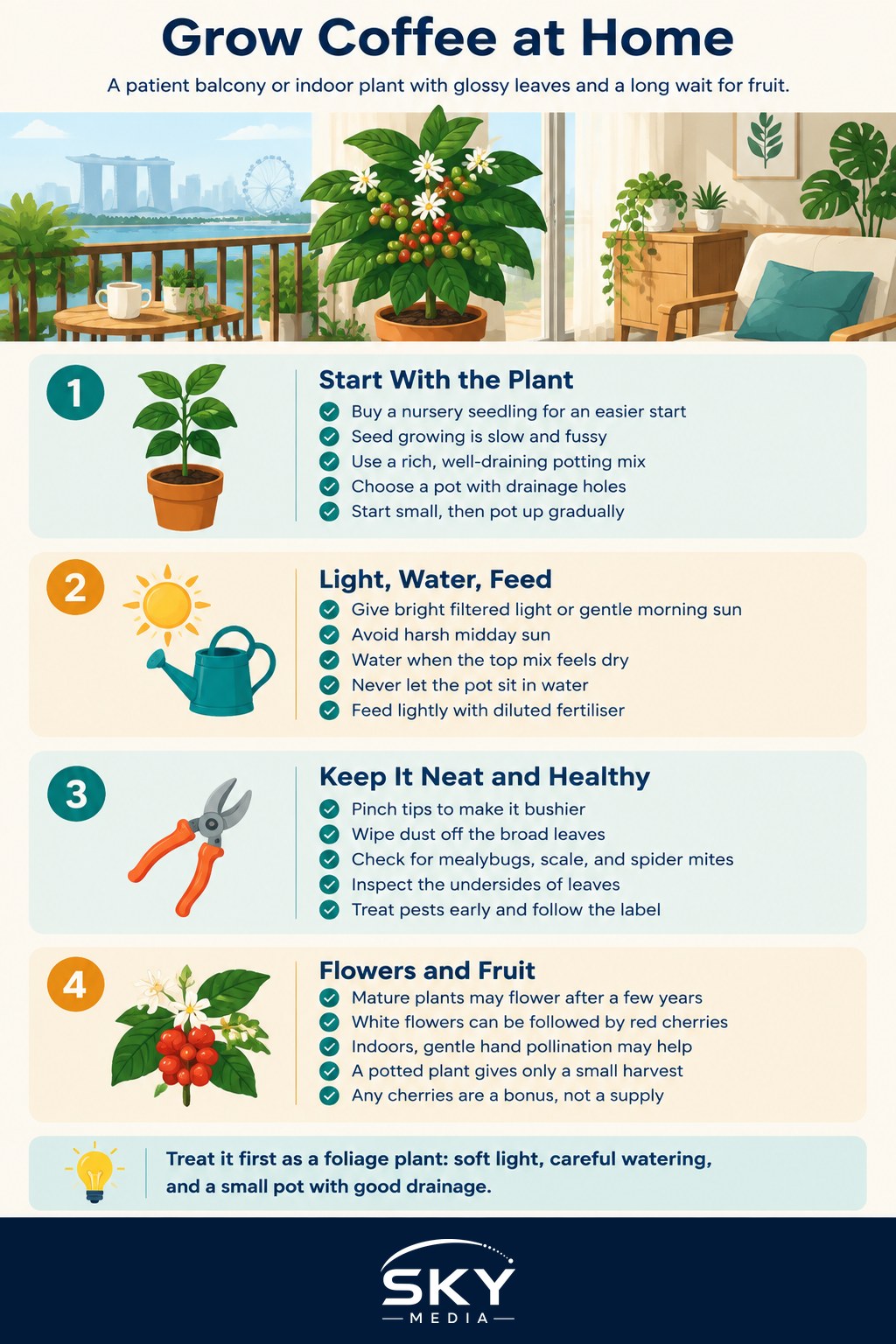
You can begin with a young plant from a nursery or grow from fresh seed, though seed is slow and fussy. A nursery seedling is the friendlier option for most beginners and gives you a head start of a year or more.
Coffee likes a rich but well draining potting mix. A general purpose mix lightened with a little compost and some perlite holds moisture without turning into a soggy block, which matters given our frequent rain. Choose a pot with good drainage holes and start on the smaller side, potting up gradually as the plant grows. A pot that is far too large stays wet for too long and invites root rot. Our guide on choosing the right pot size for your plant is handy here.
Position matters. Coffee naturally grows as an understorey shrub beneath taller trees, so it dislikes harsh, direct midday sun, which scorches the leaves. Bright, filtered light or gentle morning sun is ideal. A shaded balcony, a spot behind a light curtain, or a corridor with soft light suits it well. If your only space is a hot, sunny ledge, our notes on gardening on a shady balcony can help you create the dappled conditions coffee prefers.
Everyday Care in the Tropics
Watering is a balance. Coffee likes evenly moist soil but hates sitting in water. Check the top couple of centimetres of the mix and water when it starts to feel dry, letting excess drain away freely. Never leave the pot standing in a full saucer, both to protect the roots and because still water in saucers and trays is an Aedes mosquito breeding risk. Empty and scrub saucers regularly and follow NParks and NEA guidance.
Our humidity actually suits coffee, so you rarely need to fuss over moisture in the air. Feed during active growth with a balanced fertiliser diluted as the label directs, easing off if growth slows. Always read the label rather than guessing at a stronger dose, since coffee is sensitive to being overfed.
Coffee plants can grow tall and leggy if left alone, so pinch out the growing tips now and then to encourage a fuller, bushier shape that stays balcony-friendly. Wipe dust off the broad leaves occasionally so they can breathe and photosynthesise well.
Keep an eye out for common tropical pests such as mealybugs, scale, and spider mites, especially on indoor plants where air is still. Catch them early by inspecting the undersides of leaves. Wipe off small outbreaks with a damp cloth, or use a gentle, targeted treatment following the label exactly and testing on a few leaves first. For a fuller rundown, see our guide on how to deal with plant pests.
Patience, Flowering, and Fruit
If your coffee plant is happy and mature enough, usually after a few years, you may be treated to clusters of small, fragrant white flowers, followed by green berries that slowly ripen to red cherries. Indoors, you may need to help pollination along by gently dabbing between flowers, a technique covered in our guide to hand-pollinating fruiting plants.
Do not be disheartened if fruit is scarce or does not appear. A single potted plant produces only a very small quantity of cherries even in a good year, so treat any harvest as a fun bonus rather than a coffee supply. Turning cherries into a drinkable cup involves pulping, drying, and roasting, which is a whole separate craft.
A note on eating and using the plant: the raw coffee cherry, the leaves, and unroasted beans are not something to snack on, and this guide is about growing rather than any health use. If you ever plan to consume any part of a plant, be completely sure of its identity, wash anything home-grown, and check with a doctor or a reliable source for anything health-related.
Growing a coffee plant at home is really about enjoying a beautiful, resilient shrub that thrives in our climate. Give it soft light, steady but careful watering, and time, and you will have a lush green companion that makes any small space feel a little more like a leafy retreat.
Frequently Asked Questions
How long does a potted coffee plant take to fruit? It can take a few years, if it fruits at all, and a single potted plant gives only a small number of cherries. Treat any harvest as a bonus. The glossy foliage is the main reward.
Should I buy a coffee seedling or grow it from seed? A nursery seedling is friendlier for beginners and gives a head start of a year or more. Seed is slow and fussy. Pick a plant with healthy glossy leaves.
Can I turn my own coffee cherries into a drinkable cup? It is possible but involves pulping, drying and roasting, which is a separate craft. Raw cherries, leaves and unroasted beans are not for snacking. Learn the process from a reliable source first.
How do I help a coffee plant produce fruit indoors? You may need to help pollination by gently dabbing between the small white flowers. A happy, mature plant in soft light and steady moisture is more likely to flower. There is no guarantee of fruit.
Why are the leaves on my coffee plant turning brown? Brown, scorched leaves usually come from harsh direct sun, while soggy mix and root rot can also cause browning. Move it to filtered light and check drainage. Water when the top couple of centimetres feel dry.