
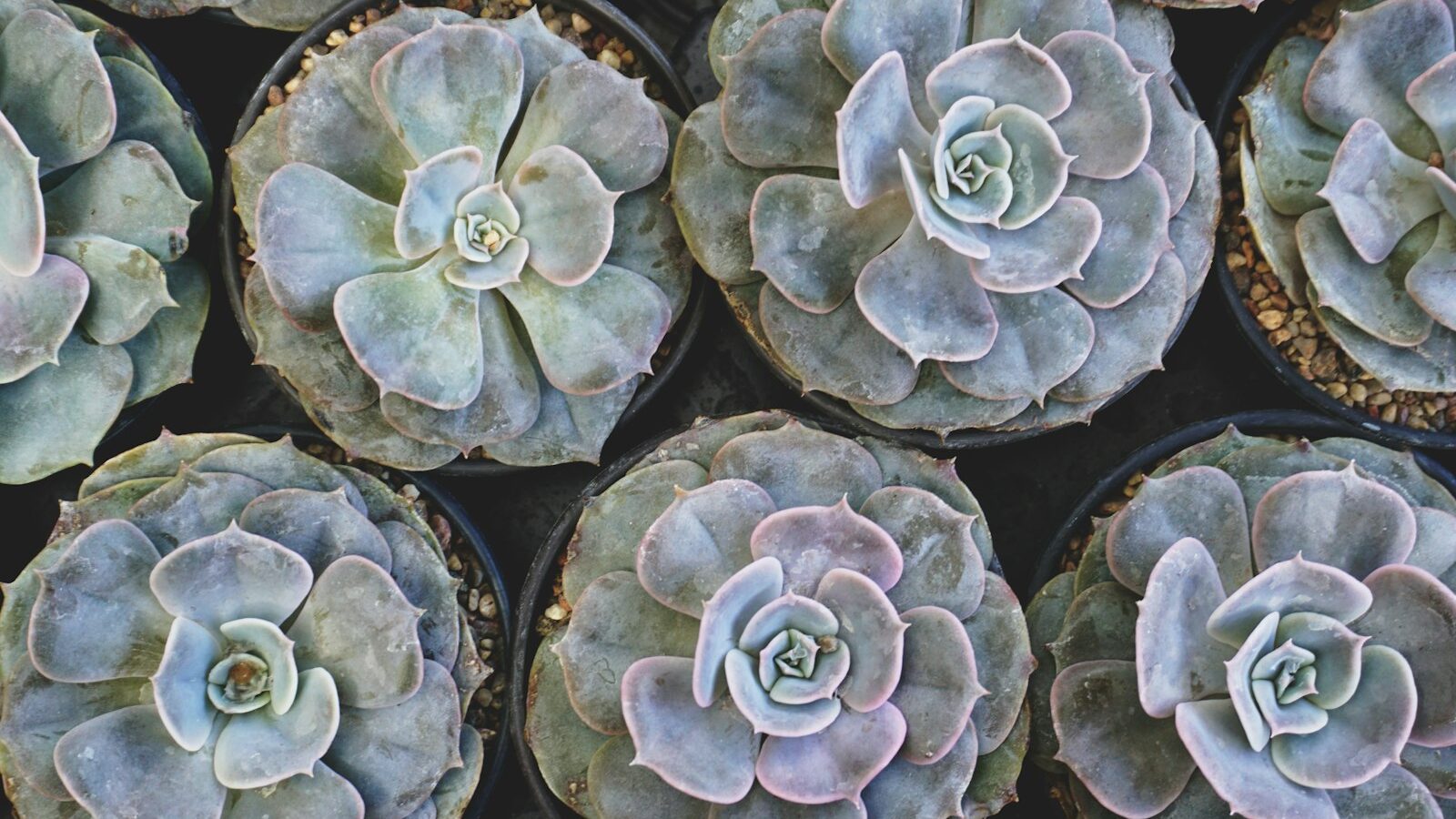
Few plants look as tidy and photogenic as a well-grown echeveria, with its neat, symmetrical rosette of plump leaves in soft blues, greens, pinks and dusky purples. Growing echeveria in Singapore is genuinely rewarding once you understand one thing: these plants come from dry, sunny highlands, not our humid tropics, so your whole job is to give them strong light while keeping the roots on the dry side. Get that balance right on a bright windowsill or balcony and you will be rewarded with those famous tight, colourful rosettes.
Why Rosette Succulents Struggle in the Tropics
Echeverias and their rosette cousins evolved in arid, high-altitude parts of Mexico and Central America, where the sun is fierce, the air is dry and rain is occasional. They store water in their fleshy leaves to ride out drought, which is exactly why constant moisture rots them. Singapore hands them plenty of the heat and sun they love, but also thick humidity and sudden downpours that their roots simply cannot cope with.
The good news is that you do not need to recreate a desert. You only need to copy it where it matters: keep the soil dry between drinks, give the plant the brightest position you have, and never let it sit in soggy compost or standing water. Once you accept that overwatering, not underwatering, is the real danger here, echeverias become far easier than their delicate looks suggest.
Light: The Key to Tight, Colourful Rosettes
Light is what keeps an echeveria compact and colourful. In a bright spot the rosette stays low, dense and often blushes pink or red at the leaf tips. In a dim corner it does the opposite: the plant etiolates, meaning it stretches upward, the leaves space out along a lengthening stem, and the colour fades to a pale, floppy green. Once a rosette has stretched it will not shrink back, so getting the light right from the start matters.
Aim for the brightest indoor position you have, ideally a windowsill or balcony that receives several hours of direct sun. An east-facing spot with strong morning sun is gentle and reliable. A hot west-facing afternoon spot can work too, but introduce a plant to intense midday sun gradually, as pale or freshly bought rosettes can scorch and develop brown patches if moved straight into blazing light. If your rosette starts reaching or leaning, it is asking for more light, not water.
Soil, Pots and Drainage
If you remember one rule, make it this: drainage decides whether your echeveria lives or dies. In our humid air, water lingers, so the soil and pot must let it escape fast.
- A gritty, fast-draining mix. Ordinary potting soil holds far too much water. Use a specialist cactus and succulent mix, or lighten a normal mix with plenty of perlite, coarse sand or fine gravel so water rushes straight through.
- Pots with drainage holes only. Never plant a rosette in a sealed decorative pot. If you love a cover pot, keep the plant in a plastic nursery pot inside it and lift it out to water.
- Terracotta helps. Unglazed clay breathes and wicks moisture out of the soil, which suits echeverias far better than plastic or glazed ceramic in this climate.
- Shallow beats deep. A smaller, shallower pot dries out faster, which is exactly what you want here.
Echeveria Care at a Glance
| Care factor | What echeveria wants in Singapore |
|---|---|
| Light | Very bright, several hours of direct sun |
| Watering | Only when soil is fully dry, then soak and drain |
| Soil | Gritty cactus mix, sharp drainage essential |
| Pot | Terracotta with drainage holes, on the small side |
| Humidity | Prefers airflow; dislikes still, damp air |
| Warning sign | Stretching (etiolation) means too little light |
Watering Without Rotting the Roots
Watering is where most people lose their echeveria. Wait until the soil is completely dry all the way through, then water thoroughly and let every drop drain away. In practice you will water far less often than any other houseplant, perhaps once a week or two in bright weather and less when it is dull and wet. Poke a wooden skewer deep into the pot; if it comes out with damp soil clinging to it, wait. When in doubt, do not water.
Always water the soil, not the rosette. Water that pools in the centre of the rosette or sits on the powdery leaves in our humidity invites rot and can wash off the pretty farina, the natural bluish bloom on the leaves. Give the plants airflow too, from a breezy balcony or an open window, as moving air helps the soil dry and discourages the fungus that thrives in stagnant, damp conditions. Do not mist them; that only adds to the moisture problem.
Beating Rain and Mosquitoes
There is one Singapore rule you must never skip. After watering, never let water pool in the saucer, tray or cover pot under your echeveria. Standing water is a breeding ground for Aedes mosquitoes, and dengue is a serious, ongoing risk here. Because succulents are watered infrequently and left to sit, a forgotten saucer can quietly stagnate for days. Tip out the saucer every time and keep it dry between waterings, following NEA’s guidance on removing stagnant water around the home.
If you grow rosettes on an open balcony, watch the weather. Prolonged monsoon rain leaves the soil wet for far too long, so shelter the pots under an overhang or move them in during heavy spells. A little feed helps during brighter months: use a diluted, balanced or low-nitrogen fertiliser sparingly and always follow the label. Keep fertilisers and pest treatments away from children and pets, and reach for gentle, eco-friendly options first.
Propagating and Growing Your Collection
One of the joys of echeverias is how easily they multiply. Mature rosettes produce small offsets, or pups, around their base that you can gently pull away and pot up once they have a few roots. You can also propagate from a single healthy leaf: twist a whole leaf off cleanly, let the end callus over for a day or two, then rest it on top of dry gritty mix in a bright, airy spot. In a few weeks tiny roots and a baby rosette appear. This is a cheap, satisfying way to build a whole shelf of plants from one specimen.
Choose a healthy first plant with firm, plump leaves and no soft, mushy or discoloured spots. Give it strong light, gritty soil, a well-drained pot and a firm hand with the watering can, and your echeveria will reward you with slow, sculptural, jewel-like growth for years.
Explore more
New to this group of plants? Start with our guide to Caring for Succulents and Cacti, then compare notes with Caring for Haworthia and Growing Aloe Vera at Home. To show off those rosettes, see How to Choose Pots and Planters.