
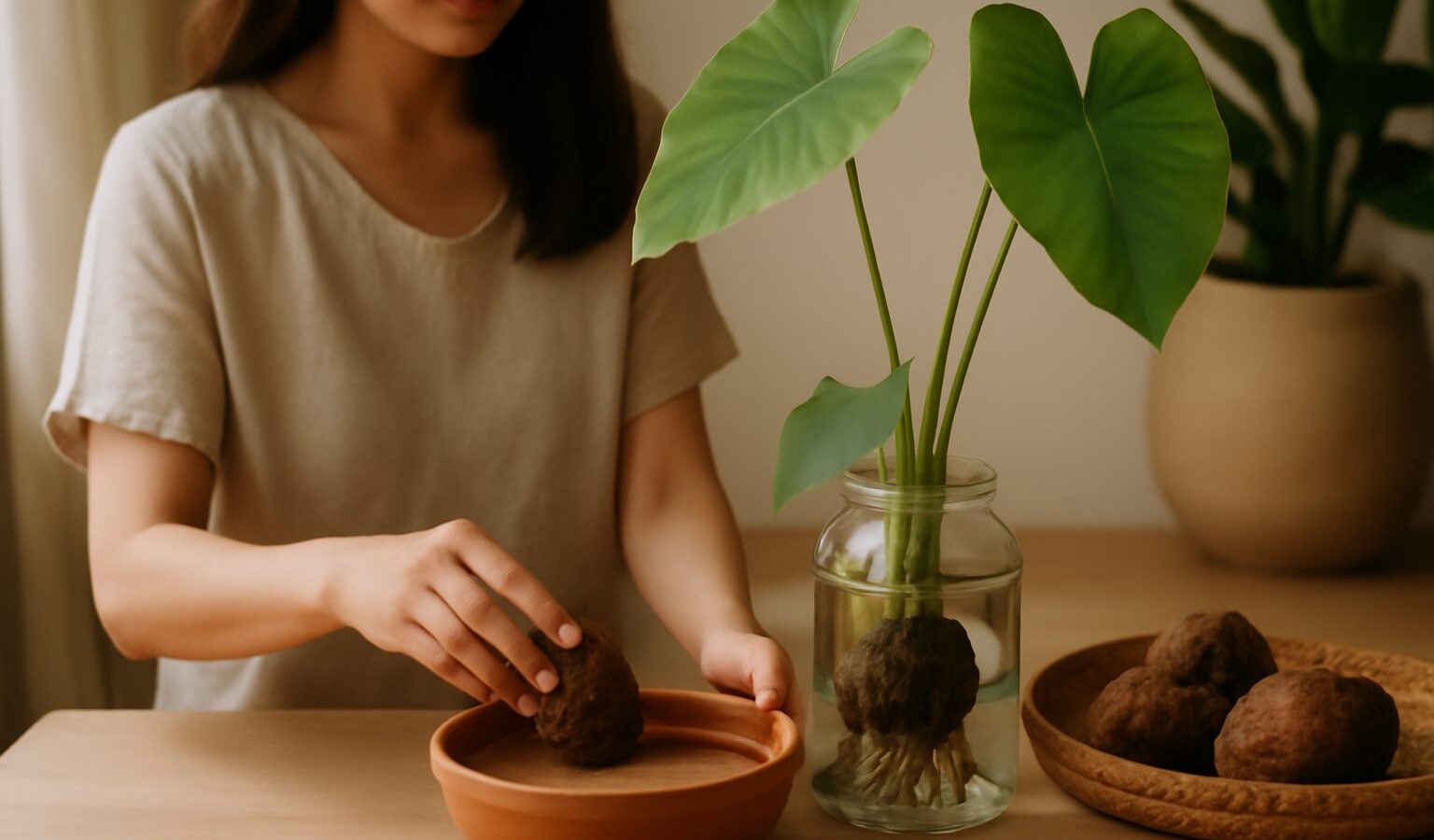
Taro is one of the few food crops that is happy with wet feet. In its traditional growing regions it is often planted in flooded paddies, which makes it a natural fit for a water tub on a balcony or a patio. If you want to grow taro in water at home, the method is simple once the container, soil and water level are right. The main extra job in Singapore is making sure your water garden never becomes a mosquito breeding spot.
This guide focuses on container water growing for small homes. For a broader look at taro alongside tapioca in the ground, see our guide to growing taro and tapioca in Singapore.
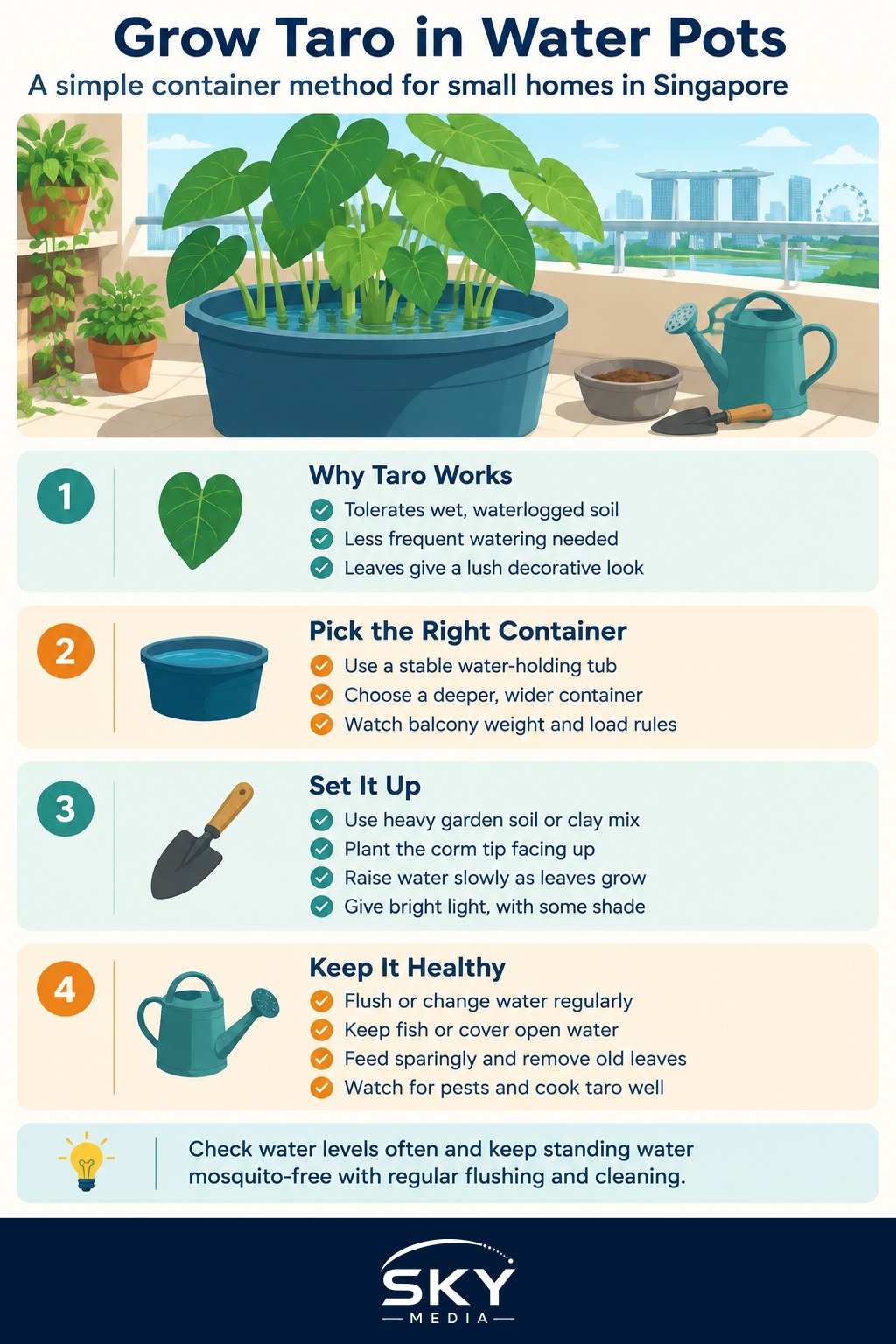
Why Taro Suits Water Containers
Taro (Colocasia esculenta, often called “yam” in Singapore kitchens) grows from a starchy underground corm and produces large, heart-shaped leaves. It tolerates waterlogged soil far better than most vegetables, because its roots cope with low oxygen conditions that would rot a chilli or tomato plant.
Growing it in standing water has some benefits for apartment gardeners:
- Less frequent watering. A tub holds a reserve of water, so you are not watering daily in hot weather.
- Steady moisture. Taro dislikes drying out, and a water container prevents the stress of dry spells.
- An attractive feature. The big leaves look like an ornamental pond plant, so a taro tub can double as a decorative corner.
One note before you buy planting material: several ornamental “elephant ear” plants look similar but are grown for their leaves, not for eating. Start from corms sold as food at a wet market or supermarket, or from a known edible variety from a nursery.
Choosing the Right Container
The container must hold water, be stable and be big enough for the corm to swell.
| Container option | Advantages | Drawbacks | Best for |
|---|---|---|---|
| Plastic tub or storage box without holes | Light, cheap, easy to find | Can become brittle in strong sun over time | First attempts and rented homes |
| Glazed ceramic pot with no drainage hole | Attractive, heavy and stable | Very heavy when filled, harder to move | Patios and ground-floor spaces |
| Half barrel or large planter with a pond liner | Generous root space, good yields | Needs a liner and more soil | Larger balconies and landed gardens |
| Regular pot standing in a deep tray | Uses pots you already own | Tray dries out fast and needs topping up often | Testing before committing to a tub |
Look for a container at least as deep as a standard bucket, and wider if you want more than one plant. Our guide on choosing the right pot size for your plant explains why root volume matters for yield. Before filling anything on a balcony, think about weight: wet soil and water are heavy, so keep large tubs near walls or supporting structures and follow your building or MCST (management corporation) rules about balcony loads and items in common corridors.
Setting Up Your Taro Water Tub
1. Choose the soil. Use a heavy soil such as garden loam or a clay-rich mix. Light potting mixes with lots of perlite, bark or coco peat tend to float and turn the water murky. If you only have potting mix, blend it with heavier garden soil and avoid floating ingredients.
2. Fill the bottom of the container. Add soil to roughly half to two thirds of the container’s depth. You can mix in a little well-rotted compost, but avoid large amounts of fresh manure or fertiliser, which can foul the water and feed algae.
3. Plant the corm. Push the corm into the soil with the growing tip facing up, so that it is just covered. If your corm has already sprouted, keep the shoot above the soil.
4. Add water slowly. Pour water gently over a plate or saucer placed on the soil so you do not wash the soil away. At first, keep the soil just saturated, with the surface wet but not deeply flooded, until shoots are established.
5. Raise the water level as the plant grows. Once the plant has several leaves, you can keep a shallow layer of water above the soil. Deep flooding over the crown of a young plant can rot it, so increase the level gradually.
6. Position for light. Taro likes bright light. A spot with several hours of sun works well, though very harsh afternoon sun on a hot west-facing balcony can scorch leaves. Partial shade in the hottest part of the day is fine.
Keeping Mosquitoes Out of Your Water Garden
This is the most important part of growing taro in water in Singapore. Any standing water can become a breeding site for Aedes mosquitoes, which spread dengue. The National Environment Agency (NEA) runs regular campaigns on this and can take action against homes where breeding is found, so check NEA’s current guidance on preventing breeding in water features.
Practical steps that home water gardeners commonly use:
- Flush the water regularly. Top up the tub so that it overflows, or replace part of the water, at least weekly. This disrupts the larval cycle.
- Keep small fish. Many water gardeners keep small larvae-eating fish such as guppies in larger tubs. Make sure the container is big enough and shaded enough that the water does not overheat.
- Cover exposed water. Fine mesh over open water around the plant stems can help, as long as it does not trap fish or block the leaves.
- Check for larvae. Look for small wriggling larvae near the surface. If you see them, flush or change the water right away.
- Clean saucers and trays. Any separate trays or catch basins also hold water, so empty and scrub them weekly.
Feeding, Maintenance and Common Problems
Feeding. Taro is a heavy feeder, but fertiliser in standing water can cause algae blooms. Many growers push a small amount of slow-release fertiliser into the soil near the roots, rather than sprinkling it on the surface, and do so sparingly. Follow the product’s label.
Topping up. Water evaporates quickly in Singapore’s heat. Check the level every few days and keep it consistent.
Salt and mineral buildup. Over months, residues can build up, especially if you use fertiliser often. Periodic flushing helps, and our guide on dealing with salt buildup in pots explains what to watch for.
Old leaves. Remove yellowing outer leaves at the base so they do not decay in the water.
Pests. Aphids and spider mites sometimes appear on leaves. Hose them off or wipe the leaves. Snails can visit tubs at ground level; pick them off by hand.
Handle with care. Raw taro, including leaves, stems and corms, contains calcium oxalate crystals that can irritate skin and the mouth. Wear gloves when handling cut parts, keep children and pets from chewing the plant, and always cook taro thoroughly before eating.
Harvesting Taro From a Water Container
Taro is a slow crop and takes many months to produce a usable corm. A common sign of readiness is when the leaves begin to yellow and die back. To harvest:
- Lower or drain most of the water so the soil is easier to work.
- Loosen the soil around the plant with your hands or a small trowel.
- Lift the main corm along with any small side corms (cormels).
- Set aside healthy side corms or the top of the main corm to replant.
Container corms are often smaller than field-grown ones, so treat your first harvest as a learning season. Refresh the soil before replanting, since taro uses up nutrients.
Getting More From a Small Space
Once you are comfortable with one tub, you can build a small water garden by placing several containers together, or pair a taro tub with other moisture-loving plants. For ideas on making the most of limited space with pots, read container gardening for small spaces.
Further reading: How to Grow Lotus in Pots on a Singapore Balcony