
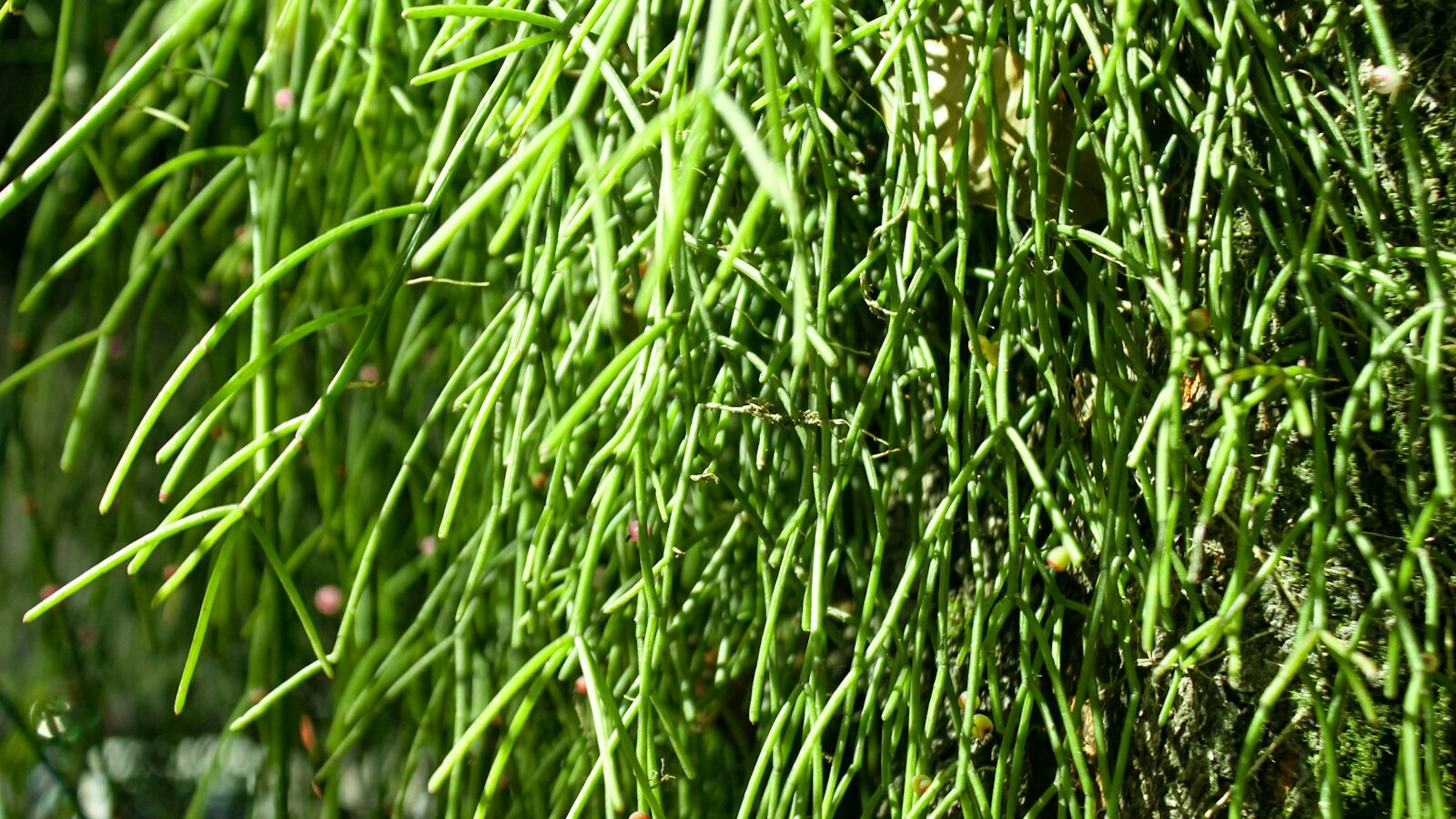
Rhipsalis looks nothing like the cactus most people picture. Instead of a spiny ball in a desert pot, you get cascading strands of slender green stems that spill over the side of a hanging basket like a soft, living curtain. It is often called mistletoe cactus because some species produce small white berries that resemble mistletoe.
The good news for Singapore growers is that rhipsalis comes from humid forests, not deserts. Our warm, moist climate suits it far better than it suits many true desert cacti. Good rhipsalis care comes down to understanding that difference: bright but filtered light, an airy mix that never stays soggy, and steady humidity.
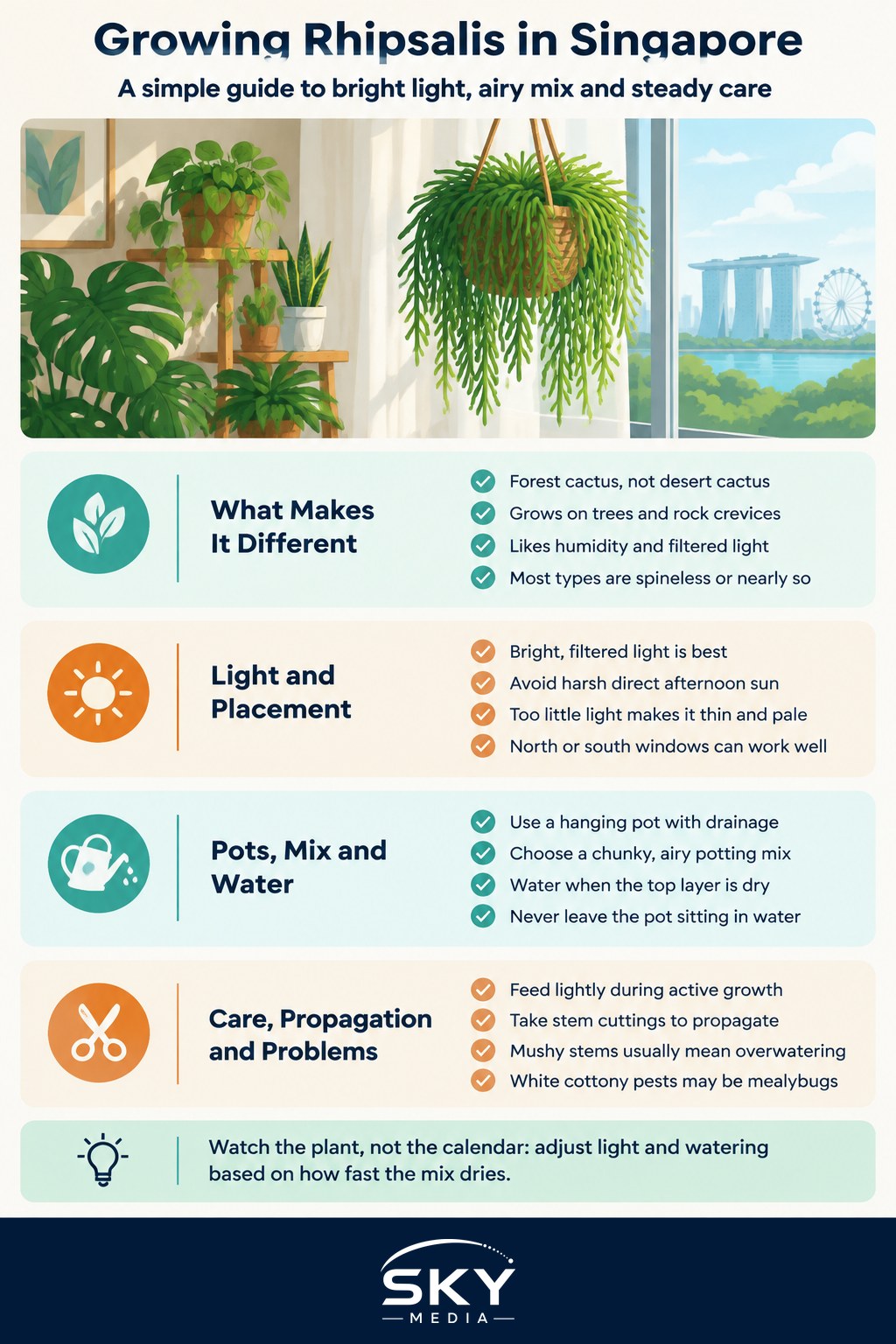
What Makes Rhipsalis Different From Desert Cacti
Rhipsalis is an epiphytic cactus. In the wild, it grows on tree branches and in rock crevices, clinging on with its roots and catching water and nutrients from rain, mist and decaying leaf litter. That lifestyle shapes everything about how you should care for it.
- It prefers filtered light, like sunlight dappled through a forest canopy, not full blazing sun.
- Its roots want air. In nature they are never sitting in wet, dense soil.
- It likes humidity, which Singapore provides naturally.
- Most types are spineless or nearly so, making them pleasant to handle and safe-feeling around homes.
There are many species and forms, from very fine, hair-like stems to thicker, chain-like or flattened segments. Care is broadly similar across the group, though thicker-stemmed types tend to tolerate a little more light and slightly drier spells.
If you have grown a Christmas cactus, you are already halfway there: both are forest cacti with similar needs. Our guide to caring for a Christmas cactus covers that close relative.
Light: Bright but Filtered
Light is where most rhipsalis problems start.
Ideal spots include a bright window that does not receive harsh direct afternoon sun, a covered balcony or corridor with good daylight, or under a shade net outdoors.
Too much sun shows up as yellowing, reddish or bleached stems. A bit of reddish blush can be a stress response and is not always a problem, but if stems look scorched or dry, move the plant to a shadier spot.
Too little light leads to thin, pale, stretched growth and a sparse look. Indoors far from a window, rhipsalis will survive for a while but rarely thrive.
In HDB flats, a north or south facing window with bright indirect light is often a good starting point, but every home is different. Watch the plant for a few weeks and adjust.
Hanging Pots, Potting Mix and Drainage
Rhipsalis is made for hanging displays. Its trailing stems look best when they can fall freely.
Pots. Choose a hanging pot with good drainage holes. Plastic pots hold moisture longer; terracotta and mesh-style baskets dry faster. In humid Singapore, faster-drying containers are often the safer choice, especially if you tend to overwater. Make sure your hanging hook and bracket can hold the weight of a freshly watered pot.
Potting mix. Never use plain garden soil or heavy, water-retaining mixes alone. A good rhipsalis mix is chunky and airy. Common combinations include:
- Orchid bark mixed with a little potting mix
- Cactus mix blended with perlite or pumice
- A mix of coco chips, bark and a small amount of compost
The aim is a medium that holds some moisture but drains quickly and lets air reach the roots.
Repotting. Rhipsalis tends to like being slightly snug in its pot. Repot only when roots are clearly crowded or the mix has broken down and stays soggy, usually every couple of years.
Watering and Humidity
Here is how rhipsalis compares with the plants people often confuse it with.
| Plant | Natural habitat | Light | Watering approach | Mix |
|---|---|---|---|---|
| Rhipsalis | Tropical forest, on trees | Bright, filtered | Water when top layer of mix is dry, never leave soggy | Chunky, airy, bark-based |
| Christmas cactus | Tropical forest, on trees | Bright, filtered | Similar, slightly drier after flowering | Chunky, airy |
| Desert cacti | Arid regions | Full sun | Let mix dry out completely between waterings | Gritty, fast-draining |
| Hoya | Tropical forest, often climbing | Bright, indirect | Water when mix is mostly dry | Chunky, airy |
How to water. Water thoroughly until it runs out of the drainage holes, then let the top portion of the mix dry before watering again. Stick a finger into the mix; if it feels dry a couple of centimetres down, it is time. In Singapore’s humidity, many growers find this means watering every few days to once a week, depending on pot type, mix and spot, but your plant and your home set the schedule, not the calendar.
Avoid waterlogging. Do not let a hanging pot sit in a saucer of water. Soggy roots are the most common way to lose a rhipsalis.
Humidity. Singapore’s natural humidity usually suits rhipsalis well. In an air-conditioned room, the air can become drier, so an occasional mist or grouping plants together can help.
Feeding. During active growth, a diluted balanced fertiliser or one made for orchids or epiphytes, applied occasionally, is plenty. Follow the product’s instructions and err on the weaker side; overfeeding can harm roots.
Rhipsalis pairs well with other humidity lovers, so if you enjoy it, you may also like growing hoyas or growing bromeliads, which share many of the same conditions.
Propagating Rhipsalis From Cuttings
Rhipsalis is one of the easiest plants to propagate, which makes it great for sharing.
- Take a cutting of several stem segments using clean scissors, ideally from a healthy, mature strand.
- Let it callus for a day or so in a shaded, dry place so the cut end seals.
- Plant it in a moist, airy mix, pressing the base in lightly. You can place several cuttings in one pot for a fuller look sooner.
- Keep it in bright shade and water lightly until new growth appears, which signals roots have formed.
Some growers also root cuttings in water before moving them to a mix. Either way, patience is the main ingredient.
Common Problems and Fixes
- Mushy, dark or rotting stems at the base: usually overwatering or a mix that stays wet. Remove affected parts, check the roots, and repot into a fresh, airy mix if needed.
- Shrivelled, wrinkled stems: often underwatering, or roots that have rotted and can no longer take up water. Check the roots before adding more water.
- Yellow or bleached stems: too much direct sun. Move to filtered light.
- Stems falling off easily: some shedding is normal, especially when the plant is moved, but heavy loss can signal stress from sudden changes in light or watering.
- Mealybugs and scale: look for white cottony spots or small bumps on stems. Wipe them off with a cotton bud dipped in rubbing alcohol, or use a suitable insecticidal soap, following the label.
Flowers and Berries
Mature rhipsalis may produce tiny cream or white flowers along the stems, followed by small, round berries on some species. They are subtle rather than showy, but finding them is a pleasant reward for good care. Steady light and a healthy root system give the best chance of flowering.
With bright filtered light, a chunky mix, sensible watering and a hanging spot where it can trail freely, rhipsalis care is relaxed and rewarding in Singapore. It is an easy way to bring a little rainforest into your home.
Frequently Asked Questions
Is rhipsalis safe around cats and dogs? Rhipsalis is generally regarded as low in toxicity to pets, but chewing any plant can upset a stomach. Hang it out of reach, as trailing stems tempt cats. If your pet eats a lot or seems unwell, call your vet and mention the plant.
Can rhipsalis stay outdoors during the monsoon rains? It can with cover. A covered balcony or corridor protects it from pounding rain and a waterlogged pot, which cause rot. If it is outdoors under shade net, make sure the pot drains freely and bring it under shelter during long wet spells.
Can rhipsalis live in an air-conditioned room or office? It can survive if there is good light, but cold, dry air-conditioned air is not ideal. Keep it away from vents, mist occasionally and water less often as the mix dries more slowly in cool rooms. Rotate it to a brighter spot now and then.
How do I make my rhipsalis look fuller? Give it bright filtered light and pinch or trim long stems to encourage branching. Cuttings can be rooted and planted back into the same pot to thicken the plant. Avoid overwatering, which leads to sparse, weak growth.
How fast does rhipsalis grow? Growth is steady rather than fast, and it depends on light, watering and feeding. Healthy plants in good conditions put out new stems over the growing season. Do not rush it with too much fertiliser, as overfeeding can harm the roots.
Further reading: Growing Lithops and Living Stones in a Humid Climate · Growing Echeveria and Rosette Succulents