
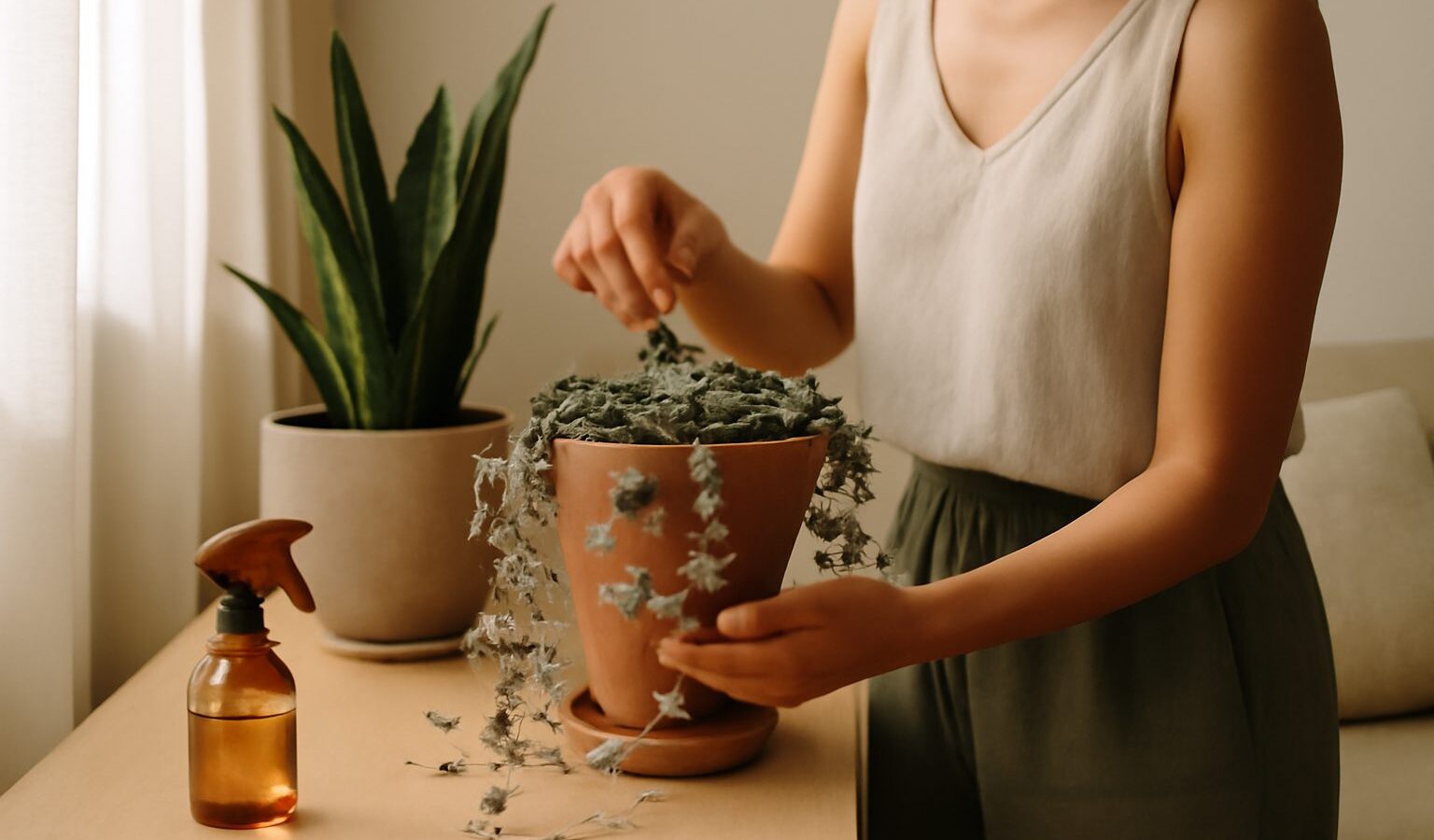
Draped from a high shelf or a hanging pot, the string of hearts is one of the prettiest trailing plants you can grow indoors. Its thin, wiry stems carry pairs of small, heart-shaped leaves marbled in silver and green, and in good light they can tumble down a metre or more. Also known by its botanical name Ceropegia woodii, the string of hearts is a semi-succulent, which means it stores water in its leaves and prefers to dry out between drinks. That single fact shapes almost everything about how you care for it in Singapore’s humid climate.
Understanding a Semi-Succulent Trailer
Because the string of hearts stores moisture in its leaves and its small tubers, it is far more forgiving of forgetfulness than of fussing. The most common way people kill it is kindness, watering too often in a pot that never fully dries. Treat it a little like a succulent and you will be rewarded with long, healthy strands.
It is also a reassuringly pet-friendly and child-friendly choice, being non-toxic. That makes it a safer pick than the toxic aroids for homes with cats, dogs or small children, though the trailing strands are tempting to bat at, so hang it well out of a playful pet’s reach. If you are building a low-risk plant shelf, it pairs naturally with a pilea chinese money plant, another non-toxic favourite.
Getting the Light Right
Light decides whether your string of hearts is lush and colourful or thin and pale. It wants plenty of bright, indirect light, and a good dose of it keeps the leaves closely spaced and brings out the silver marbling and, in strong light, a hint of purple on the undersides.
- Best spot: near a bright window, or on a sheltered balcony that gets gentle morning sun but is shaded from the harsh afternoon glare.
- Signs of too little light: long bare stretches of stem with widely spaced leaves, and faded, mostly green colour.
- Signs of too much: a plant baking in full midday sun can scorch, with brown or bleached leaves.
On a bright HDB balcony it often does beautifully in a hanging pot, where the strands can trail freely. Indoors, hang or perch it as close to a bright window as you can. If the strands grow long and sparse, more light is almost always the answer.
Watering the Right Way in Our Humidity
This is where local growers most often go wrong. Advice written for temperate homes assumes dry indoor air, but our climate is humid and soil stays damp far longer. Let the soil dry out almost completely before watering again.
- Check by feeling the soil or lifting the pot. A dry pot is noticeably light.
- When the soil is dry, water thoroughly until it drains from the bottom, then stop.
- Empty the saucer straightaway. Never let the pot sit in water.
Softening, shrivelling leaves usually mean thirst, and they plump back up within a day of watering. Yellowing, mushy leaves and stems mean the opposite, too much water, so let it dry out fully and ease your schedule. Any saucer or tray left with standing water can breed Aedes mosquitoes and dengue, so tip out excess water after watering and after rain, following NEA and Mozzie Wipeout habits. A gritty, free-draining mix, such as a potting mix cut with sand or perlite, gives you a real safety margin.
Humidity, Feeding and Keeping It Tidy
Unlike thirsty tropical plants, the string of hearts does not crave extra humidity, so skip the misting. Our ambient moisture is plenty, and misting a semi-succulent mainly invites rot. The one thing to watch is a very dry, air-conditioned room, though even there it copes better than most plants.
Feed sparingly. A balanced liquid fertiliser at half strength, once a month during the active growing period, is ample. Semi-succulents are light feeders, so more fertiliser will not mean faster growth, only a risk of burnt roots, so always follow the dose on the label.
To keep it looking full rather than stringy, you can trim long strands and lay the cuttings back on top of the soil to root, which thickens the plant at the crown. Turn the pot now and then so all sides get even light and trail evenly.
Propagating for a Fuller Plant or Free Gifts
The string of hearts is wonderfully easy to multiply, and propagating is the fastest way to a fuller pot.
| Method | How it works | Speed | Best for |
|---|---|---|---|
| Soil layering | Lay a strand on moist soil; nodes root where they touch | Moderate | Thickening the parent plant |
| Water propagation | Root cut strands in a glass of water | Slower, easy to watch | Beginners, teaching kids |
| Tuber planting | Pot the small round tubers that form along stems | Reliable | Making brand new plants |
For soil layering, simply coil a healthy strand on the soil surface and hold it in place with a bent paperclip so the leaf nodes sit against the mix. For water propagation, place cut strands in a glass and change the water every couple of days so it stays fresh, then pot up once roots appear. If you spot little round tubers, sometimes called beads, along the stems, you can plant these directly and each can grow into a new plant.
A Quick Troubleshooting Note
Most problems are watering-related. Shrivelled leaves mean underwatering and bounce back fast. Yellow, soft stems mean overwatering, so let it dry out. Sparse, leggy strands mean too little light, so move it brighter. Fungus gnats hovering around the pot are a sign the soil is staying too wet, so extend the time between waterings.
With bright light, a dry-then-drench watering habit and only occasional feeding, caring for string of hearts is genuinely easy, even for a self-declared black thumb. Once your first plant is trailing happily, it is hard to resist adding more greenery. For low-fuss colour in shadier corners, look at an aglaonema Chinese evergreen, and for a bold height contrast above your trailers, a bird of paradise plant makes a striking centrepiece. This is general guidance for home gardeners, so watch how your own plant responds and adjust to your space.