
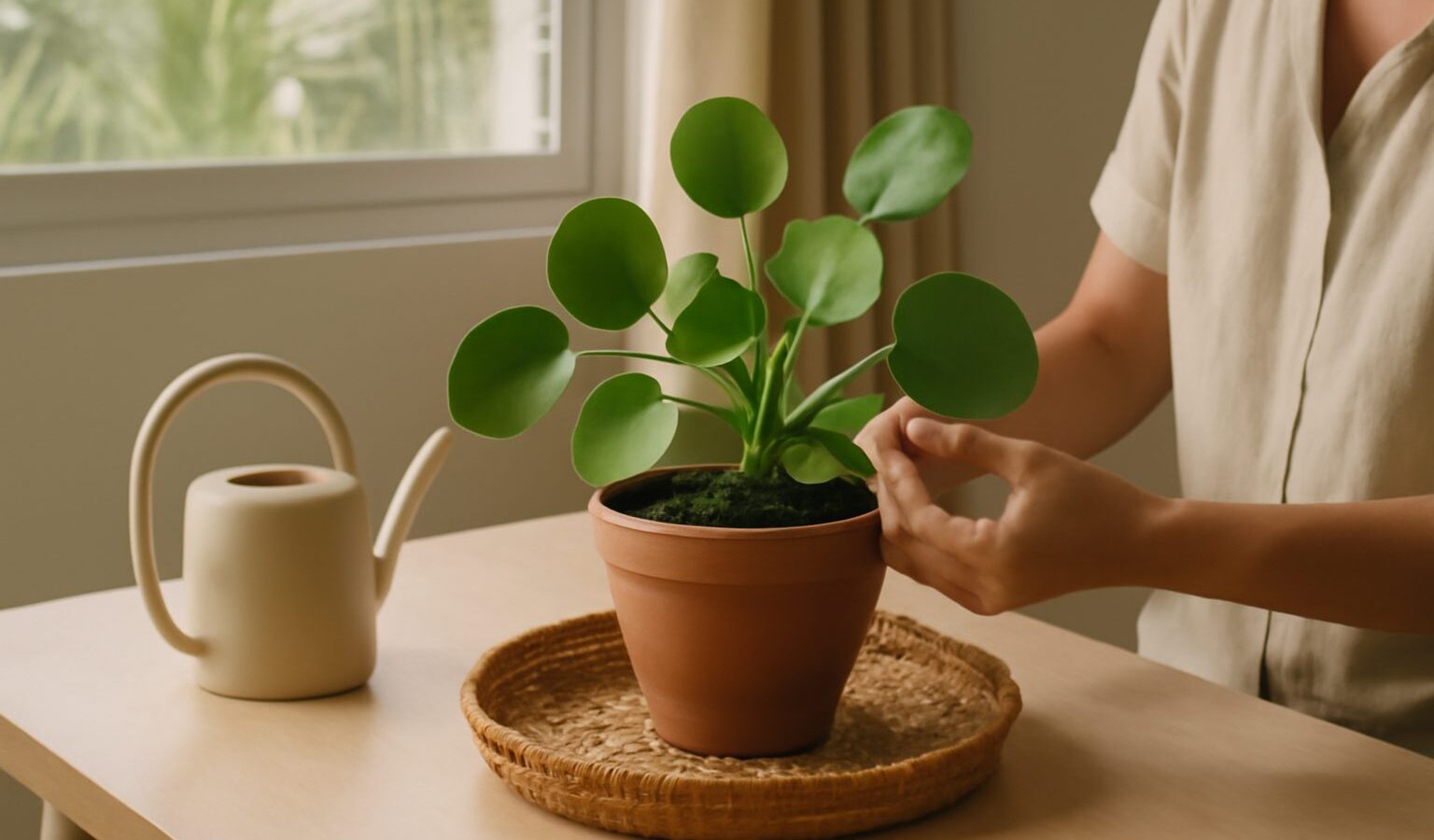
Few houseplants are as friendly and giving as the pilea chinese money plant. With its round, coin-shaped leaves held on thin stalks, it has an almost cartoonish charm, and it is famous for producing baby plants, or pups, that you can pass to friends. Also known as Pilea peperomioides, the pancake plant or the sharing plant, it is compact enough for the smallest HDB windowsill. This guide covers how to keep one thriving in Singapore, and how to turn a single plant into a whole shelf of them.
What Makes the Pilea Special
The pilea chinese money plant is a small, mounding plant that rarely grows taller than about 30 centimetres. Each leaf is a flat disc attached in the middle, so a healthy plant looks like a cluster of little green umbrellas. It is not a demanding plant, which makes it a lovely choice for beginners and black thumbs who have killed things before.
It is also a pet-friendly and child-friendly option, being non-toxic, so it suits households that cannot risk the toxic aroids. If you are choosing plants around curious pets, it sits comfortably alongside a string of hearts as one of the safer picks. That said, no plant is meant to be eaten, so it is still sensible to keep it out of reach of a determined toddler.
Light and Position for Round, Flat Leaves
Light is the single biggest factor in how attractive your pilea looks. In good light, the leaves stay round, flat and tightly packed. In poor light, the stems stretch, the leaves shrink and space out, and the plant looks sparse.
- Ideal spot: a bright windowsill with plenty of indirect light, such as an east-facing ledge that catches gentle morning sun.
- Avoid: harsh, direct afternoon sun through glass, which scorches the thin leaves and bleaches their colour.
- Corridors: a bright common corridor can work, but a very dim one will leave the plant leggy.
Pilea leaves naturally turn to face the light, so the whole plant leans towards the window over time. Give the pot a quarter turn every few days to keep it growing evenly and symmetrically.
Watering in Our Humid Climate
The pilea chinese money plant likes its soil to dry out a little between drinks. In Singapore’s humidity the soil holds moisture longer than the plant tag, often written for temperate homes, might suggest, so let the top layer dry before watering again.
- Feel the soil. When the top two to three centimetres are dry, water thoroughly until it drains from the bottom.
- Empty the saucer afterwards. Soggy roots quickly lead to yellowing lower leaves and root rot.
- In a bright, breezy spot expect to water every five to seven days; in a shaded, air-conditioned room, less.
Drooping leaves are the plant’s honest signal. If they droop and the soil is dry, it is thirsty. If they droop and the soil is wet, you have overwatered and should ease off. Never leave the pot sitting in a saucer of water, both for the roots and because standing water anywhere on a balcony can breed Aedes mosquitoes, so tip out saucers after watering and after rain in line with NEA advice.
Humidity, Feeding and Keeping It Neat
Humidity is rarely a worry here. Our moist air suits the pilea, so misting is unnecessary and can even encourage fungal spots on the leaves. The one thing to watch is aircon, which dries the air and can cause slightly crispy leaf edges in a bedroom or study that runs the aircon for long stretches.
Feed lightly during the growing period, which for us is most of the year. A balanced liquid fertiliser at half the recommended strength, applied once a month, is plenty. Over-feeding does more harm than under-feeding, so when in doubt, dilute more and follow the label.
To keep the plant looking full, wipe the leaves occasionally to remove dust, and pinch off any yellow or damaged leaves at the base. If your plant grows tall and bare at the bottom, it is usually a light problem, so move it somewhere brighter and it will bush out again.
Propagating the Pups
The best part of growing a pilea chinese money plant is how generously it multiplies. A happy plant sends up baby plants, called pups, both from the soil around the base and sometimes along the main stem.
- Soil pups: once a pup is a few centimetres tall with a couple of leaves, follow its stem down into the soil, and use a clean knife to cut it away with a bit of root attached. Pot it into its own small container of moist mix.
- Stem pups: these can be cut off and rooted in a small glass of water. Change the water every couple of days so it stays fresh and does not stagnate, then pot up once roots appear.
Here is a quick comparison of the two easy methods.
| Method | What you need | Speed | Best for |
|---|---|---|---|
| Soil pup division | A clean knife, a small pot | Fast, roots already formed | Reliable, hands-off growers |
| Stem pup in water | A small glass of water | Slower, roots form over weeks | Watching roots grow, teaching kids |
| Leaving pups on | Nothing, just patience | Fills the pot out fully | A single lush, bushy plant |
Within a few months a single plant can give you several gift-ready babies. It is this sharing habit that earned it the nickname sharing plant, and it makes the pilea a wonderful entry into growing your own indoor collection.
Common Problems at a Glance
Most pilea troubles trace back to light or water. Curled or cupped leaves often mean the light is too strong or the plant is stressed by heat, so move it slightly back from the glass. Pale, widely spaced leaves mean too little light. White, chalky spots on the underside of leaves are usually harmless mineral deposits the plant naturally releases, not a disease. Yellowing lower leaves point to overwatering, so let the soil dry more between waterings.
With a bright windowsill, a sensible watering rhythm and the odd feed, the pilea chinese money plant is one of the most rewarding beginner plants you can grow in a flat. Once you have a few pups going, you may want to expand into other easy greenery, such as a colourful aglaonema Chinese evergreen for shadier spots, or browse the best plants for your bedroom for calming, low-fuss options. This is general guidance for home growers, so watch how your plant responds and adjust to your own windowsill.