
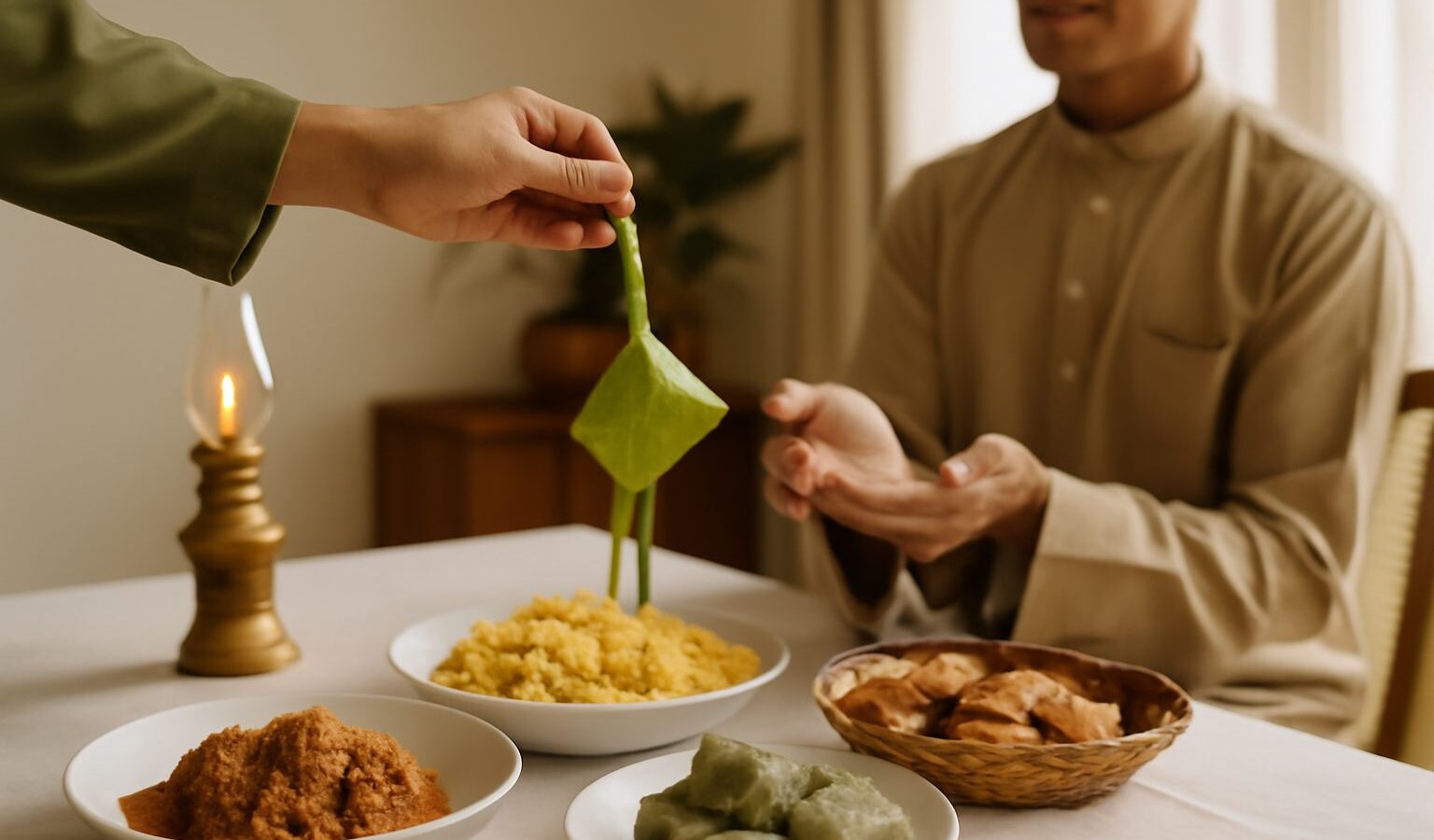
Hari Raya Puasa in Singapore is one of the most joyful celebrations of the year for the Malay and Muslim community, marking the end of the fasting month of Ramadan. In the weeks before, you will notice festive lights along Geylang Serai, a bustling night bazaar, and families shopping for new clothes and gifts. If you are new to Singapore or want to understand and take part respectfully, this guide explains what the day marks, how it is observed here, and the courtesies that make you a thoughtful guest.
Hari Raya Puasa, also known as Aidilfitri, follows the Islamic (Hijri) calendar, which is based on the lunar cycle. Because the Islamic year is shorter than the Gregorian calendar year, the date moves earlier by roughly ten to twelve days each year, so it can fall in any season. As the date is not fixed, always check the current year’s dates on the Ministry of Manpower (MOM) public holidays list rather than assuming a set date.
What Hari Raya Puasa Marks
Hari Raya Puasa marks the end of Ramadan, the month during which Muslims observe fasting from dawn to sunset. The words “Hari Raya Puasa” mean “the day of celebration after fasting” in Malay, and “Aidilfitri” is the term drawn from Arabic for the same festival.
For those who observed the fast, the day is a celebration of completing a month of discipline, reflection, and devotion, and a time to seek forgiveness, strengthen family ties, and give thanks. It usually begins with congregational prayers at the mosque in the morning, after which families gather. A common greeting is “Selamat Hari Raya”, meaning happy celebration, often followed by “Maaf Zahir dan Batin”, a heartfelt request for forgiveness for any wrongs, in word or deed. In Singapore the festival is observed primarily by the Malay and Muslim community, and neighbours, colleagues, and friends of all backgrounds often join in the visiting and well wishes.
How the Community Observes It in Singapore
The celebration in Singapore blends religious observance with warm family and community traditions. Common customs include:
- Morning prayers: Many begin the day with special congregational prayers at the mosque, dressed in their finest.
- Seeking forgiveness: Younger family members greet their parents and elders, often in a gesture called salam, to ask forgiveness and receive blessings.
- Open house: Families keep an open house, welcoming relatives, friends, neighbours, and colleagues to visit throughout the day and over the following weeks. Guests are treated to a spread of home-cooked dishes.
- Festive food: Tables are laid with favourites such as ketupat (rice cakes), rendang, lontong, satay, and an array of kuih and cookies. Sharing food is central to the celebration.
- Green packets (duit raya): Elders give money to children and younger guests in green packets, a gesture of generosity and blessing, similar in spirit to giving during festive seasons in other communities.
- New clothes: Many wear new traditional outfits, such as the baju kurung and baju melayu, often coordinated in matching colours within a family.
- Geylang Serai bazaar: In the lead up to Hari Raya, the Geylang Serai area hosts a large festive bazaar and light up, with stalls selling food, clothes, decorations, and gifts. It is a highlight of the season and open to everyone.
Visiting can continue for several weeks after the first day, so the spirit of the celebration lingers well beyond the public holiday itself.
The Public Holiday and What to Expect
Hari Raya Puasa is a gazetted public holiday in Singapore, observed on the first day of the celebration. If it falls on a Sunday, the following Monday is generally observed as a holiday in its place. Because the date shifts each year, confirm it on the MOM public holidays list for the current year.
On the day, most workplaces and schools are closed. Malls, supermarkets, attractions, and public transport generally operate as usual, though some may adjust their hours. Muslim-owned eateries and businesses may close so that owners can celebrate with family, while the Geylang Serai bazaar and many food stalls are lively in the run up to the day. If you plan to visit friends or shop for festive treats, the days before Hari Raya are the busiest and most colourful time to do so.
Respectful Etiquette for Guests
Being invited to an open house is a warm gesture, and a few simple courtesies help you take part respectfully. These are practical guidelines rather than strict rules.
| Do | Keep in mind | Why it matters |
|---|---|---|
| Return the greeting “Selamat Hari Raya” | Dress modestly, covering shoulders and knees | Simple, respectful dress suits a family and religious occasion |
| Remove your shoes before entering the home | Ask before bringing food, or bring halal treats | Many Muslim households keep a halal kitchen |
| Accept food and drink graciously | Avoid serving or bringing alcohol and pork | These are not consumed in observant Muslim households |
| Greet and pay respect to elders first | Wait to be shown where to sit | Honouring elders is central to the day |
| Enjoy the open house spirit and mingle | You need not stay long; visiting is casual | Hosts welcome many guests across the day |
You do not need to be Muslim to visit an open house or exchange greetings. A sincere “Selamat Hari Raya” is always appreciated. If you are hosting Muslim guests at other times of year, offering halal food and a space to pray shows the same thoughtfulness in return.
Why It Matters Here
Hari Raya Puasa is a time of gratitude, forgiveness, and togetherness. In multicultural Singapore, the open house tradition is also a bridge between communities, as friends and neighbours of every background are welcomed to share food and good wishes. That openness reflects the wider Singapore approach of allowing each community to celebrate its faith and heritage while others are invited to learn and take part.
For newcomers, the easiest way to appreciate Hari Raya Puasa is to experience it: stroll through the Geylang Serai bazaar, accept an invitation if one is offered, and return a warm greeting. Curiosity and courtesy are always welcome.
Explore more
To see how communities celebrate side by side in Singapore, read racial and religious harmony in Singapore. For how this and other festival holidays fit into the year, see our Singapore public holidays guide. Both offer helpful context for anyone settling into life here.