
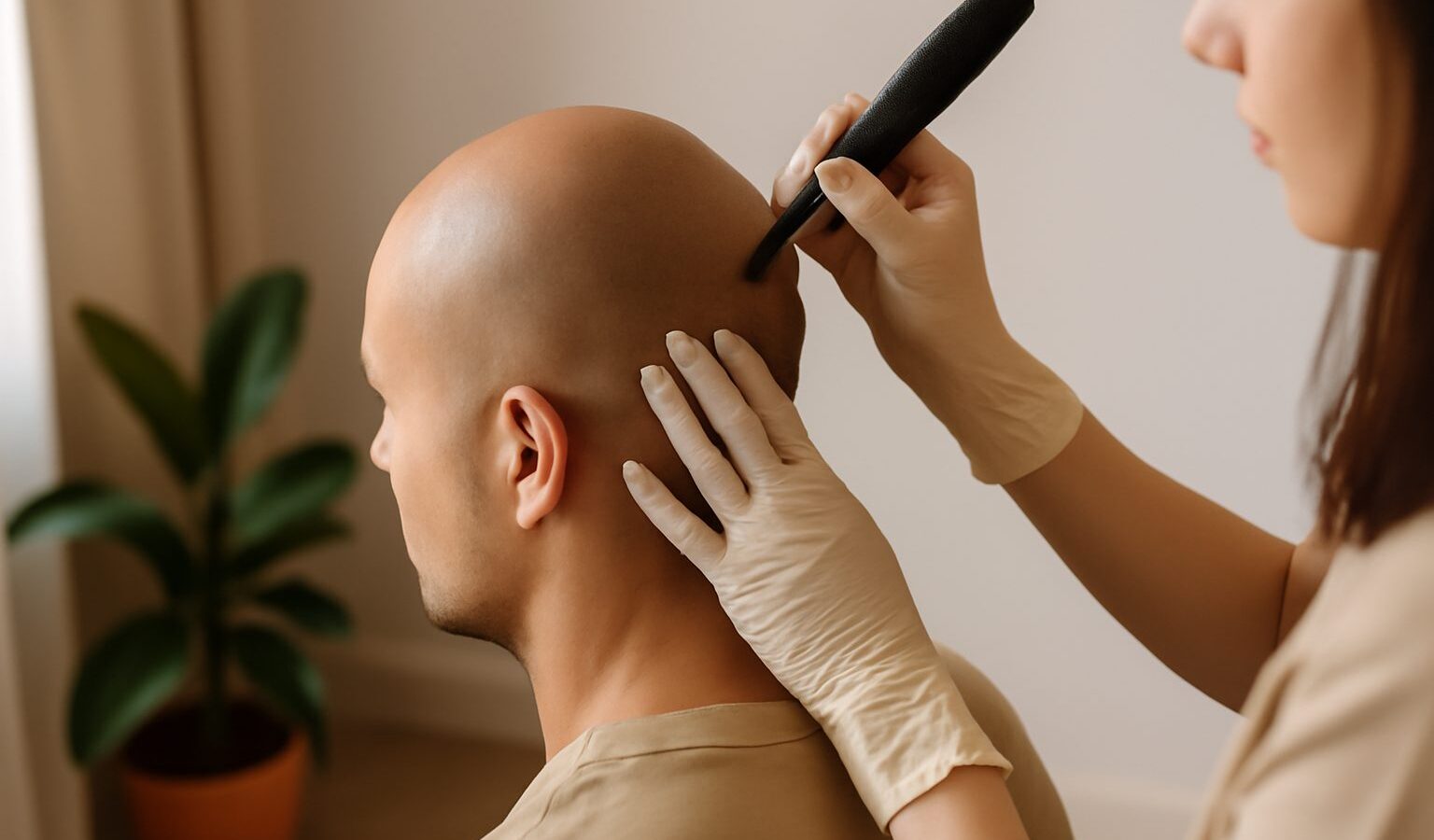
Scalp micropigmentation in Singapore has grown from a niche service into a well-known option for people dealing with thinning hair, receding hairlines and bald patches. Often shortened to SMP, it is a cosmetic tattoo technique that places tiny dots of pigment into the scalp to imitate the look of short hair follicles or to reduce the contrast between hair and skin.
It does not grow hair, and it is not a medical treatment for hair loss. What it does is change how hair loss looks. This guide explains how it works, who tends to be a good candidate, what the process and aftercare involve, and what to check before you book.
How Scalp Micropigmentation Works
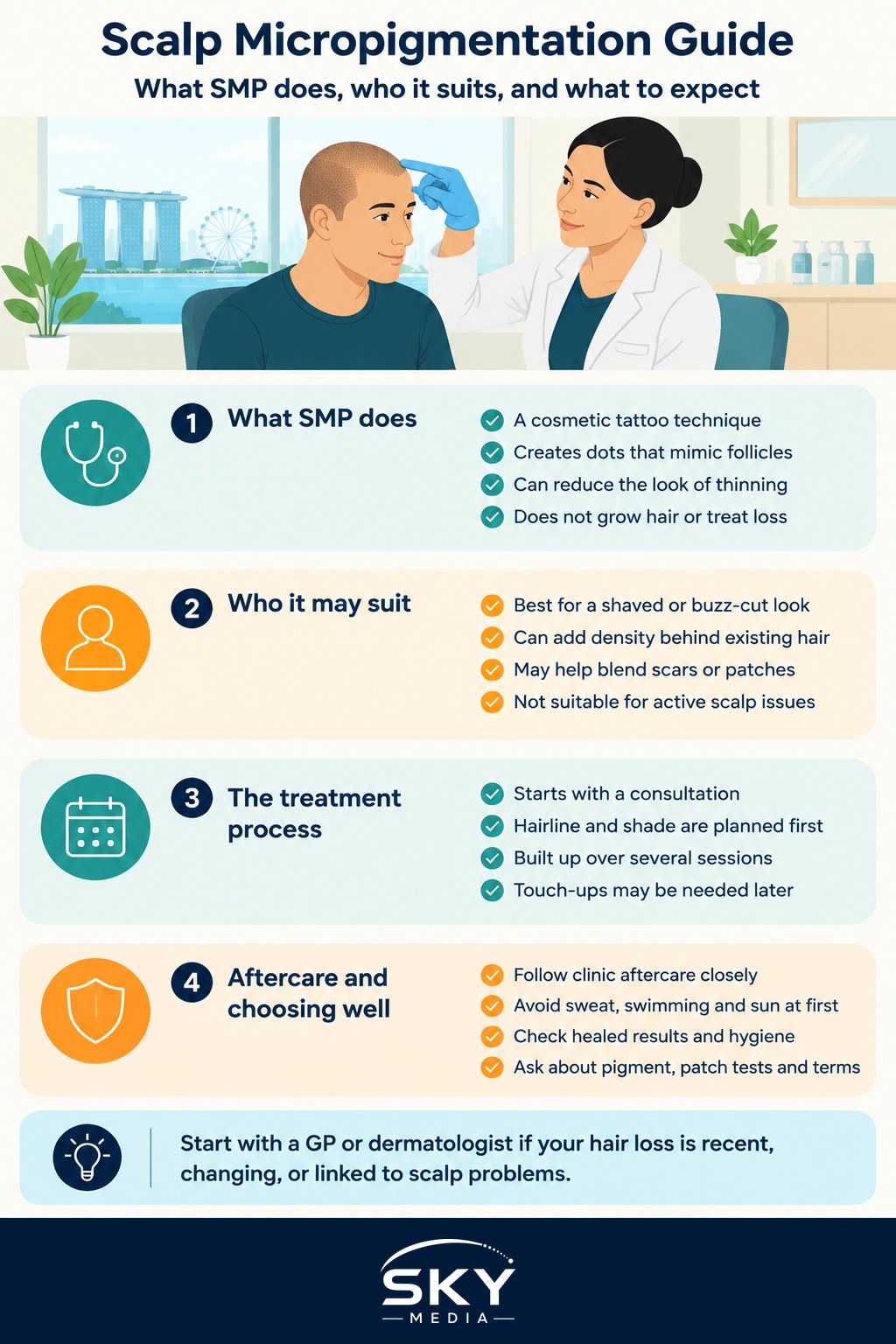
A practitioner uses a fine needle to deposit pigment into the upper layers of the scalp skin. The dots are built up in layers, usually over a few sessions, to create the impression of a closely shaved head or to add density behind existing hair.
Key points to understand:
- It is a form of tattooing. Pigment is placed in the skin, so it is a semi-permanent to long-lasting change. It fades gradually over time and may need touch-ups.
- The pigment and depth differ from a body tattoo. Practitioners typically use pigments and techniques intended for the scalp, aiming for small, natural-looking dots rather than solid colour.
- Shade matching matters. The pigment is matched to your hair colour and skin tone. A poorly chosen shade or dots placed too deep can look blurred or take on an unnatural tint over time.
- Results are flat. SMP creates the look of hair, not texture. Up close, there is nothing to touch.
Who It Suits, and Who Should Think Twice
SMP works best when the goal matches what the technique can actually deliver.
| Situation | How SMP may help | Things to consider |
|---|---|---|
| Advanced hair loss, happy with a buzz-cut look | Recreates the look of a closely shaved head and a defined hairline | You commit to keeping hair very short to keep the look consistent |
| Diffuse thinning with longer hair | Adds density behind existing hair so the scalp shows less | Works as camouflage; does not stop ongoing thinning |
| Scars from surgery, injury or hair transplant | Can blend scars into surrounding hair or a shaved look | Scar tissue takes pigment differently; ask about scar experience |
| Patchy hair loss from conditions such as alopecia areata | May camouflage patches in some cases | Hair loss pattern can change; speak to a doctor first |
| Active scalp problems, such as inflammation or infections | Usually not suitable until treated | Get the scalp condition assessed and treated first |
People who often find SMP suits them include those who have accepted a shaved style and want it to look fuller and sharper, people who want to reduce scalp shine through thin hair, and transplant patients who want to soften strip scars.
You may want to pause and think further if:
- Your hair loss is recent or changing quickly, and the cause has not been checked.
- You are unsure about committing to a look that is hard to reverse.
- You have a history of keloid scarring, skin conditions on the scalp, or you are on medication that affects healing or bleeding.
- You are pregnant or have a health condition that needs medical clearance.
Because hair loss has many possible causes, from genetics to thyroid issues, nutrition and stress, it is sensible to see a GP or dermatologist first. A clinic-based scalp analysis can give some insight, but a doctor is the right person to diagnose underlying conditions. This article is general information and not medical advice.
What to Expect From the Process
Every practitioner works a little differently, but the process usually follows a similar pattern:
- Consultation. Discussion of your goals, hair loss pattern, hairline design and pigment shade. A good practitioner will be honest if SMP is not right for you.
- Hairline design. For buzz-cut looks, the hairline is drawn and adjusted with you before any pigment goes in. Age-appropriate, slightly irregular hairlines tend to look more natural than very straight, low ones.
- First session. A base layer of dots is applied. Expect some redness and tenderness afterwards.
- Follow-up sessions. Additional layers build density and refine the shade, usually spaced out to allow healing in between.
- Touch-ups in future. Pigment softens over time, especially with sun exposure, so occasional touch-ups are common.
Ask the clinic how many sessions they expect for your case, how much time to leave between them and what the total commitment looks like, including touch-ups. Pricing varies widely by provider and by how much of the scalp is treated, so get a clear written quote.
Aftercare in Singapore’s Heat and Sun
Aftercare matters more in a hot, humid climate where sweating and sun exposure are part of daily life. Your practitioner’s instructions come first, but common advice includes:
- Avoid washing, scrubbing or wetting the scalp for the period your practitioner recommends after each session.
- Avoid heavy sweating, gym sessions, swimming pools, saunas and the sea while the skin heals.
- Do not pick at small scabs or flakes.
- Protect your scalp from strong sun with a hat once healed, and ask about using sunscreen on the scalp, since UV can fade pigment.
- Avoid harsh scalp exfoliants on treated areas. If you use scalp scrubs as part of your routine, ask your practitioner when and how it is safe to resume.
Contact your practitioner or a doctor if you notice increasing pain, swelling, pus, fever or anything that looks like infection or an allergic reaction.
Choosing a Practitioner or Clinic
Because SMP is hard to undo, the practitioner’s skill matters a great deal. When comparing options, check:
- Portfolio of healed results, not just fresh photos taken right after a session. Ask to see results months or years later.
- Experience with your situation, whether that is a full buzz-cut look, density for longer hair, scars or a particular skin tone.
- Hygiene practices, such as single-use needles, gloves and a clean, organised work area.
- Pigment information. Ask what pigment they use and how it is expected to age.
- Patch test option if you have sensitive skin or allergies.
- Clear terms on touch-ups, revisions and refunds, in writing.
- Honest consultation. Be cautious of anyone who promises results that look exactly like real hair from every angle, or who pressures you to commit on the spot.
Living With Scalp Micropigmentation Long Term
SMP is low maintenance day to day, but it is a long-term commitment. If you have a buzz-cut style, you will need to keep your hair trimmed short to keep the look consistent. Your natural hair loss may continue, so the design might need adjusting in future. Fading and colour shift are possible over the years, and removal, if you change your mind, usually involves laser treatment that can be slow and is not guaranteed to be complete.
Alongside SMP, a healthy scalp routine still matters. Our guide to scalp care and dandruff covers the basics that keep treated and untreated skin comfortable. Approached with realistic expectations and a skilled practitioner, scalp micropigmentation can be a confidence boost for the right person.
Frequently Asked Questions
Does scalp micropigmentation hurt? Most people feel some discomfort, though how much varies with the person and the area treated. You can expect redness and tenderness afterwards. Ask the practitioner what to expect, and raise any concerns about pain at the consultation.
Can scalp micropigmentation be removed if I change my mind? Removal is possible but not simple. It usually involves laser treatment that can be slow and is not guaranteed to be complete. Because it is hard to reverse, think carefully before committing to the look.
Should I see a doctor before booking scalp micropigmentation? Yes, ideally, especially if your hair loss is recent or changing quickly. Causes range from genetics to thyroid issues, nutrition and stress, and a GP or dermatologist is the right person to diagnose them. A doctor can also advise if you are on medication or have scalp conditions.
Will scalp micropigmentation stop my hair from thinning further? No. SMP does not grow hair and is not a medical treatment for hair loss. It only changes how the loss looks. If your natural hair keeps thinning, the design may need adjusting in future.
How can I tell if an SMP clinic is trustworthy? Ask to see healed results taken months or years later, not just fresh photos. Check hygiene practices such as single-use needles and gloves, and get touch-up and refund terms in writing. Be cautious of anyone who pressures you to commit on the spot.