

Some days your toddler will not let you out of sight for a second. They cling to your leg at a family gathering, cry the moment you step into the kitchen, and dissolve into tears at drop off. If you feel touched out, frustrated and a little worried all at once, that is a completely understandable mix. A clingy child in Singapore is not being naughty or manipulative. Clinginess is a normal, if exhausting, part of early childhood, and it usually reflects a child who feels safest with you.
Clinginess tends to come and go in waves. It often peaks during the toddler years and flares up again at times of change, such as starting infant care, welcoming a new sibling, moving home or coming back from a holiday. It can also spike when a child is unwell, overtired or simply going through a developmental leap. Understanding that it is a phase, not a permanent state, takes some of the pressure off.
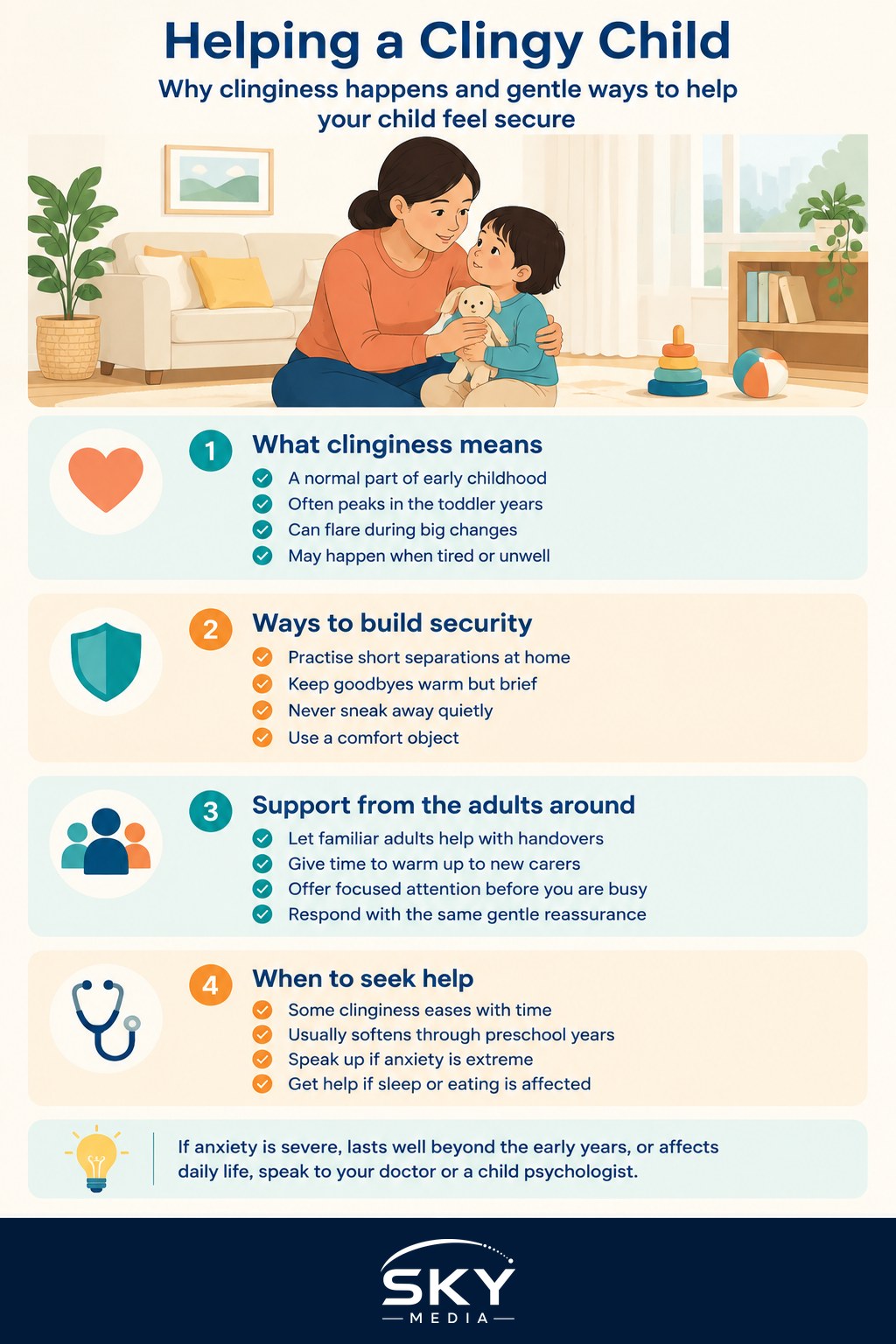
Understand What Clinginess Is Telling You
At its heart, clinginess is about security. Your child is learning that you can leave and come back, and that understanding takes time to settle. Until it does, being apart from you can feel genuinely frightening to a small child. Responding with warmth rather than frustration is what slowly builds the confidence they need to venture out.
It helps to know that clinginess is closely linked to separation anxiety, which most young children experience to some degree. Meeting it with reassurance does not spoil a child or make them more dependent. In fact, children who feel securely attached tend to become more independent over time, because they trust that their base is solid. You may find it helpful to read more on dealing with separation anxiety in children.
Gentle Ways to Build Security
You cannot force a clingy child to be brave, but you can create the conditions that help confidence grow. Small, consistent steps work far better than pushing a reluctant toddler into situations that overwhelm them.
- Practise short separations at home. Pop into another room for a minute, calling out cheerfully, then return. This teaches your child that you always come back.
- Keep goodbyes warm but brief. A long, anxious farewell signals that something is wrong. A confident hug, a clear “Bye, see you after lunch,” and a calm exit reassures more than lingering does.
- Never sneak away. Slipping off while your child is distracted may avoid tears in the moment, but it makes them cling harder next time, because they learn you might vanish.
- Build trust with new carers. Whether it is a grandparent, a helper or an infant care teacher, giving your child time to warm up with a familiar adult present makes handovers easier.
- Use a comfort object. A soft toy or small blanket can stand in for you and help your child feel anchored when you are not there.
- Fill their cup first. A little focused, unhurried attention before you need to be busy often reduces the clinging that comes from a child seeking connection.
Prepare your child for changes ahead of time in simple words. Before a new sibling arrives or infant care begins, talk about it gently and read stories about it. Knowing what is coming helps a small child feel less blindsided.
Be Patient and Know When to Seek Help
On the hardest days, clinginess can feel relentless, and it is normal to feel frayed. Try not to take it personally or read it as a sign you have done something wrong. Your child clings to you precisely because you are their safe place, which is a quiet testament to the bond you have built.
Consistency across the adults in your child’s life makes a real difference. In many Singapore households, grandparents and a helper share the daily care, so it helps when everyone responds to clinginess with the same gentle reassurance rather than teasing or shaming a child for their tears.
Clinginess overlaps with other tender toddler moments, and a calm, connected approach carries across them. You may also find it useful to read more on dressing and toddler independence as your child grows more confident doing things on their own.
Every child is different, and clinginess eases at its own pace as security grows, usually softening through the preschool years. That said, if your child’s anxiety is extreme, if it persists well beyond the early years, if it stops them from taking part in everyday activities, or if it comes with other worries such as trouble sleeping or eating, it is worth speaking to your doctor or a child psychologist. Reaching out is a caring, sensible step. There is no single right way to parent through this phase, and asking for support is part of doing it well.
Frequently Asked Questions
Is it a bad idea to sneak away while my child is distracted? Yes, it may avoid tears in the moment but makes them cling harder next time, because they learn you might vanish. Keep goodbyes warm and brief, with a clear message such as saying you will see them after lunch.
Will comforting my clingy toddler make them more dependent? No. Meeting clinginess with reassurance does not spoil a child. Children who feel securely attached tend to become more independent over time, because they trust that their base is solid.
How can I practise separations with my toddler at home? Pop into another room for a minute, calling out cheerfully, then return. This teaches your child that you always come back, and short, consistent steps work better than pushing them into situations that overwhelm them.
Why is my toddler suddenly clingier after a big change? Clinginess often flares at times of change, such as starting infant care, a new sibling, moving home or returning from a holiday, and also when a child is unwell or overtired. Talking through changes in simple words beforehand helps.
When is clinginess a reason to see a doctor or psychologist? If anxiety is extreme, persists well beyond the early years, stops your child joining everyday activities, or comes with trouble sleeping or eating, speak to your doctor or a child psychologist.