
Leaving a packet of chicken on the kitchen counter to thaw is a habit many households grew up with. In a Singapore kitchen, where room temperature often sits around 30°C and the air is humid, it is also one of the easiest ways to let bacteria multiply. Learning to defrost meat safely takes a little planning, but the three reliable methods are simple once you know them.
This guide covers fridge, cold water and microwave thawing, with tips for seafood, cooking from frozen and refreezing. It focuses on thawing; for general storage advice on keeping food fresh at home, check the guidance from the Singapore Food Agency (SFA), which publishes food safety advice for households.
Why the Counter Is the Problem
Bacteria grow fastest in what food safety bodies call the “danger zone”, roughly between 5°C and 60°C. When frozen meat thaws on the counter, the outer layer warms into that zone long before the centre has thawed. In a hot kitchen, that happens quickly.
The same applies to:
- Thawing in a sink of warm or hot water.
- Leaving meat in the car or on a sunny windowsill.
- Placing frozen food near the stove or rice cooker to speed things up.
Freezing does not kill most bacteria; it only pauses them. Once food warms up, they become active again. That is why the method matters, not just the end result.
The Three Safe Methods Compared
| Method | How long it roughly takes | Best for | Cook when? | Can you refreeze? |
|---|---|---|---|---|
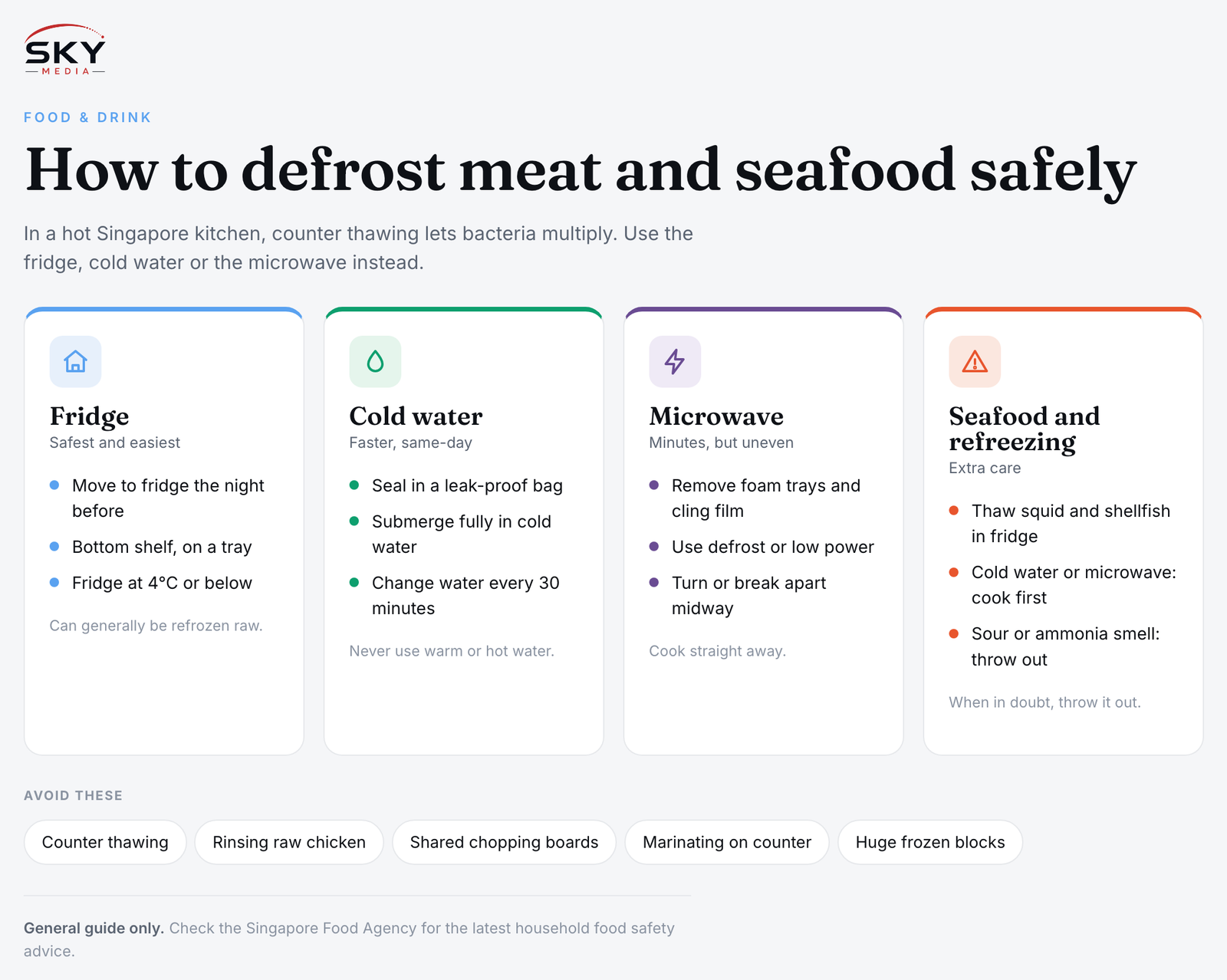
| Fridge | Many hours to a day or more, depending on size | Planned meals, whole chickens, large cuts, roasts | Within a short period, as long as it stays cold | Generally yes, if it stayed refrigerated (quality may drop) |
| Cold water | Under an hour for small packs, a few hours for larger items | Same-day cooking, chicken parts, fish fillets, prawns | Immediately after thawing | Only after cooking |
| Microwave | Minutes | Last-minute meals, small portions, mince | Immediately, as some parts may start cooking | Only after cooking |
Times vary with thickness, packaging and your appliance, so treat these as rough guides and check that the food is fully thawed before cooking.
Method 1: Thawing in the Fridge
The fridge is the safest and easiest method because the food never leaves a cold temperature. Your fridge should be at 4°C or below; a cheap fridge thermometer helps you check, since Singapore’s heat makes older fridges work harder.
How to do it well:
- Plan ahead. Move the food from freezer to fridge the night before, or earlier for big items.
- Put it on the bottom shelf in a tray, plate or container, so juices cannot drip onto ready-to-eat food.
- Keep it wrapped in its packaging or a sealed bag.
- Check it’s thawed through before cooking. Press the thickest part; there should be no icy core.
Ground meat, poultry and seafood thawed in the fridge are best cooked within a day or two; red meat cuts can usually last a little longer. If in doubt, cook sooner rather than later.
Method 2: Cold Water Thawing
When you forget to plan ahead, cold water is the faster safe option. Water transfers heat much better than air, so food thaws more quickly while staying cold.
Steps:
- Seal the food in a leak-proof zip bag, pressing out the air. If water gets in, it can carry bacteria and make the meat soggy.
- Submerge it completely in a bowl or sink of cold tap water. A plate on top keeps it under.
- Change the water about every 30 minutes so it stays cold. Singapore tap water is not especially cold, so you can add a few ice cubes.
- Cook immediately once thawed.
Never use warm or hot water. It may feel faster, but the outer layer sits in the danger zone while the inside is still frozen.
Method 3: Microwave Defrosting
Microwaves are handy for small portions and mince, but they thaw unevenly. Edges can begin to cook while the centre stays frozen, and those warm patches are ideal for bacteria.
To do it safely:
- Remove foam trays, cling film and plastic packaging that is not microwave-safe.
- Use the defrost setting or a low power level, and set it by weight if your microwave offers that.
- Turn, flip or break the food apart partway through.
- Cook it straight away, ideally right after defrosting.
Seafood: Extra Care in a Hot Kitchen
Seafood is delicate and spoils quickly, so the same rules apply with a few additions. For choosing and handling fresh catches, see our guide to buying and preparing fresh seafood.
- Fish fillets thaw well in the fridge overnight or in sealed bags in cold water. Thin fillets can sometimes be cooked straight from frozen.
- Prawns thaw fast. Place them in a sealed bag in cold water, or put them in a colander under cold running water for a short time if your recipe needs them quickly.
- Squid and sotong are best thawed slowly in the fridge for the best texture.
- Shellfish such as frozen mussels or clams should be thawed in the fridge and cooked promptly. Discard any with an off smell.
- Vacuum-packed fish: many packs advise removing the fish from the vacuum packaging before thawing. Follow the instructions on the label.
Trust your nose. A strong, sour or ammonia-like smell after thawing means the food should go.
Cooking From Frozen
You do not always need to thaw first. Many items can be cooked directly from frozen, such as thin fish fillets, prawns, small meat portions, dumplings and frozen nuggets. Expect cooking time to be longer, often noticeably so, and check that the centre is cooked through. A food thermometer is the most reliable way to check doneness for poultry and thick cuts. Avoid cooking large frozen items, such as a whole chicken, in a slow cooker, since they stay in the danger zone too long.
Refreezing and Common Mistakes
Refreezing rules depend on how you thawed:
- Thawed in the fridge and kept cold: can generally be refrozen raw, though texture may suffer.
- Thawed in cold water or the microwave: cook first, then freeze the cooked dish.
- Left out at room temperature for long: do not refreeze; when in doubt, throw it out.
Other mistakes to avoid:
- Rinsing raw chicken in the sink, which splashes bacteria around. Pat it dry with paper towels instead.
- Using the same chopping board for raw meat and ready-to-eat food without washing it in between.
- Marinating on the counter. Always marinate in the fridge; our guide on how to marinate meat and seafood well explains timing and safety.
- Freezing huge blocks. Portioning meat flat in freezer bags before freezing makes thawing faster and more even.
A Simple Weekly Routine
- When shopping, divide meat and seafood into meal-sized flat packs and label them with the date.
- Each evening, move tomorrow’s protein from the freezer to the fridge.
- Keep a few quick-thaw items, such as prawns and thin fillets, for nights you forget.
- Use cold water or the microwave only when you will cook straight away.
With a little routine, you can defrost meat safely every time, even in the hottest kitchen.
Further reading: How to Buy, Store and Cook Lap Cheong and Waxed Meats