
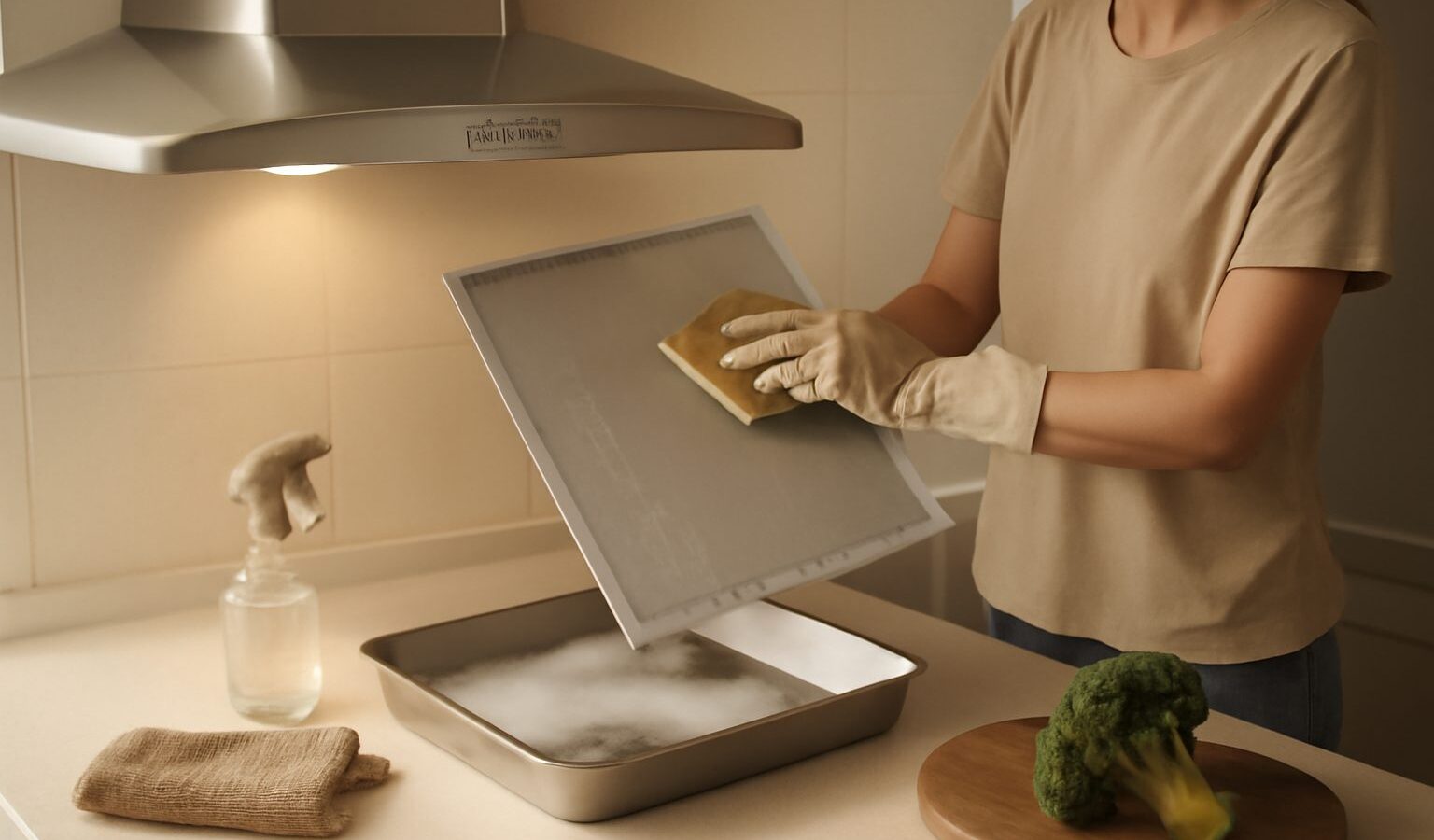
A range hood pulls smoke, steam, and grease out of your kitchen every time you cook. Because it does such heavy work, it slowly clogs with sticky oil that dulls its suction and drips onto the stove. Cleaning a range hood and its filters regularly keeps the airflow strong, the surfaces bright, and the whole kitchen smelling fresher. It is easier than most people expect.
Why Grease Builds Up So Fast
Local cooking leans on stir-frying, deep-frying, and simmering, all of which throw oil into the air. The hood is designed to catch that grease before it coats your walls and cabinets. The metal mesh filters trap the oil, and the fan draws the rest away. Over weeks the filters turn from shiny to brown and tacky, and the fan works harder to pull air through the blocked mesh. Neglected long enough, the grease hardens, drips, and even becomes a fire risk near an open flame. A regular clean prevents all of this.
Safety First
- Switch off and unplug the hood at the wall, or turn off its circuit breaker, before you remove any part. Never clean a hood with the fan running.
- Let the stove and any recently used surfaces cool completely so you do not burn yourself while reaching above them.
- Never mix bleach with vinegar, ammonia, or any degreaser. The fumes are hazardous, and hot grease jobs need only dish soap, bicarbonate of soda, and hot water.
- Open a window or run a fan for ventilation while you work.
- Dry every filter and surface fully before refitting. In our humid air, a damp filter left in place traps moisture and smells.
Removing and Cleaning the Grease Filters
The metal mesh or baffle filters do the hardest work, so start there.
- Slide or unclip the filters from the underside of the hood. Most release with a small spring catch or a pull tab. Check your manual if they resist.
- Fill your sink or a basin with very hot water. Add a generous squirt of dish soap and two to three tablespoons of bicarbonate of soda. The soap breaks down grease and the bicarbonate lifts baked-on residue.
- Submerge the filters and leave them to soak for 15 to 30 minutes. For heavy build-up, top up with fresh hot water halfway through.
- Scrub each filter with a soft brush or an old toothbrush, working into the mesh from both sides. The grease should loosen and rinse away.
- Rinse under hot running water until the mesh feels clean, not tacky.
- Shake off the water and lay the filters flat on a towel to dry completely before refitting.
If the filters are aluminium, avoid soaking them in a strong caustic oven cleaner, which can discolour the metal. Dish soap and bicarbonate of soda are safe and effective.
Cleaning the Hood Body and Fan
With the filters out, wipe down the rest of the unit.
- Spray a warm mix of dish soap and water, or a little diluted vinegar, onto a cloth and wipe the underside and exterior of the hood. Work in the direction of any brushed-steel grain.
- Reach the visible fan housing and blades carefully with a damp cloth wrapped around your finger. Do not force the cloth into the motor.
- For sticky corners, dab on a bicarbonate of soda paste, wait a few minutes, then wipe clean.
- Polish stainless steel surfaces with a dry microfibre cloth to remove streaks.
- Wipe the control buttons or dial gently, spraying cleaner onto the cloth rather than the panel.
Do not spray water or cleaner directly into the fan motor or the light fitting.
How Often to Clean
| Part | Light cooking | Frequent frying | Signs it is overdue |
|---|---|---|---|
| Grease filters | Monthly | Every 2 weeks | Brown, tacky, slow airflow |
| Hood underside and body | Monthly | Fortnightly | Visible grease film, drips |
| Fan housing and blades | Every 3 months | Monthly | Rattling, weak suction |
| Charcoal filter (recirculating) | Every 3 to 6 months | Every 3 months | Lingering smells after cooking |
If your hood recirculates air rather than venting outside, it uses a charcoal filter that cannot be washed. Replace it on schedule to keep odours down.
Tips to Keep It Cleaner for Longer
- Run the hood on a medium setting a few minutes before you start cooking and leave it on for a few minutes after, so it clears lingering steam and grease.
- Wipe the visible underside with a soapy cloth once a week to stop grease hardening.
- Use a splatter guard on the pan when frying to cut the amount of oil reaching the filters.
- Soak filters the moment airflow drops rather than waiting for a thick crust.
Cleaning the Hood Light
Most hoods have a light that shines onto the stove, and its cover collects a sticky film that dims the glow over time. Switch off the hood, let any recently used bulb cool, then remove the lens cover if it unclips. Wash it in warm soapy water, dry it fully, and refit. A clean light makes a surprising difference to how well you can see what you are cooking. Never touch a hot halogen bulb with bare fingers, as the oil from your skin shortens its life.
When to Call a Professional
If the fan rattles loudly, the suction stays weak after a thorough clean, or grease has seeped into the motor, it may be time for a service. A technician can open the housing safely and check the wiring, which is not a job to attempt yourself. A yearly professional clean is worth considering for households that fry heavily, as it clears grease from the ducting and internal parts you cannot reach.
A Fresher, Safer Kitchen
A clean range hood does more than look tidy. It clears smoke faster, protects your cabinets from a greasy film, and lowers the fire risk above your stove. Set a simple soaking routine for the filters, give the body a weekly wipe, and your extractor will keep pulling its weight for years.
Explore more: Clean your oven and stovetop · Deep clean your kitchen · Cleaning hacks for a tropical home