
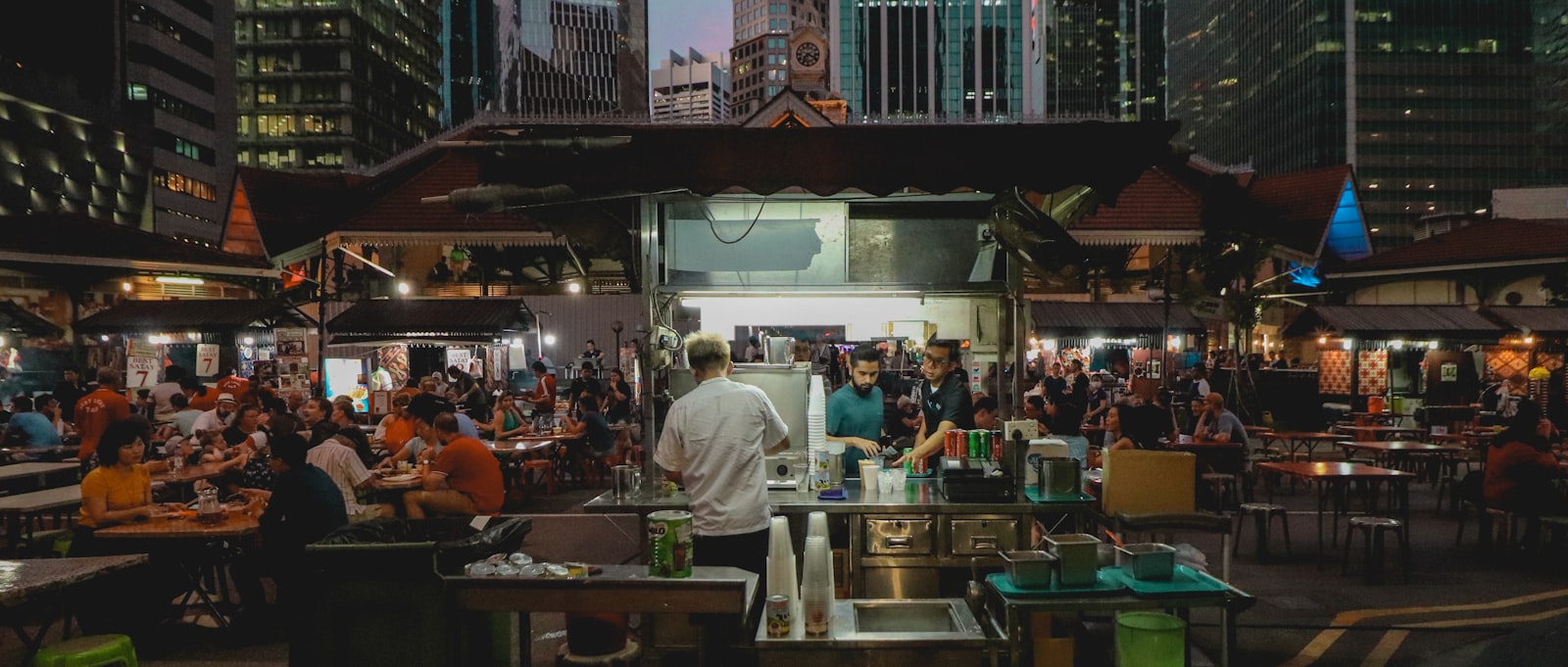
Learning how to eat street food safely is one of the best skills a traveller can pick up, because some of the finest meals of any trip are cooked on a cart, a griddle or a charcoal grill by the roadside. For Singaporeans raised on hawker culture, street food abroad feels natural and exciting, and there is no need to avoid it out of fear. With a little common sense you can enjoy the noodles, skewers, dumplings and snacks that give a place its flavour while keeping your stomach happy. This guide is general information to help you choose well, not medical advice.
Below we cover how to read a good stall, the freshness rules that matter most, water and ice, easing your system in, and what to do if things go wrong.
Read the stall before you order
The single most useful habit is to look before you buy. A good street food stall tells you a great deal in a few seconds if you pay attention.
- Go where it is busy: a stall with a steady queue of locals has high turnover, which means the food is fresh and does not sit around, and it means locals trust it. A crowd is the best hygiene rating there is.
- Watch it being cooked: the safest street food is prepared in front of you and served straight from the heat. If you can see the cook working, you can see the conditions.
- Look for care: notice whether the cook keeps their space reasonably clean, handles money and food with some separation, and cooks to order rather than reheating tired trays.
- Trust your nose and eyes: if a stall smells off, looks grubby, or has food sitting out lukewarm in the heat, simply move on. There is always another stall.
Turnover is the theme running through all of this. Popular, freshly cooked food that does not linger is the food least likely to trouble you.
The freshness rules that matter most
A few simple rules cover the majority of risk. Keep these in your head and you will make good calls almost automatically.
Eat it freshly cooked and piping hot. Heat is your friend, because thorough cooking deals with most of what makes people ill. Food that arrives steaming, straight from a hot wok, grill or fryer, is far safer than anything that has been sitting at room temperature. Be more cautious with foods that are cooked then left to cool, with pre prepared items on display in the open, and with raw or lightly cooked dishes such as raw seafood, salads and cut items that may have been rinsed in unsafe water.
For fruit, choose what you can peel yourself, such as bananas, oranges and mangoes, so you are eating the protected inside rather than a surface that may have been washed in questionable water or handled a lot. The comparison below is a rough guide, not a rigid rulebook.
| Generally lower risk | Be more careful with |
|---|---|
| Food cooked to order and served piping hot | Dishes left sitting out lukewarm |
| Busy stalls with high turnover | Quiet stalls where food lingers |
| Fruit you peel yourself | Pre cut fruit and open salads |
| Freshly boiled soups and stir fries | Raw or lightly cooked seafood |
| Sealed bottled or boiled drinks | Tap water and loose ice where water is unsafe |
Water, ice and hand hygiene
In many countries the tap water is not safe for visitors to drink, and this is where a lot of travellers slip up without realising. Stick to sealed bottled water or water that has been properly boiled, and use it for brushing your teeth too if the tap is not safe. Be wary of ice unless you are confident it is made from safe water, since a hot drink undone by dubious ice is a classic way to fall ill. Sealed, factory bottled and canned drinks are a reliable choice.
Your own hands matter as much as the stall. Street food is often finger food, and you will touch cash, railings and menus along the way. Carry hand sanitiser and use it before you eat, and wash with soap and water when you can. It is a small habit that quietly prevents a lot of trouble.
Ease your system in
Give your stomach a chance to adjust rather than throwing everything at it on the first night. When you arrive somewhere new, start gently. Try smaller portions, favour thoroughly cooked dishes, and build up as your system settles into the local food over a day or two. Diving straight into the most adventurous, richest or spiciest thing on the street the moment you land is asking a lot of a body still adjusting to a new place.
If you know you have a sensitive stomach, be a little more selective without shutting yourself off from the fun. Lean towards hot, freshly cooked dishes, go easy on raw items and very rich food, and pace yourself across the trip. You can absolutely enjoy street food with a delicate stomach; you simply choose with a bit more care.
Carry a few basics and know when to see a doctor
Pack a small kit so a minor upset does not derail your trip. Useful basics include oral rehydration salts to replace what you lose, any medicines you personally rely on, hand sanitiser and tissues. Rehydration is the most important thing if you do get an upset stomach, because staying hydrated is what helps you recover and feel human again.
Most travellers’ tummy troubles are mild and pass within a day or two with rest and fluids. However, do not tough out anything serious. Seek medical care if you have a high fever, blood in your stool, severe or persistent vomiting, signs of dehydration such as dizziness and very little urine, or symptoms that simply are not improving. This is general guidance, so when in doubt, see a doctor or a pharmacist, especially for children, older travellers or anyone with underlying health conditions.
Handled sensibly, street food abroad is not something to fear but one of the great pleasures of travel. Choose the busy stall, take it hot and fresh, mind your water and your hands, and go enjoy the best meals of your trip.