
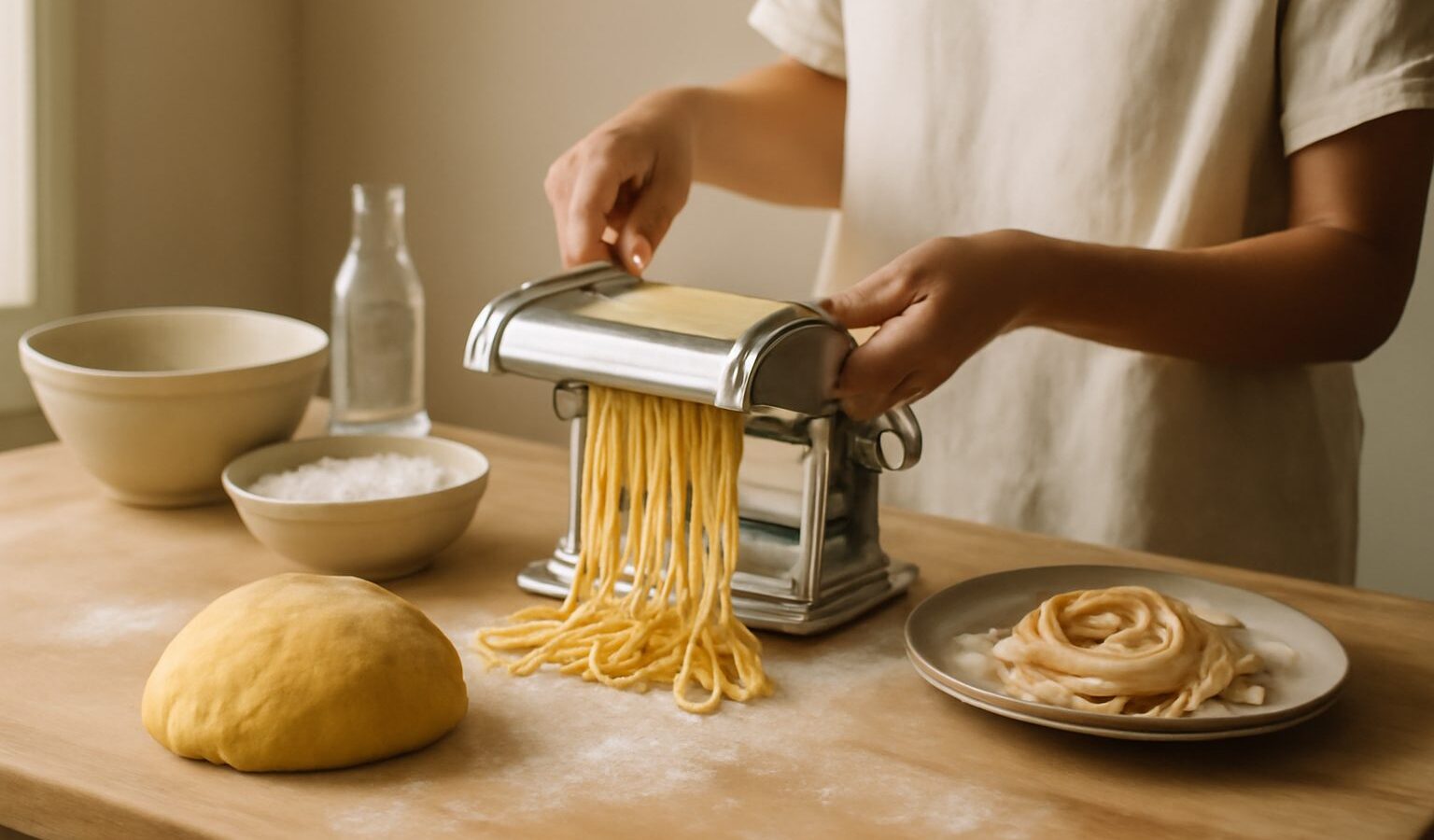
Fresh pasta feels like a restaurant luxury, yet it is one of the most rewarding things you can make with your hands. All it really takes is flour, eggs and a little patience. Making fresh pasta in Singapore comes with one extra character in the story, the humidity, which changes how your dough behaves. Once you understand that, you can turn out silky tagliatelle or delicate ravioli in a small HDB kitchen with nothing more than a rolling pin and a knife.
Ingredients and Equipment
The classic ratio is simple. Use 100g of plain flour and one large egg per person, so a batch for two is 200g flour and two eggs. Italian cooks often reach for finely milled 00 flour for a silkier texture, but plain flour works perfectly well and is easy to find. A pinch of salt and a small drizzle of olive oil are optional additions that some cooks like. That is genuinely all you need for egg pasta.
Please note the allergens here. This dough contains both gluten and egg, two of the most common allergens, so it is not suitable for guests who avoid either. An eggless version made from semolina and warm water is possible if you need it, though the texture is firmer and chewier.
For equipment you can keep things minimal. A clean work surface, a rolling pin, a sharp knife and a bench scraper will get you a long way. A hand cranked pasta machine makes rolling faster and more even, but it is not essential. A large pot for boiling and a slotted spoon or spider for lifting the cooked pasta round out the kit. If you are curious about egg handling and freshness in general, our guide to cooking perfect eggs every way is a useful companion read.
Method, Humidity and Common Pitfalls
Tip the flour onto your surface and make a well in the centre. Crack the eggs into the well, then use a fork to beat them gently, slowly pulling in flour from the walls of the well until the mixture is too thick to stir. Now switch to your hands and bring it into a shaggy ball. This is where Singapore humidity matters. Our flour absorbs moisture from the air, so on a damp day you may need a little extra flour, while on a drier day a teaspoon of water can help a stiff dough come together. Add adjustments slowly, because it is far easier to add than to take away.
Knead the dough firmly for about eight to ten minutes until it is smooth, elastic and springs back when pressed. Wrap it tightly in cling film and let it rest at room temperature for at least thirty minutes. This rest relaxes the gluten and makes rolling far easier. Do not skip it. In a warm kitchen you can rest it in the fridge to stop the surface drying out, then bring it back to room temperature before rolling.
Rolling is the meditative part. Cut the dough into pieces, keeping the rest covered so it does not dry out, which happens quickly in air conditioning. Roll each piece thinly on a lightly floured surface, turning and flipping often, until you can almost see your hand through it. Dust with flour, fold loosely and slice into ribbons for tagliatelle, or cut sheets for lasagne and filled pasta. Unfurl the ribbons and toss them in a little flour or semolina so they do not stick together in the humidity.
Cooking fresh pasta is fast. Bring a large pot of well salted water to a rolling boil, add the pasta, and cook for just two to four minutes depending on thickness. Fresh pasta is ready when it floats and tastes tender with a slight bite. Reserve a cup of the starchy cooking water before draining, as a splash of it helps a sauce cling beautifully.
A few pitfalls to watch. If your dough is sticky and tacky, it usually needs more flour or a longer knead. If it tears while rolling, it may be too dry or under rested. Filled pasta leaks if you trap air inside, so press out the air and seal the edges firmly with a dab of water. Store fresh pasta in the fridge for a day dusted with flour, or freeze it on a tray first before bagging so the strands do not clump. Do not leave egg dough sitting out in a warm kitchen for hours.
Fresh pasta pairs naturally with simple sauces that let the texture shine, from butter and sage to a light tomato base. For more on classic pairings and regional style, browse our overview of Italian food in Singapore, and if you are cooking for guests, our tips on hosting a simple dinner party at home will help you plan the rest of the meal.