
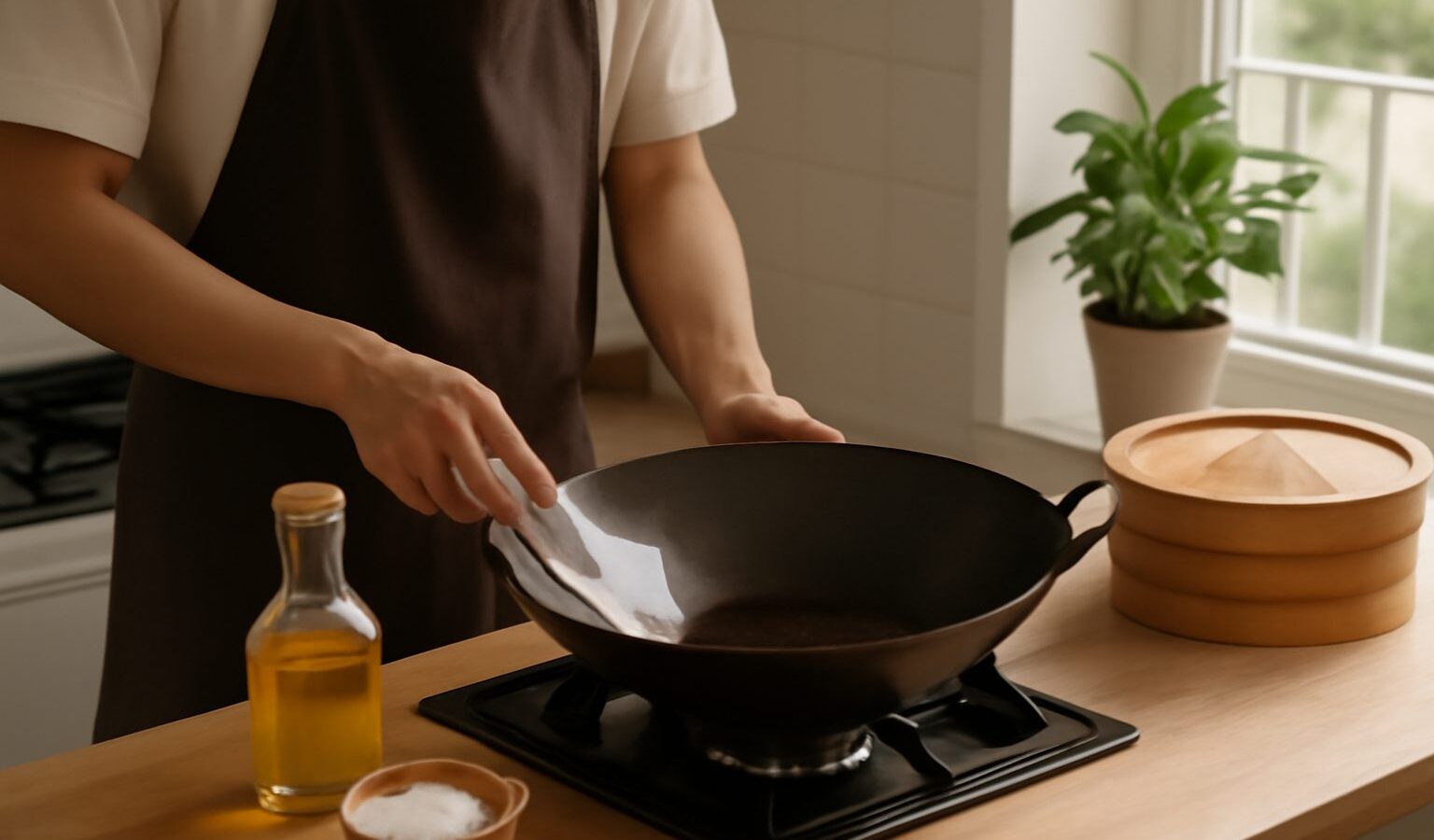
The wok is the heart of home cooking across much of Asia, and a well-kept one is a joy to use: food slides around freely, cleanup takes seconds, and you get closer to that smoky char we call wok hei. A neglected one rusts, sticks and frustrates. The difference is seasoning and a few simple habits. This guide to wok care in Singapore walks you through seasoning a new carbon-steel wok, building up its natural non-stick layer, and keeping rust at bay in our humid weather.
Most of this applies to carbon-steel and cast-iron woks, the traditional choice you will find in kitchenware shops near the wet market. Non-stick woks are a different story and are covered briefly at the end.
Choosing the Right Wok for Your Hob
Before seasoning, make sure the wok suits your kitchen. If you cook on gas, a round-bottomed wok sits in the flame beautifully and lets you toss food. If you are on an induction or flat electric hob, which is common in newer HDB flats, choose a flat-bottomed wok so it makes proper contact and heats evenly. Carbon steel is the sweet spot for home cooks: it is light enough to lift and toss, heats fast, and builds a non-stick patina over time. Cast iron holds heat well but is heavy. A wok around 30 to 36cm suits most households and still fits a single burner.
Avoid pre-seasoned non-stick woks if you want that traditional char; the coating cannot take the very high heat that gives stir-fries their flavour.
Seasoning a New Carbon-Steel Wok
A new wok usually arrives coated in a factory oil to stop rust in transit. You must scrub this off first with hot water, detergent and a scourer. This is the one and only time you will deliberately scrub a wok hard. Rinse and dry it fully.
Then season it to create the first layer of patina:
- Set the dry wok over medium to high heat until the surface changes colour, turning bluish or straw-toned as the metal opens up.
- Turn off the heat briefly, wipe a thin film of high-smoke-point oil over the inside with a wad of kitchen towel held in tongs. Groundnut, vegetable or canola oil all work.
- Return to the heat and let the oil smoke and darken, tilting so it coats the sides. Wipe away any excess.
- Repeat the thin oil layer two or three times until the surface looks darker and slightly glossy.
Keep the kitchen well ventilated; this step smokes a lot, so open windows and switch on the exhaust fan. A classic finishing trick is to stir-fry a handful of garlic, ginger and spring onion in oil across the whole surface, which helps set an even seasoning and clears any metallic edge. Your wok will not be jet black yet, and that is fine. The real patina builds every time you cook.
Building and Protecting the Patina
The patina is the thin, dark, naturally non-stick layer that forms from cooking oils bonding to the metal. The best way to build it is simply to use the wok often, especially for oily, high-heat stir-fries. Each cook adds to it.
To protect that hard-won layer, wash gently. Right after cooking, while the wok is still warm, rinse with hot water and nudge off food with a soft sponge or a bamboo wok brush. Usually you need no detergent at all. If something is stuck, a little warm water and a gentle scrub lifts it; avoid steel wool and harsh scouring, which strip the seasoning back to bare metal.
The single most important habit in our climate comes next: dry the wok completely. Set it back over low heat for a minute or two until every trace of water evaporates, then, while it is still warm, wipe the inside with the thinnest film of oil. This oil barrier is what stands between your wok and the humidity that would otherwise rust it overnight.
Do This, Not That: Wok Care at a Glance
| Situation | Do this | Not that |
|---|---|---|
| New wok, first use | Scrub off factory oil, then season | Cooking on it straight away |
| Everyday cleaning | Warm water and a soft sponge | Soap soak or steel wool |
| After washing | Dry on the heat, wipe with thin oil | Leaving it wet in the rack |
| Food keeps sticking | Cook more, rebuild the patina | Giving up and scrubbing it bare |
| Small rust spot appears | Scrub the spot, re-season it | Ignoring it in humid weather |
The through-line is simple: build the seasoning, clean it gently, and always dry it thoroughly.
Fixing Rust and Storing Your Wok
Rust happens, especially in Singapore’s humidity, and it is not the end of your wok. Scrub the rusty patches with a scourer and a little detergent, or a paste of bicarbonate of soda, until you reach clean metal, rinse, dry, and simply season those areas again as you did when new. A wok can be revived many times.
For storage, keep the wok bone dry and lightly oiled. Do not stack damp pots inside it or shut it in a closed cupboard while still warm and steamy, as trapped moisture invites rust. Hanging it on a hook, if you have wall space, keeps air moving around it. If you use your wok only occasionally, wipe a fresh film of oil over it every couple of weeks so the surface never sits dry and exposed.
A quick word on non-stick woks: never season them and never blast them on high heat, which damages the coating. Use low to medium heat, wooden or silicone tools, and a soft sponge, and replace them when the coating wears.
Season it once, cook on it often, and dry it every time. Do that and your wok will only get better, turning glossy and effortlessly non-stick over the years, ready for whatever you fancy tossing in it.
Explore more
A wok is one piece of a working kitchen, so see our guide to essential kitchen tools for beginner cooks to round out your setup. Sharpen your prep with basic knife skills every home cook should know, and once you are cooking regularly, learn how to store food safely at home in our warm climate.