

A cracked molar or a wisdom tooth that needs to come out can produce a bill that makes you reach for your policy documents. The short answer to whether dental insurance in Singapore will pay is: it depends on which plan, why you need the treatment, and where it is done. Many people assume their hospital plan covers teeth, then discover that routine dental work is one of the most common exclusions.
This guide explains which kinds of cover may pay for dental work and when. It is general information, not financial advice. Your policy wording and your insurer or HR team have the final say on any claim.
Why Most Health Plans Leave Out Routine Dental Work
Insurers treat routine dental care, such as check-ups, scaling and polishing, fillings, crowns, braces and whitening, as predictable or elective spending rather than an insurable risk. That is why it is commonly excluded from hospitalisation plans. Cover tends to appear only in three situations:
- The treatment is caused by an accident, such as a fall or sports injury
- The treatment is surgical and medically necessary, sometimes done in a hospital or day surgery setting
- You hold a plan or benefit designed specifically for dental, such as an employer’s dental benefit or a standalone dental plan
Keep these three buckets in mind as you read your own policies.
The Main Types of Cover, Plan by Plan
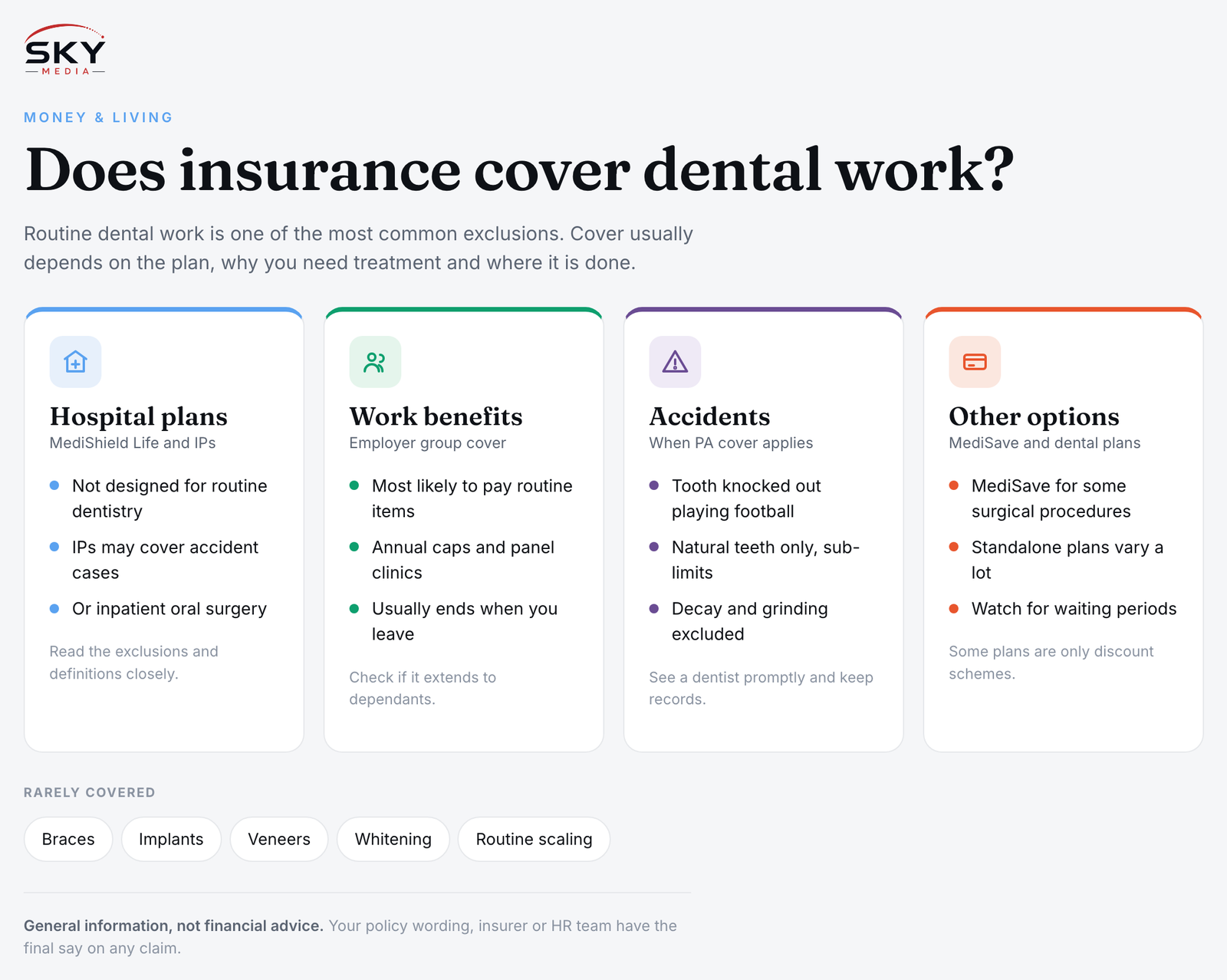
MediShield Life. This is the basic national health insurance run by the CPF Board. It is aimed at large hospital bills and certain costly outpatient treatments. It is not designed for routine dentistry. Check the MediShield Life page on the CPF Board or MOH website for what is claimable.
Integrated Shield Plans (IPs). These are private hospitalisation plans that sit on top of MediShield Life. They generally exclude dental treatment, but policies often carve out exceptions, for example dental treatment needed because of an accident, or oral surgery carried out as part of an inpatient admission. The definitions are specific, so read the “exclusions” and “definitions” sections closely.
MediSave. Not insurance, but relevant. Certain surgical dental procedures may be payable from MediSave within withdrawal limits, depending on the procedure and the clinic. Ask the dental clinic whether your procedure is MediSave-claimable and check the current rules with the CPF Board.
Employer group insurance. Some companies include dental benefits, either as a fixed yearly amount per employee or as a rider on group outpatient cover. These are the most likely to pay for routine items like scaling or fillings, but often with annual caps, panel clinic requirements and lists of excluded procedures. The benefit usually ends when you leave the company, which is worth reading about in employer group insurance and cover gaps when you leave a job.
Personal accident (PA) plans. Many PA policies pay for dental treatment needed because of an accident, often up to a stated sub-limit and only for natural teeth, not dentures or existing crowns. Claims usually need a report of how the injury happened.
Standalone dental plans. Some insurers and dental groups offer plans dedicated to dental care. Terms vary a lot: some are true insurance, others are prepaid packages or membership discounts tied to particular clinics. Check whether there is a waiting period, annual limit, list of covered procedures and restrictions on pre-existing conditions.
Travel insurance. Many travel policies include emergency dental treatment overseas for sudden pain or injury, usually with a modest limit. If you rely on card-linked cover, read does your credit card’s free travel insurance actually cover you? before you fly.
Quick Comparison of Dental Cover Options
| Type of cover | What it may pay for | Common limits or catches |
|---|---|---|
| MediShield Life or Integrated Shield Plan | Possibly accident-related or inpatient oral surgery, per policy terms | Routine dental work usually excluded; strict definitions |
| MediSave | Certain surgical dental procedures | Only listed procedures, withdrawal limits apply |
| Employer group dental benefit | Check-ups, scaling, fillings, sometimes extractions | Annual cap, panel clinics, ends when you leave the job |
| Personal accident plan | Dental injury from an accident | Sub-limit, natural teeth only, needs proof of accident |
| Standalone dental plan | Varies from preventive care to wider treatment | Waiting periods, clinic restrictions, some are discount schemes |
When Accident Cover Applies (and When It Does Not)
Accident wording is where many claims succeed or fail. Insurers typically define an accident as a sudden, unforeseen external event. In practice:
- Likely to qualify: chipping a front tooth after tripping on a kerb, a tooth knocked out during football, jaw injury in a road accident
- Less likely: a tooth that cracks while biting on something hard, because insurers may treat this as wear or pre-existing weakness
- Usually excluded: decay, gum disease, grinding damage and cosmetic work
Some policies also require treatment within a set period after the accident. If something happens, see a dentist promptly, keep the dentist’s notes and receipts, take photos where sensible, and notify your insurer early.
How to Check Your Own Cover in Ten Minutes
- List every policy you hold, including employer benefits, PA plans and riders bundled with savings or life plans.
- Search each policy document for “dental” and read the exclusions and definitions sections.
- Check your employee handbook or benefits portal for annual limits and panel clinic lists.
- Ask your dentist for a written treatment plan and estimate before non-urgent work.
- Call the insurer or HR with the procedure name and ask: is this covered, what documents do you need, and is pre-authorisation required?
Keep the answers in writing, such as an email, in case of a dispute later.
Costs Insurance Will Not Cover, and How to Plan for Them
Braces, implants, veneers and whitening are rarely covered by any policy. For these, it usually makes more sense to plan with savings than to look for insurance. A few ideas:
- Get a second opinion and a full written quote, including follow-up visits
- Ask whether treatment can be staged over time
- Compare private clinics with public dental services for eligible patients
- Look into subsidy schemes for eligible residents, which are separate from insurance and run through MOH
Older adults planning bigger work may find our guide to dental implants and bridges for seniors helpful for what to ask before treatment.
Common Mistakes to Avoid
- Assuming “hospital plan” means “teeth too”. It usually does not.
- Buying a dental plan right before major work. Waiting periods and pre-existing condition clauses often apply.
- Skipping pre-authorisation. Some plans want approval before treatment.
- Losing receipts. Most insurers need itemised bills and dentist reports.
- Forgetting dependants. Check whether your group benefit extends to a spouse or children, and on what terms.
Dental insurance in Singapore is patchy by design. Know which bucket your treatment falls into, read the wording, and ask your insurer or HR before you sit in the chair.
Frequently Asked Questions
Will insurance pay for a tooth that cracked while I was eating? Probably not. Insurers may treat a tooth that cracks while biting something hard as wear or existing weakness rather than an accident. Accident cover is more likely for events like a fall, a sports knock or a road accident.
What should I do right after chipping a tooth in an accident? See a dentist promptly, keep the dentist’s notes and receipts, take photos where sensible, and notify your insurer early. Some policies also require treatment within a set period after the accident, and claims usually need a report of how it happened.
Does MediSave pay for dental treatment? Only certain surgical dental procedures, and only within withdrawal limits, depending on the procedure and the clinic. Ask the dental clinic whether your procedure is claimable, and check the current rules with the CPF Board.
Do employer dental benefits cover my spouse and children? It depends on the group policy. Check your benefits portal or handbook for annual limits, panel clinic lists and whether dependants are included and on what terms. The benefit usually ends when you leave the company.
Should I buy a dental plan just before big dental work? That is usually a poor plan. Standalone dental plans often have waiting periods, annual limits and restrictions on pre-existing conditions, so they may not pay for work you already need. Read the terms and ask the insurer first.
Further reading: Maternity Insurance in Singapore: When to Buy and What It Covers · Clear Aligners vs Braces for Adults in Singapore