

Just off Race Course Road, a short stroll from the colour and bustle of Little India, sits a quiet and dignified temple with a long history. The Leong San See Temple singapore devotees hold dear is a place of Chinese Buddhist and Taoist worship, its name meaning Dragon Mountain Temple. With its ornate roof, its carved dragons, and its peaceful courtyards, it offers a moment of calm in a busy part of the city. This guide covers what the temple is, its story, its features, and how to visit respectfully.
What It Is and Which Faith
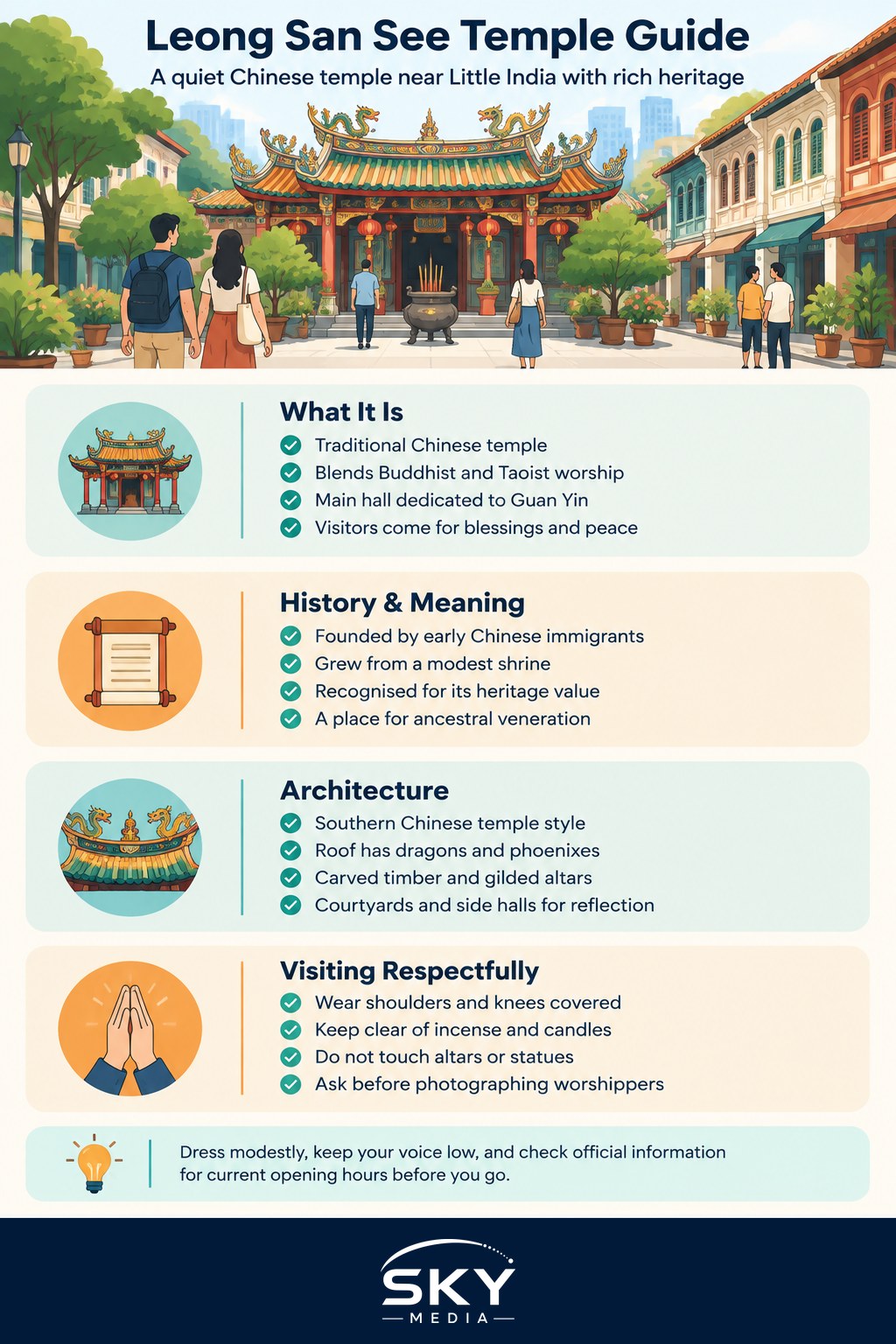
Leong San See is a traditional Chinese temple that blends Buddhist and Taoist elements, as many Chinese temples in Singapore do. The main hall is dedicated to Guan Yin, the Bodhisattva of Compassion, one of the most beloved figures in Chinese Buddhism. Worshippers come to seek blessings, guidance, and peace of mind, offering incense and prayers before the deities.
The temple was founded by early Chinese immigrants, in particular monks and devotees who wished to establish a proper place of worship in their new home. Over the decades it grew from humble beginnings into the handsome temple standing today. It reflects the religious life of the Chinese community, who brought their traditions with them and built temples that served both spiritual and social needs. To place it in context, you can explore an overview of Buddhist temples in Singapore.
History and Significance
Leong San See dates back to the early twentieth century, growing from a modest shrine into a fully developed temple through the devotion and donations of the community. It has been recognised for its heritage value and stands as a reminder of how immigrant communities put down roots and built institutions that endure.
The temple sits close to the equally historic Sakya Muni Buddha Gaya Temple, often called the Temple of a Thousand Lights, and together they form a small cluster of religious heritage near Little India. This proximity of Chinese temples to the Hindu heart of Little India, with mosques and churches never far away, is a everyday illustration of the interfaith harmony in Singapore that many residents take quiet pride in. Leong San See also carries a role in ancestral veneration, with spaces set aside for remembering the departed, an important practice in Chinese tradition.
Architecture and Features
The temple is a fine example of traditional southern Chinese temple architecture. The roof is its crowning glory, with sweeping ridges topped by intricate figures of dragons, phoenixes, and other auspicious motifs made in colourful ceramic and porcelain. These figures are not mere decoration. In Chinese belief the dragon is a powerful and protective symbol, fitting for a temple whose name means Dragon Mountain.
Inside, timber pillars and beams are richly carved and painted, and gilded altars hold statues of Guan Yin and other deities. Red lanterns, incense coils hanging from the ceiling, and the scent of sandalwood create an atmosphere that engages all the senses. Courtyards and side halls provide space for reflection and for the various shrines. The overall effect is one of warmth and craftsmanship, the product of generations of care.
Role Today
Leong San See remains an active temple, busiest during Chinese festivals and on days of religious significance such as the birthdays of the deities. During Chinese New Year and the Lunar calendar’s key dates, devotees fill the halls with prayers and offerings. Beyond festivals, people visit throughout the year to pray for health, family, and good fortune, and to honour their ancestors. The temple thus continues to serve as a spiritual home for the community while welcoming visitors who come to admire its beauty.
How to Get There
The temple stands on Race Course Road, near the Little India district. It is easily reached by MRT, with stations in the Little India and Farrer Park areas within walking distance, as well as by bus. A visit combines naturally with exploring the temples, shops, and eateries of the surrounding neighbourhood.
Respectful Visitor Etiquette
As a working temple, Leong San See asks for respectful conduct from all who enter. Dress modestly, keeping shoulders and knees covered, and keep your voice low inside the halls. Be careful around burning incense and lit candles, and do not touch the altars or statues. If you wish to observe worshippers, do so quietly and without getting in their way. Photography is often permitted in the general areas, but always look for signs and ask before photographing people at prayer or sensitive shrines. Visitors new to Chinese temple customs may appreciate this guide to temple worship etiquette for newcomers in Singapore. Check the temple’s official information for current opening hours, and treat the space as the place of devotion it is.
Frequently Asked Questions
What does Leong San See mean? The name means Dragon Mountain Temple. The dragon is a powerful and protective symbol in Chinese belief, so it suits a temple with carved dragons along its sweeping roof ridges.
Who is the main deity at Leong San See? The main hall is dedicated to Guan Yin, the Bodhisattva of Compassion, one of the most beloved figures in Chinese Buddhism. Worshippers come to seek blessings, guidance and peace of mind, offering incense and prayers.
Can I visit Leong San See and Sakya Muni Buddha Gaya Temple on the same trip? Yes, the two historic temples sit close to each other near Little India and form a small cluster of religious heritage. Together with the surrounding temples, shops and eateries, they make an easy walking visit.
When is Leong San See busiest? It is busiest during Chinese festivals and on days of religious significance such as the birthdays of the deities, including Chinese New Year and the key dates of the Lunar calendar. For a quieter visit, choose an ordinary day.
Does the temple have a place to remember ancestors? Yes, it carries a role in ancestral veneration, with spaces set aside for remembering the departed, an important practice in Chinese tradition. Observe quietly and ask staff if you are unsure about customs.
Further reading: Hong San See Temple · Kong Meng San Phor Kark See Monastery