
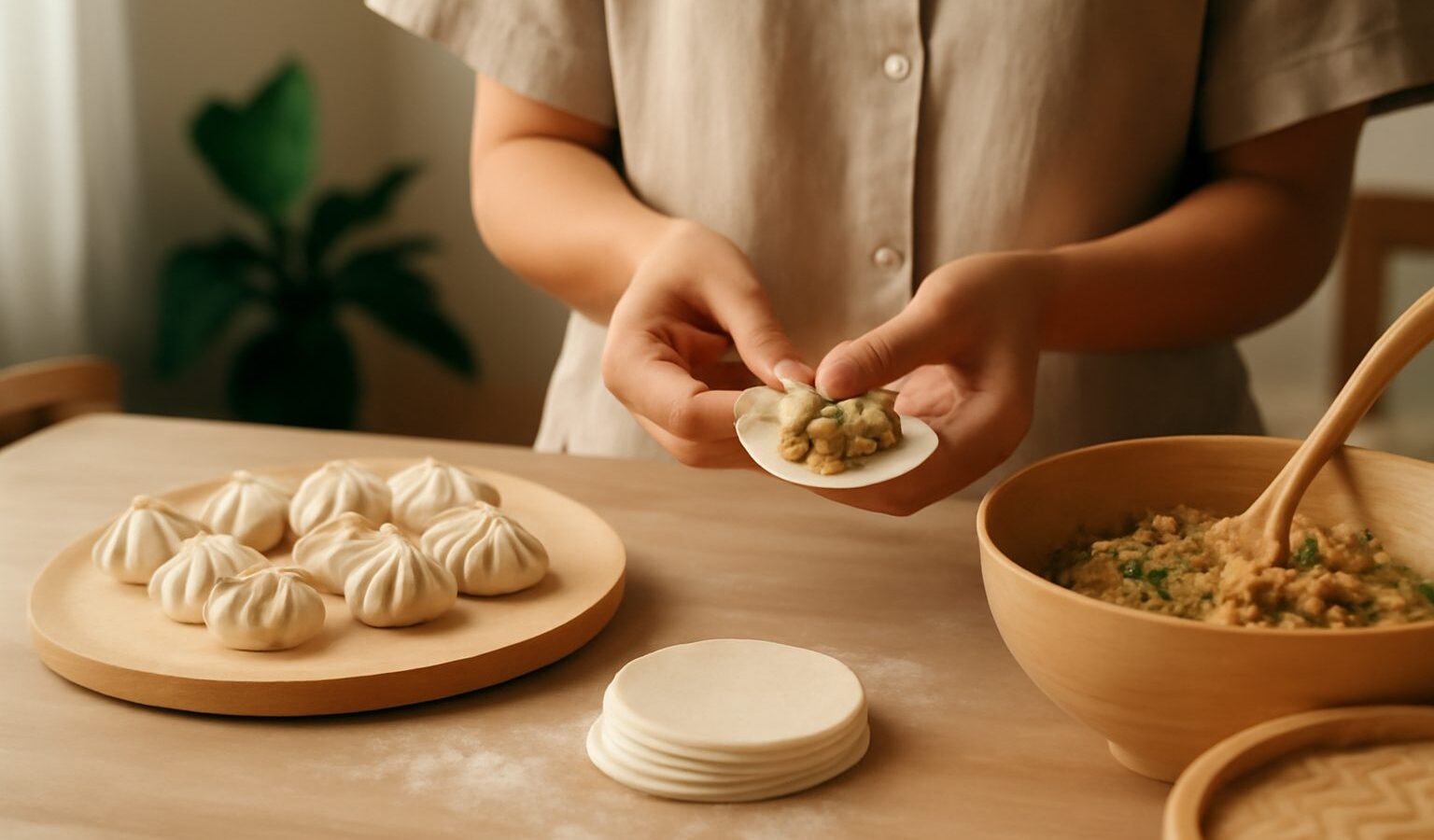
Few kitchen projects are as sociable and satisfying as making dumplings at home. Gather a few people around a table with a bowl of filling and a stack of wrappers, and what could be a chore turns into an afternoon of chatting, folding and gentle competition over whose pleats look neatest. Making dumplings at home is far more achievable than it looks, and once you have the rhythm you will never look at a plate of jiaozi or gyoza the same way again. This guide covers the filling, the folding, safe handling, the three main ways to cook them, and how to freeze a batch for later.
Dumplings come in countless forms across Asia, from Chinese jiaozi and wontons to Japanese gyoza and beyond, but the core idea is wonderfully simple. You wrap a seasoned filling in a thin dough skin and cook it until the wrapper is tender and the filling is cooked through. You can make your own wrappers from just flour and water, but shop bought wrappers are excellent and take all the pressure off a first attempt, so there is no shame in starting there.
Building a Juicy, Balanced Filling
A classic pork and cabbage filling is the perfect place to begin. You want minced pork with a reasonable amount of fat, because lean meat alone turns dry. To this you add finely chopped Chinese cabbage or napa, which you should first salt lightly and squeeze to remove excess water, or your filling will turn soggy and leak. Stir in aromatics such as spring onion, grated ginger and a little garlic, then season with soy sauce, sesame oil, a pinch of sugar, white pepper and a splash of Shaoxing wine if you have it.
The secret to a juicy dumpling is to add a little liquid to the meat and stir vigorously in one direction until the mixture turns tacky and cohesive. A few spoonfuls of stock or water, beaten in gradually, gives you that lovely burst of juice inside. Vegetarian fillings work beautifully too, using ingredients like mushroom, firm tofu, chives, cabbage and carrot, seasoned the same way. Whatever you choose, fry a tiny nugget of the filling in a pan and taste it before you wrap, so you can adjust the seasoning while it is easy to do.
Handling Raw Meat Safely
Because most dumplings contain raw meat filling, a little care keeps everything safe and pleasant. Keep the filling cold, working from the fridge and returning it there if you take a break, rather than letting a bowl of raw pork sit out on a warm counter. Wash your hands, your board and your utensils well after handling raw meat, and keep raw filling away from anything you will eat uncooked. It helps to work in batches, keeping most of the filling chilled while you wrap a tray at a time.
Assembled dumplings should also stay cold until they hit the water or pan. Lay them on a lightly floured tray, not touching, and pop the tray in the fridge if you are not cooking straight away. Most importantly, always cook dumplings right through until the filling is piping hot and no longer pink, since pork and other minced meats must be fully cooked to be safe. If you are unsure, cut one open to check the centre is cooked before serving the rest.
Folding and Cooking Three Ways
Folding is the part everyone worries about and the part that matters least to the taste. Place a spoonful of filling in the centre of a wrapper, wet the edge with a little water, then fold and seal. The simplest fold is a half moon, pressing the edges firmly together to force out air. Once you are comfortable, you can add pleats along one side for the classic ruffled look, but a well sealed plain half moon cooks just as well. The one rule that truly counts is a firm seal, so the filling stays inside during cooking.
There are three popular ways to cook dumplings. Boiling is the most forgiving. Drop the dumplings into a large pot of simmering water, stir gently so they do not stick, and cook until they float and the wrappers look glossy and the filling is cooked through, usually a few minutes. Steaming gives a softer, more delicate skin. Line a steamer so the dumplings do not stick, leave space between them, and steam over rapidly boiling water until cooked. Pan frying, the method behind crisp bottomed potstickers and gyoza, is the showstopper. Heat a little oil in a pan, sit the dumplings in flat side down until the bases turn golden, then carefully add a splash of water and cover at once, standing back from the steam, and let them finish by steaming until the water evaporates and the filling is fully cooked.
| Method | Texture | Rough time | Best for |
|---|---|---|---|
| Boiling | Soft, slippery skin | 4 to 6 minutes | Beginners, jiaozi in soup |
| Steaming | Tender, delicate skin | 8 to 10 minutes | Softer, lighter dumplings |
| Pan frying | Crisp base, soft top | 8 to 10 minutes | Potstickers and gyoza |
The best news for busy cooks is that dumplings freeze wonderfully, so it is worth making a big batch. Freeze them raw on a floured tray until solid, spaced apart so they do not stick together, then transfer them to a bag or box. Cook them straight from frozen, adding a minute or two to the time, without thawing first, which keeps the wrappers intact. With a freezer drawer of homemade dumplings, a hot, comforting meal is never more than a few minutes away. Start with shop bought wrappers, keep the filling cold, seal firmly, cook through, and enjoy the very sociable pleasure of folding your own.
Explore more
Basic Knife Skills for Home Cooks
Mastering the Basics of Stir-Frying
How to Toast and Temper Spices
How to Make Sambal Chilli from Scratch