
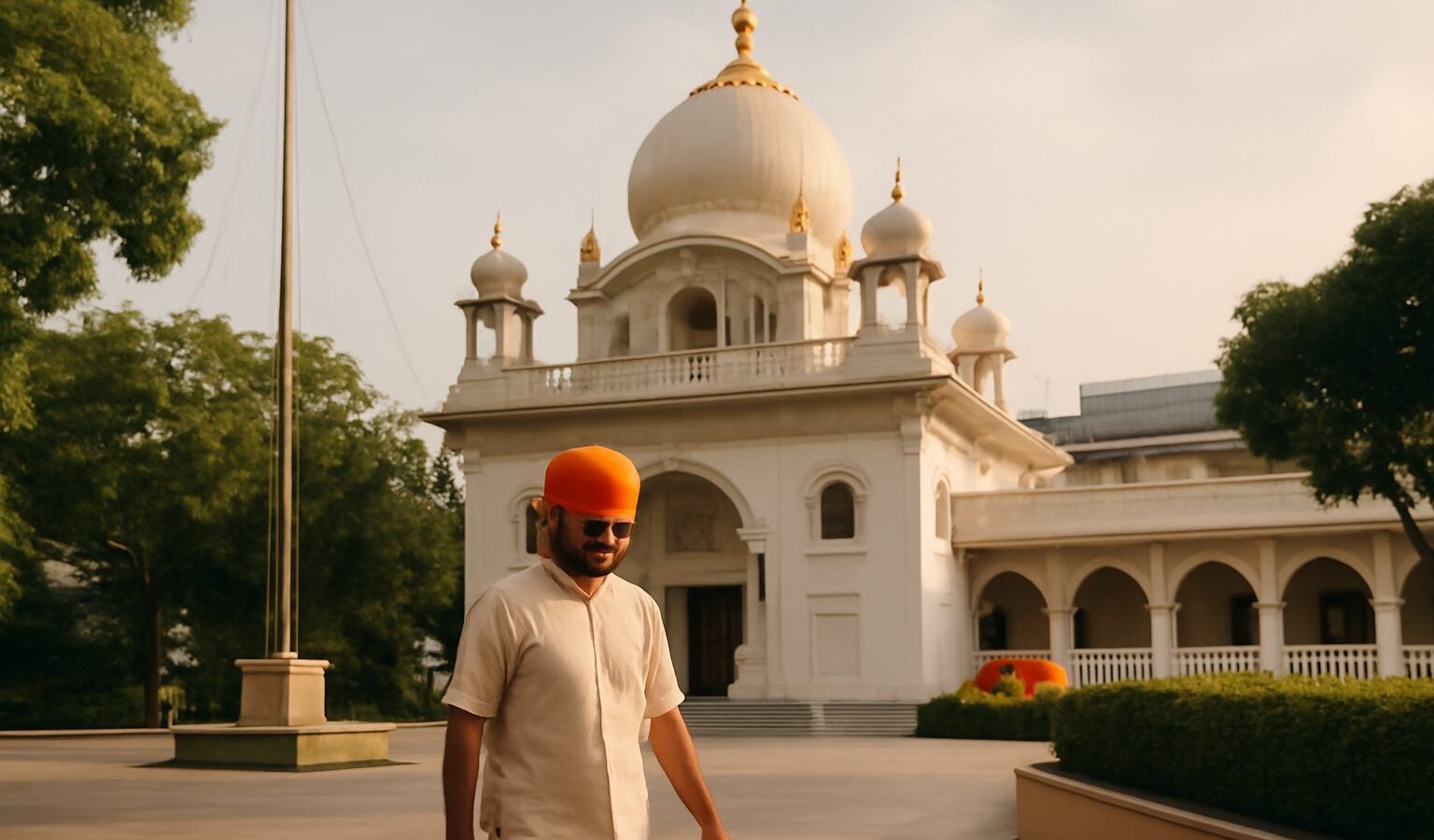
Set on a quiet rise off Silat Road, near the older estates of Bukit Merah, the Silat Road Sikh Temple is one of the most significant gurdwaras in the country and a cherished home for the Sikh community. A gurdwara is a Sikh place of worship, a house that welcomes all regardless of background, and this one carries a long and layered history. For anyone drawn to the story of the silat road sikh temple singapore Sikhs hold dear, a visit offers a window into a faith built on service, equality and devotion.
Understanding the Sikh Faith and the Gurdwara
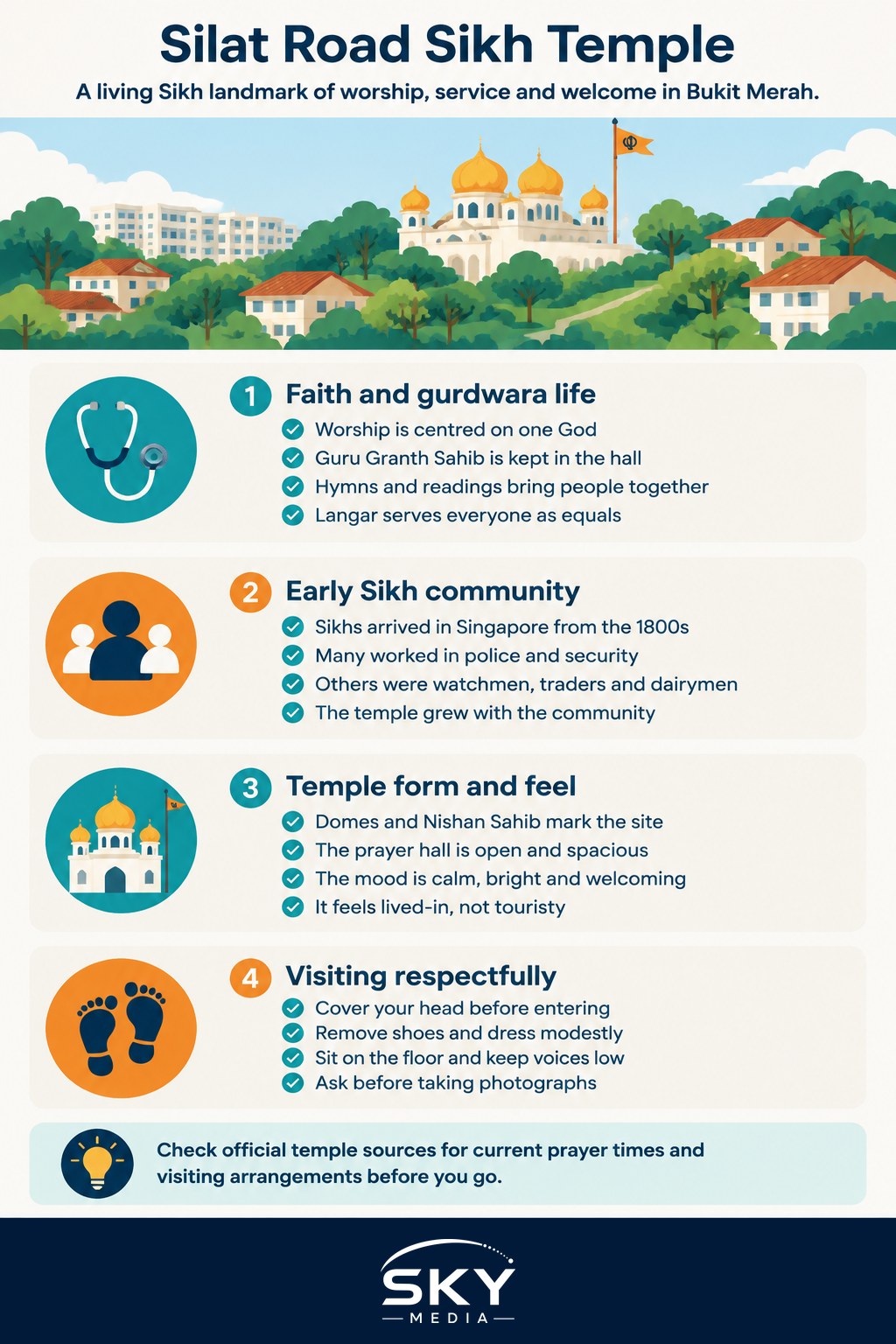
Sikhism was founded in the Punjab region of South Asia and centres on devotion to one God, honest living, and service to others. At the heart of every gurdwara is the Guru Granth Sahib, the Sikh holy scripture, which is treated with the utmost respect and installed in the main prayer hall. Worshippers gather to sing hymns, listen to readings and share in community.
A defining feature of the gurdwara is the langar, the free community kitchen where meals are served to everyone who comes, seated together on the floor as equals. This practice expresses one of Sikhism’s core values, that all people are equal before God. The Silat Road temple continues these traditions, keeping alive a form of hospitality that has welcomed visitors for generations.
History and the Early Sikh Community
Sikhs arrived in Singapore from the nineteenth century onward, many serving in the police and security forces or working as watchmen, traders and dairymen. As the community grew, it needed places to worship and gather, and gurdwaras began to appear across the island. The Silat Road site is closely tied to this early history and to the wider legacy of the community’s central temple traditions.
The gurdwara here has long been associated with care for the community, including a role connected to the welfare of elderly and passing members of the faith, reflecting the Sikh commitment to service through every stage of life. Over the decades the temple has been rebuilt and expanded to serve a growing congregation, while keeping its place as a spiritual anchor.
To understand how this fits into the broader picture, it helps to read alongside the story of the Central Sikh Temple in Singapore, with which the Silat Road gurdwara shares deep historical links. The two sites together tell much of the story of how Sikhs established and sustained their faith on the island. Wider context on the community can also be found in accounts of the Sikh and smaller communities of Singapore.
Architecture and Atmosphere
Like many gurdwaras, the temple is crowned by domes and topped with the Nishan Sahib, the Sikh flag, which flies from a tall pole and marks the building as a place of worship from a distance. The prayer hall is spacious and open, designed to hold the congregation as they sit together on the floor facing the scripture.
The atmosphere is one of calm and welcome rather than grandeur for its own sake. Bright, airy interiors, the sound of devotional singing and the warmth of the langar kitchen give the place a living, working character. It is a space shaped by daily worship and community life rather than by tourism.
The Temple Today
The gurdwara remains an active centre of Sikh worship and community service. Alongside regular prayers and readings, it continues the langar tradition and hosts gatherings that bring families together. For the Sikh community it is both a spiritual home and a link to the generations who built it.
Visitors of all faiths are welcome, and many come to learn, to share a meal, or simply to experience the peace of the prayer hall. That openness is itself a lesson in the Sikh values of equality and generosity.
Getting There
The temple lies in the Bukit Merah area, within reach of the MRT and bus network that serves the central and southern parts of the island. As always, plan your route in advance and allow time to arrive calmly, since gurdwaras are places of quiet devotion rather than rushed sightseeing.
Visiting Respectfully
A few simple courtesies allow you to visit with respect. Both men and women must cover their heads before entering the prayer hall, so bring a scarf or head covering, though many gurdwaras also provide cloths at the entrance. Remove your shoes and, where provided, wash your hands or feet before going in. Dress modestly, covering shoulders and legs.
Inside the hall, sit on the floor and avoid pointing your feet toward the Guru Granth Sahib, which is a sign of disrespect. Do not smoke or bring alcohol or tobacco anywhere near the premises, as these are strictly against Sikh practice. Keep your voice low, be mindful during prayer times, and always ask before taking photographs, since some areas may not permit them.
If you are offered food from the langar, receiving it graciously is part of the spirit of the place. To explore how this and other faith communities enrich the island, you may also enjoy learning about Singapore’s ethnic enclaves. The Silat Road Sikh Temple stands as a reminder that heritage is not only in old walls but in living traditions of service and welcome.
Please check official temple sources for current prayer times and visiting arrangements before you go, as these can change.
Frequently Asked Questions
Do I have to be Sikh to enter the Silat Road gurdwara? No. A gurdwara is a house of worship that welcomes people of all backgrounds and faiths. Many visitors come to learn, to share a meal or simply to enjoy the peace of the prayer hall. Just follow the etiquette observed there.
What happens if I forget a head covering? Many gurdwaras provide cloths at the entrance, so you can usually borrow one on arrival. Still, bringing your own scarf is a thoughtful habit. Men and women alike must cover their heads before entering the prayer hall.
How should I behave if I am offered food at the langar? Accept it graciously, as that is part of the spirit of the place. Meals are served free to everyone, seated together on the floor as equals. Eat what you are given, keep the area tidy, and thank those serving.
What is the Nishan Sahib I see outside? It is the Sikh flag, flown from a tall pole at the gurdwara. It marks the building as a Sikh place of worship from a distance. Look for it above the domes when you approach the temple.
Is it all right to photograph the prayer hall? Ask first. Some areas may not permit photographs, and worshippers should not be photographed without permission. Never point your feet toward the Guru Granth Sahib when seated, and keep your voice low during prayer times.
Further reading: Vaisakhi and Sikh Festivals in Singapore