
Every Ramadan, the same few words appear on mosque noticeboards, office group chats and phone apps: Imsak, Subuh, Maghrib. For Muslims who fast, these times frame the day. For colleagues, neighbours and newcomers, they explain why a friend stops eating before dawn or why the bazaar crowd surges just before sunset. This guide explains the Ramadan timetable Singapore Muslims rely on, what each time means, and where to find the official version.
It is a general explainer, written with respect for a practice that individuals observe in different ways. For religious rulings, the Majlis Ugama Islam Singapura (MUIS, the Islamic Religious Council of Singapore) and your local mosque are the authorities.
Who Publishes the Official Timetable
In Singapore, MUIS publishes the official prayer times for the whole year, and a Ramadan timetable for the fasting month. Because Singapore is small, one set of times applies across the island.
You can find the official times through:
- The MUIS website, which lists daily prayer times and Ramadan schedules.
- MUIS-linked or mosque apps and channels, which push daily times and reminders.
- Mosque noticeboards and printed calendars, often handed out before Ramadan begins.
- Third-party prayer apps, which are popular, but check that the app is set to Singapore and uses the local calculation method, or its times may differ by a few minutes from the MUIS times.
The start of Ramadan and the date of Hari Raya Puasa depend on the Islamic lunar calendar, and MUIS announces them officially. Ramadan begins roughly 10 to 11 days earlier each year in the Gregorian calendar, so the month slowly moves through the seasons over the years.
What Each Time on the Timetable Means
A typical Ramadan timetable lists one row per day, with these columns. Names here follow common Singapore Malay usage; you may also see Arabic spellings such as Fajr, Dhuhr, Asr and Isha.
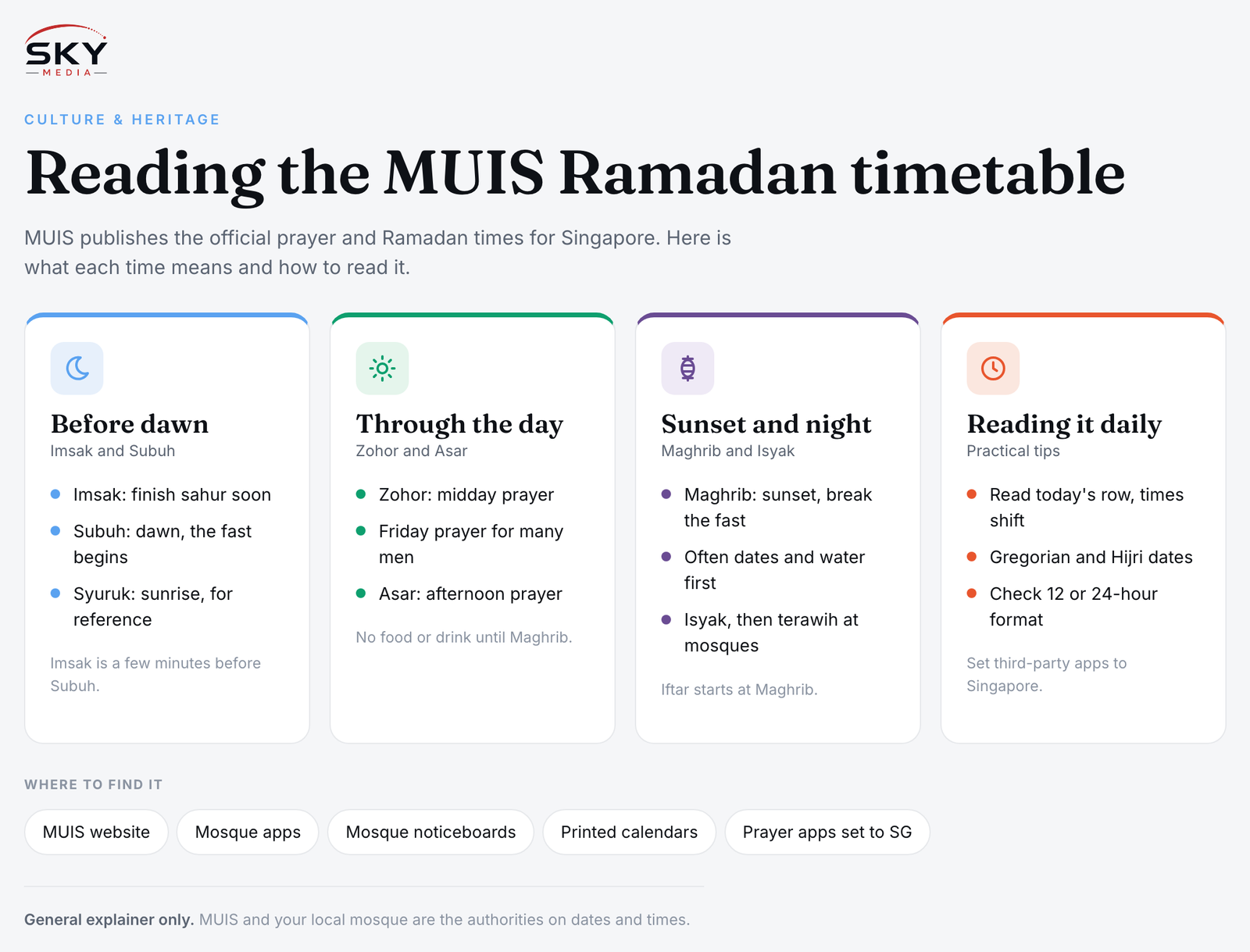
Imsak. A precautionary time a few minutes before Subuh. It acts as a reminder to finish sahur, the pre-dawn meal, and get ready to begin the fast. Many people treat it as the “stop eating soon” signal.
Subuh (Fajr). The dawn prayer time, which marks the start of the fast. From this point until Maghrib, those fasting do not eat or drink.
Syuruk. Sunrise. Some timetables include it as a reference point. It is not a prayer time itself, but it marks the end of the window for the Subuh prayer.
Zohor (Dhuhr). The midday prayer. On Fridays, men usually attend the congregational Friday prayer at a mosque around this time.
Asar (Asr). The afternoon prayer.
Maghrib. Sunset, and the moment the fast is broken. Iftar, the meal that breaks the fast, starts at Maghrib. Many people break their fast with dates and water first, pray, then have a fuller meal.
Isyak (Isha). The night prayer. During Ramadan, many people also attend terawih, extra night prayers held at mosques after Isyak.
Timetable Terms at a Glance
| Timetable term | What it marks | What people commonly do |
|---|---|---|
| Imsak | A few minutes before dawn | Finish sahur and prepare to start fasting |
| Subuh | Dawn, start of the fast | Dawn prayer, no more food or drink |
| Zohor | Midday | Midday prayer, Friday prayer for many men |
| Asar | Afternoon | Afternoon prayer |
| Maghrib | Sunset, end of the day’s fast | Break fast (iftar), often with dates and water |
| Isyak | Night | Night prayer, followed by terawih at many mosques |
How to Read the Timetable Day to Day
The times change slightly each day, usually by a minute or so, because sunrise and sunset shift gradually through the year. Singapore is close to the equator, so the changes are small compared with countries further north, but they still matter for someone counting down to iftar.
A few practical points:
- Read the row for today’s date. Do not rely on memory from yesterday.
- Look at both calendars. Many timetables show the Gregorian date and the Hijri (Islamic) date side by side, with the Ramadan day number.
- Times are in 24-hour or 12-hour format. Check which one your timetable uses, so 7.10 does not get misread.
- Allow for travel. If you are flying or crossing into Malaysia, local times will differ. Use the official times for wherever you are.
Why the Times Matter Beyond Fasting Households
You do not need to be fasting to find the timetable useful. Knowing Maghrib time helps you:
- Plan meetings and meals with Muslim colleagues, avoiding the busy minutes around iftar.
- Visit a Ramadan bazaar wisely. Crowds build in the hour before Maghrib as people buy food to break the fast. Our Ramadan bazaar etiquette guide explains how to be a considerate visitor.
- Host or visit friends. If you are inviting someone who is fasting, schedule food for after Maghrib. See how to prepare your home for Ramadan guests.
- Understand the rhythm of the neighbourhood. Mosques and nearby streets get busier around Maghrib, Isyak and terawih.
A Note for Newcomers
If you have moved to Singapore from a country where Ramadan is less visible, you will notice it in daily life: food stalls preparing takeaway packs for iftar, extra evening crowds near mosques, and warm greetings of “Selamat Berpuasa” (have a good fast). Colleagues may start and end work earlier, and some may prefer not to schedule lunch meetings. Asking politely about someone’s fast is generally welcomed, as long as you do not pressure anyone or comment on whether they are fasting.
If you are trying fasting yourself, perhaps alongside a friend or partner, use the official MUIS times and speak to a doctor first if you have any health condition. Older adults, pregnant women and people on medication should take medical advice; our guide to safe fasting for seniors covers some of the issues.
Where to Go Next
The timetable is just one part of the month. For the broader picture of how Ramadan is observed here, from sahur to Hari Raya Puasa, read Ramadan and fasting in Singapore. Each year, check the official MUIS announcements for the confirmed start date, daily times and any updates, because these are the authoritative source rather than any third-party list.
Frequently Asked Questions
Should someone stop eating at Imsak or at Subuh? Imsak is a precautionary time a few minutes before dawn, meant as a signal to wrap up the pre-dawn meal. The fast itself begins at Subuh. Many people stop at Imsak to be safe, and the mosque or MUIS can advise on personal practice.
How do I know when Ramadan has officially started in Singapore? MUIS makes the official announcement, because the start depends on the Islamic lunar calendar and moon sighting. It usually comes the evening before, so dates published far ahead are only expected ones. Follow MUIS channels or your mosque rather than social media forwards.
Do prayer times in Johor Bahru differ from Singapore’s timetable? They can differ by a few minutes, as each country uses its own official calculation and local conditions. If you are crossing the Causeway or travelling, use the official times of the place you are in. Do not rely on a Singapore timetable once you leave.
What is the difference between Syuruk and Subuh? Subuh is the dawn prayer time that marks the start of the fast, while Syuruk is sunrise, which comes later. Syuruk is not a prayer time, but it marks the end of the window for the Subuh prayer. Timetables list both as reference points.
Do children and older people have to fast during Ramadan? Fasting is not generally expected of young children, and there are recognised exemptions for illness, pregnancy and travel, among others. Older adults and anyone on medication should speak to a doctor before fasting. For religious questions about individual circumstances, ask MUIS or a local mosque.