
Along the historic length of Telok Ayer Street, between a landmark temple and an old mosque, stands a building unlike any of its neighbours. Its intricate facade, layered with arches, miniature towers and delicate plasterwork, marks it out at once. This is Nagore Dargah, one of the oldest shrines in the country and today a heritage centre telling the story of the Indian-Muslim community. For anyone exploring Nagore Dargah Singapore, the building offers a window into a community whose traders, labourers and religious life helped shape the early port. This guide covers its history, its architecture and how to visit.
A shrine on the old shoreline
Nagore Dargah was built in the first half of the nineteenth century by South Indian Muslims, often known historically as Chulias, who came to Singapore from the Coromandel coast of India to trade and work in the young settlement. Like the Chinese and Malay communities who worshipped along the same street, these early arrivals settled near the waterfront, for Telok Ayer Street once ran along the sea before land reclamation moved the coast away.
A dargah is a shrine associated with a revered holy figure, and this one honours Shahul Hamid, a saint from the town of Nagore in southern India, deeply venerated by his followers. Building the dargah gave the Indian-Muslim community a spiritual home in their new city and a place to gather, seek blessing and keep alive the traditions they had carried across the sea. That it stands within a few steps of Thian Hock Keng and close to the Al-Abrar Mosque is a vivid illustration of how peoples of different faiths lived and worshipped side by side in early Singapore.
An architecture all its own
The most immediate impression Nagore Dargah makes is visual. Its front facade is a work of exuberant detail, a composition of pointed and rounded arches, slender columns, and rows of small decorative towers and minarets rising in tiers. The plasterwork is fine and busy, and the whole face of the building has an almost lace-like quality that sets it apart from the plainer shophouses and the temple beside it.
The style draws on the architectural traditions of South India and the wider Islamic world, adapted to its setting on a Singapore street. Behind the elaborate front, the building follows the deep, narrow plan common to the old town. Carefully restored in recent decades, Nagore Dargah is recognised for its heritage value and was gazetted as a national monument, protecting its distinctive architecture for the future.
From shrine to heritage centre
While the building began as a place of worship, its role has evolved. Today Nagore Dargah operates as a heritage centre, the Nagore Dargah Indian Muslim Heritage Centre, dedicated to telling the story of the Indian-Muslim community in Singapore. Inside, displays trace the arrival and settlement of the community, its trades and businesses, its contributions to the life of the port, and its religious and cultural traditions.
This makes a visit doubly rewarding. You come for the striking architecture and stay for the history, learning how a community that is easy to overlook in the broader Singapore narrative helped build the commerce and culture of the old town. The heritage centre sits within a cluster of monuments on Telok Ayer Street, so it can be woven into a wider walk through one of the richest heritage corridors in the city.
The change in use also reflects a wider story about how Singapore has chosen to keep its past. As the resident community moved and dispersed over the decades, buildings like this could easily have been lost. Instead the dargah was conserved and given a new purpose that keeps its doors open and its story alive. In that sense Nagore Dargah stands not only for the Indian-Muslim community that raised it, but for the idea that heritage is something a city actively chooses to protect and pass on.
The monuments of Telok Ayer Street
Telok Ayer Street rewards visitors who take in more than one landmark. This table maps the near neighbours.
| Landmark | Community | Character |
|---|---|---|
| Nagore Dargah | Indian-Muslim community | Ornate shrine, now a heritage centre |
| Thian Hock Keng | Hokkien Chinese community | The oldest Hokkien temple |
| Al-Abrar Mosque | Indian-Muslim community | Early mosque on the same street |
| Telok Ayer Green | Shared heritage space | Small park recalling the old shoreline |
Visiting Nagore Dargah respectfully
Nagore Dargah welcomes visitors as a heritage centre, and because it began as a place of worship and remains a site of respect for many, a considerate visit is appreciated.
- Dress modestly, covering shoulders and knees, in keeping with the nature of the site.
- Remove your shoes where indicated, and follow any guidance from staff or posted notices about which areas are open to visitors.
- Move quietly, and be considerate with photography, checking whether it is permitted in particular areas.
- Take time with the exhibits, which are the heart of the centre’s work and offer context you will not find on the facade alone.
- Opening hours for the heritage centre can vary and may differ on public holidays and religious occasions, so check the official information before your visit.
Getting there is straightforward. Nagore Dargah stands on Telok Ayer Street in the Central Business District, and the nearest MRT station is Telok Ayer, with Tanjong Pagar and Raffles Place within walking distance. Combine your visit with the neighbouring temple and mosque, and with the cafes and conserved shophouses that line the surrounding lanes, for a full morning of heritage exploring.
Distinctive, dignified and easy to miss if you hurry past, Nagore Dargah rewards a pause. It preserves the memory of the Indian-Muslim community that helped make early Singapore, and in its new life as a heritage centre it invites every visitor to learn a chapter of the island’s story that deserves to be better known.
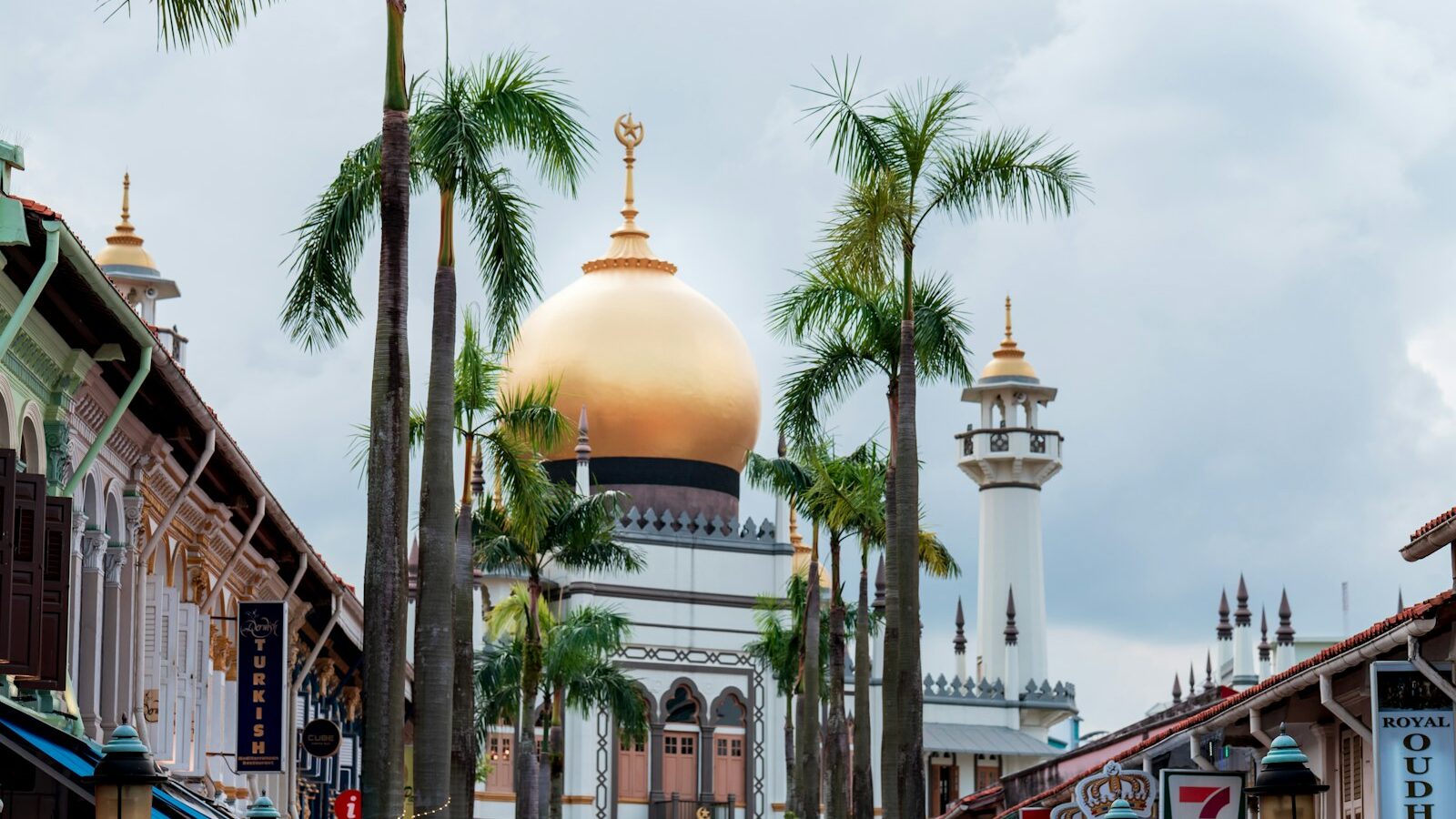
Explore more
Nagore Dargah sits at the heart of the Telok Ayer heritage trail. Step next door to Thian Hock Keng, the oldest Hokkien temple in Singapore, then walk over to Chinatown for Sri Mariamman, the oldest Hindu temple. To continue the story of the island’s Muslim heritage in another historic quarter, read about Sultan Mosque in Kampong Glam.