
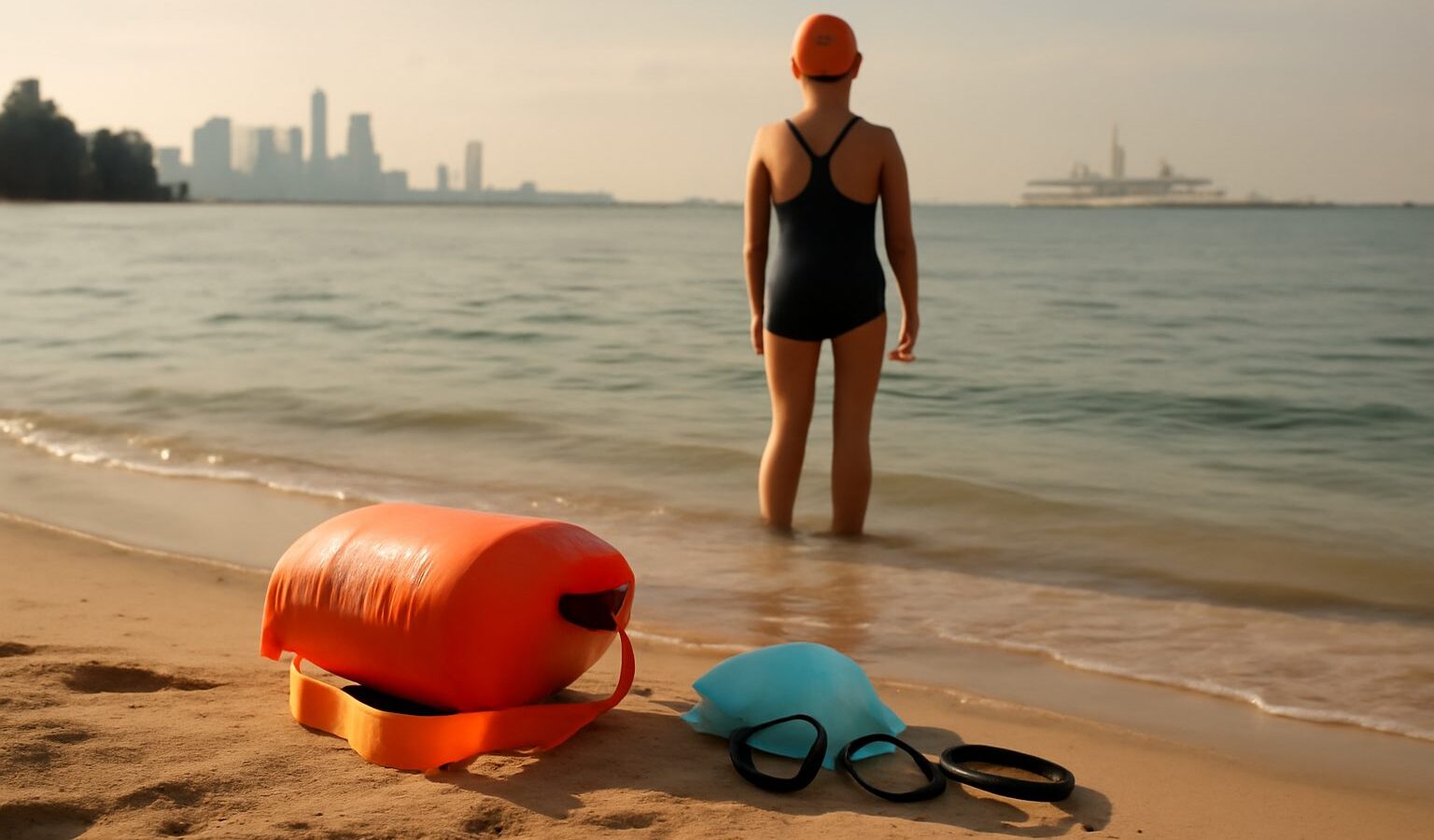
There is a particular kind of freedom in leaving the black line at the bottom of the pool behind. Open water swimming in Singapore opens up the sea, reservoirs and the horizon, and it is how many people first fall in love with the sport all over again. It is also a gateway to triathlon, to longer distances, and to simply enjoying the water in a warm, tropical setting. This guide walks you through getting started safely, where people tend to swim, the gear that helps, and how to build from confident pool laps to your first open water session.
Before we go further, a quick and important note. This is general information, not medical or coaching advice. Open water carries real risks, and you should consult a doctor before starting a new exercise programme, especially if you have a health condition, are older, or are returning after a break. Never swim alone in open water, and always respect signage and lifeguards.
From Pool Confidence to Open Water
Open water is not simply a pool without walls. There is no lane rope to grab, the water can be murky, and there is often nothing to stand on. The single most useful thing you can do is arrive with genuine pool fitness first. Being able to swim several hundred metres continuously and comfortably in a pool, without stopping at each wall, gives you the aerobic base and calm breathing you will lean on outside.
ActiveSG pools across the island are the natural training ground for this. Work on swimming relaxed, exhaling steadily underwater, and holding a straight line. A skill worth practising early is sighting, where you lift your eyes just above the surface every few strokes to check your direction, then settle back into your stroke. In a pool you can practise by glancing at a fixed point on the far wall instead of following the line. Bilateral breathing, taking air on both sides, also helps because wind and glare in open water can make one side awkward.
If your technique feels shaky, spend a season fixing that before heading out. A smoother, more efficient stroke is safer and far more enjoyable in choppier conditions.
Where People Swim Around Singapore
Singapore is compact, but swimmers do find open water. The most important rule is to choose designated, supervised and legal locations, and to never assume a stretch of coast or a reservoir is safe or permitted just because it looks calm. Many reservoirs and waterways prohibit swimming entirely, so always check current rules with the managing agency, whether that is PUB, NParks, Sport Singapore or a private operator, before you enter the water.
Organised open water and triathlon events are often the safest way to experience sea swimming, because they provide marked courses, safety kayaks and marshals. Some coastal areas and lagoons are used for supervised sessions and clinics run by clubs and coaches. Booking a session through a reputable club or triathlon squad means someone experienced is watching, and you are swimming with a group rather than alone.
- Prioritise supervised sessions, clinics and organised events over solo adventures.
- Confirm that swimming is actually permitted at any location, every time, as rules change.
- Learn the local conditions from people who swim there regularly: tides, currents, boat traffic and jellyfish.
- Tell someone on shore your plan and expected return time.
Because facilities, permissions and event calendars change, check current availability, access and any fees with ActiveSG, SportSG, the venue or the event organiser rather than relying on old information.
Gear That Actually Helps
You do not need much to start, and you certainly do not need to spend a fortune. In Singapore’s warm water a wetsuit is usually unnecessary for temperature, and some events run as non-wetsuit swims. What genuinely improves safety and enjoyment is a small, sensible kit.
| Item | Why it matters | Good for |
|---|---|---|
| Brightly coloured cap | Makes you visible to boats, kayaks and other swimmers | Every session |
| Tow float | Buoyant bag you can rest on and that boosts visibility | Beginners and long swims |
| Anti-fog goggles | Clear sighting in glare and murky water; tinted for sun | Sunny open water |
| Sun protection | Water-resistant sunscreen and a rash guard reduce burn | The tropical sun |
A tow float deserves special mention. It does not hold you up like a life jacket during swimming, but it gives you something to grab and rest on if you tire, and it makes you dramatically easier to spot. For many new open water swimmers it is the single item that unlocks confidence.
Heat, Hydration and Reading Conditions
Swimming can hide how hard you are working, and the tropical heat and humidity add a hidden load. You sweat in the water even though you cannot feel it, so arrive well hydrated, drink water before and after, and avoid swimming in the hottest, most exposed part of the day when you can. Early mornings are cooler and usually calmer.
Learn to read conditions honestly. Wind picks up chop and makes breathing and sighting harder. Currents and tides can move you sideways without you noticing, which is why a fixed landmark and regular sighting matter. If the water looks rough, visibility is poor, or a storm is building, the sensible choice is to stay out. Singapore’s afternoon thunderstorms arrive quickly, and lightning over water is a serious hazard.
Know the red flags that mean stop and seek help: sudden cramp you cannot swim through, chest tightness or breathlessness, dizziness, unusual fatigue, or feeling cold and confused. If any of these appear, signal for help, roll onto your back or your tow float, and get to shore or a safety craft. If symptoms are severe or persist, see a doctor. Warming up gently, progressing gradually, and listening to your body are your best protections.
Building Toward Triathlon and Longer Swims
For many people, open water is a stepping stone to triathlon, and the swim leg is where nerves run highest. The fix is graded exposure. Start with short, supervised swims close to shore, then extend distance slowly over weeks. Practise starting in a small group so the churn of a mass start feels familiar. Rehearse treading water, rolling onto your back to rest, and calming your breathing when your heart rate spikes.
A simple progression might look like this:
- Build a comfortable, continuous pool swim over several hundred metres.
- Add sighting and bilateral breathing until they feel automatic.
- Join a supervised open water session with a tow float and bright cap.
- Extend time in the water gradually, always with company and a safety plan.
- Enter a beginner-friendly event once short open water swims feel calm.
Consistency beats intensity. A few relaxed sessions a week, building patiently, will take you further and more safely than occasional heroics.
Explore More
If you are still finding your feet in the water, start with learning to swim as an adult in Singapore and then work through improving your swimming technique so your stroke is calm and efficient before you head outdoors. When the open water bug bites, getting into triathlon in Singapore shows how the swim fits into the wider sport.