
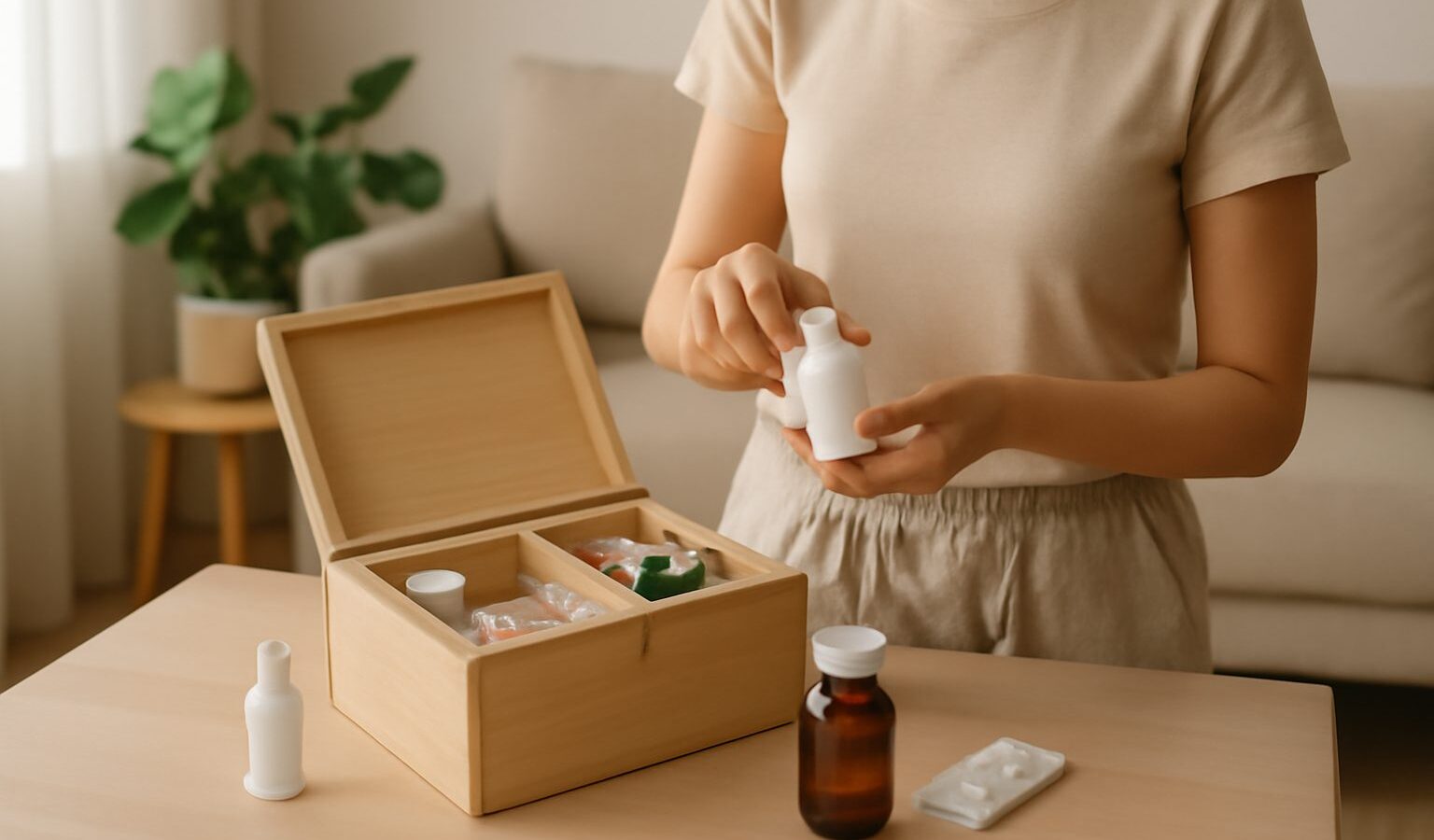
Organising medicine at home is one of those tasks that feels minor until an emergency strikes and you are digging through a drawer for a plaster or a fever remedy. A little order now means you can find what you need quickly and, just as important, keep everyone in the household safe. This guide covers safe storage, sensible categories, labelling, expiry checks and how to build a basic first-aid kit for a Singapore home.
Please treat this as general household guidance only. Always follow the instructions on the label, and speak to a pharmacist or doctor for any question about a specific medication, dose or condition.
Safety comes first
Before any tidy up, fix the two things that matter most: keep medicines out of the reach of children, and store them somewhere cool and dry.
Children are naturally curious and cannot tell a sweet from a tablet. Keep all medicines up high in a cupboard they cannot climb to, ideally one that locks or latches. Never leave loose tablets on a counter or bedside table, and put them away immediately after use rather than “later”.
The second point surprises many people. The bathroom cabinet is one of the worst places to store medicine, because heat and humidity from showers break medicines down faster. In Singapore’s climate this matters even more. A cool, dry, dark spot such as a bedroom cupboard or a high kitchen shelf away from the stove and window is far better. Keep medicines in their original packaging, which carries the name, dose and expiry date.
Sort into clear categories
Once storage is sorted, group everything so you can find it under pressure. Take it all out, check each item, and sort into a few simple categories before it goes back.
- Pain and fever relief: everyday remedies for aches and temperatures.
- Coughs, colds and allergies: lozenges, cold remedies and antihistamines.
- Stomach and digestion: for upsets, indigestion and rehydration.
- Wound care: plasters, antiseptic, gauze and tape.
- Personal or prescription items: anything prescribed for a specific person, kept separate and clearly named.
Use small labelled boxes or a divided container for each group. Keep prescription medicines apart from general remedies so there is no mix up, especially in a household with several people.
Labelling and a simple list
Labelling the outside of each box saves precious seconds. A marker and masking tape are enough: write the category on the front of each container so anyone, including a helper or relative, can find things fast.
It also helps to keep a short written list inside the cupboard door of what the household has, who any prescription items belong to and useful contact numbers. In an emergency, a calm list beats a frantic search.
Check expiry dates regularly
Medicine does not last forever, and an expired product may be less effective. Build a habit of checking dates every few months. Go through each box, remove anything past its date, and note what needs replacing.
Do not simply toss old medicine in the bin or flush it down the toilet, as this is not good for the environment. In Singapore you can return unwanted or expired medicine to many pharmacies and polyclinics, which dispose of it properly. Ask your pharmacist about the right way to hand yours in.
What belongs in a basic first-aid kit
Every home should have one clearly marked first-aid box that everyone can find. Keep it stocked, closed and in a known spot. Here is a sensible starting list for a home kit.
| Item | Use | Keep how many |
|---|---|---|
| Assorted plasters | Small cuts and blisters | A good handful |
| Sterile gauze and tape | Larger grazes and dressings | A few packs |
| Antiseptic wipes or solution | Cleaning wounds | Several |
| Crepe or elastic bandage | Sprains and support | One or two |
| Scissors and tweezers | Cutting tape, removing splinters | One each |
| Disposable gloves | Hygiene when helping others | A few pairs |
| Digital thermometer | Checking temperature | One |
| Instant cold pack | Bumps and swelling | One or two |
Store the kit away from medicines so it stays purely for wounds and injuries, and check it whenever you review expiry dates. Replace anything you have used so it is never empty when you reach for it. A small travel version in a car or bag is a useful extra.
Keep it accessible but secure
There is a balance to strike. Medicine must be out of children’s reach, yet an adult should be able to get to it quickly in the dark or in a hurry. A high, latched cupboard with the first-aid kit on the same shelf is a good compromise. Everyone in the home should know where it lives. Walk your family or helper through it once, so no one is searching during a stressful moment.
If you have young children, do a quick check around the home too. Handbags, luggage and drawers often hide loose painkillers or supplements that a curious child could find. Gather these into your secure store.
A light routine that lasts
Organising medicine at home is not a one off job. Set a simple rhythm and it stays effortless.
- Every few months, check expiry dates and clear out what is past its best.
- Restock the first-aid kit and any everyday remedies that are running low.
- Return expired or unwanted medicine to a pharmacy for safe disposal.
- Remind the household where everything is kept, especially after a reshuffle.
With a cool, dry, secure store, clear categories and a stocked first-aid kit, you turn a moment of panic into a calm, quick response. Spend half an hour on it this weekend, and you will have peace of mind that lasts far longer. For anything beyond a minor bump or graze, or for questions about a particular medicine, do not hesitate to call a pharmacist, see a doctor, or seek emergency help.
Explore more: Bathroom Storage and Organisation · Storage and Organisation Solutions · Decluttering Your Home