

One evening your dog’s coat looks fine. By the next morning there is a red, wet, angry patch on the cheek or hip, and your dog will not stop licking it. That is the classic picture of a hot spot. Hot spots dogs develop can appear fast and spread within hours, and Singapore’s warm, humid climate gives them plenty of help.
This guide explains what hot spots are, why they are common here, what you can safely do at home before you reach the vet, and how vets treat them. It is general information, not veterinary advice. If you are unsure, or your dog is in pain, call your vet.
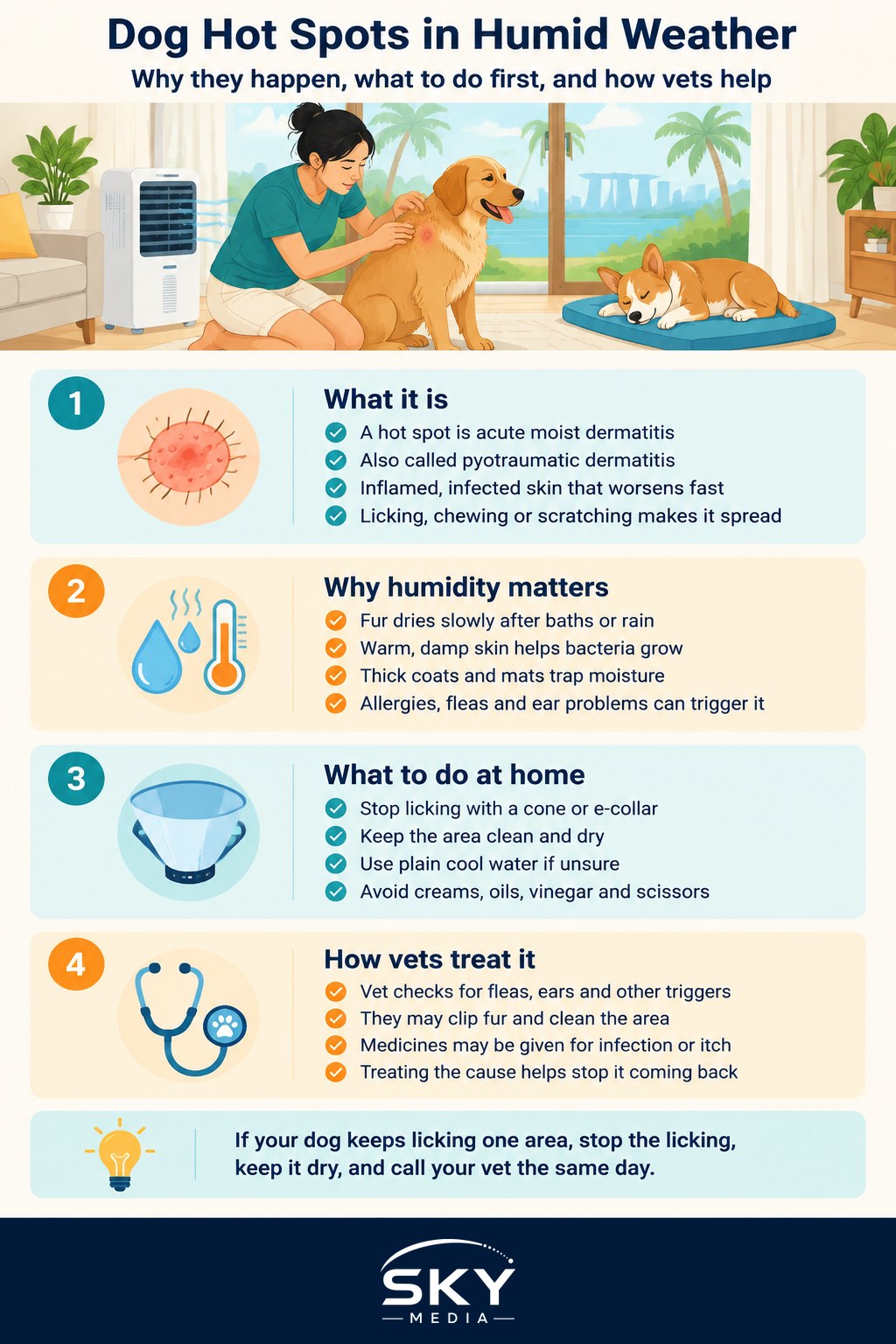
What a Hot Spot Actually Is
A hot spot is the everyday name for acute moist dermatitis, also called pyotraumatic dermatitis. It is a patch of inflamed, infected skin that the dog makes worse by licking, chewing or scratching.
The cycle usually goes like this:
- Something makes a patch of skin itchy or sore.
- The dog licks, chews or scratches it.
- The damaged skin weeps fluid, which gets trapped in the fur.
- Bacteria that normally live on the skin multiply in the warm, damp patch.
- The infection makes it itchier, so the dog licks more, and the patch grows.
Common signs include a red, moist or oozing area, matted or missing fur, a bad smell, crusting at the edges and a dog that keeps returning to the same spot. Many are painful to touch, so even a gentle dog may flinch or snap.
Why Singapore’s Humidity Makes Hot Spots More Likely
Hot spots happen everywhere, but some local conditions tip the odds.
- The coat stays damp. Humidity means fur dries slowly after a bath, swim, rain walk or even a spell of panting and drooling. Damp skin under a thick coat is an ideal place for bacteria.
- Thick and double coats. Breeds with dense undercoats, such as retrievers, huskies, chow chows and many spitz types, trap heat and moisture close to the skin. Long-haired dogs that are not brushed often develop mats that hold water.
- Allergies. Flea allergy is a frequent trigger, and fleas thrive in warm weather. Environmental allergies (dust mites, grasses, moulds) and food allergies can also cause itching that starts the cycle.
- Ear and anal gland problems. An itchy ear infection often leads to a hot spot on the cheek or neck from scratching. Uncomfortable anal glands can lead to chewing at the rump or tail base.
- Boredom and stress. Dogs left alone for long hours or lacking exercise sometimes lick themselves out of habit, which can damage the skin.
Humidity does not cause hot spots by itself. It makes them easier to start and harder to heal once the dog begins licking.
First Steps at Home Before the Vet
Because hot spots can grow quickly and are often painful, the safest default is to call your vet the same day. While you wait, a few careful steps can stop things getting worse.
Stop the licking
Put on a cone collar (often called an e-collar) or an inflatable collar if you have one. For hot spots on the body, a clean, loose cotton T-shirt can sometimes help, but it must not hold moisture against the skin. Licking is what keeps a hot spot spreading, so this is the most useful thing you can do.
Keep it clean and dry
- Gently pat the area dry with a clean, soft cloth or paper towel. Do not rub.
- If your vet has already given you an antiseptic wash for your dog, follow their instructions. Otherwise, plain cool water and patting dry is safer than guessing.
- Keep your dog in a cool, air-conditioned or well-ventilated space so the area can dry.
Things not to put on a hot spot
- Human creams and ointments, especially those containing zinc oxide or steroids, unless your vet says so. Dogs lick them off, and some ingredients are harmful if swallowed.
- Essential oils, including tea tree oil, which can be toxic to dogs.
- Home remedies such as vinegar, alcohol or hydrogen peroxide, which sting and can damage healing tissue.
- Powders and talc, which clump in the wet patch.
Avoid clipping the fur yourself with scissors. Dogs move suddenly, and it is easy to cut skin that is already sore. Clipping is best done by the vet, who can sedate a dog that is in too much pain to be handled.
How Vets Treat Hot Spots
Your vet will look at the patch, check for fleas, ear infections or other triggers, and may take a sample of the skin surface to see what bacteria or yeast are present. Treatment often includes some of the following, depending on how bad it is.
- Clipping and cleaning: shaving the fur around the hot spot lets air reach the skin and shows the true size, which is often bigger than it looks.
- Topical treatment: medicated washes, sprays or creams to clean the area and calm the infection.
- Oral medicine: for larger or deeper infections, a vet may prescribe medication to control infection, itch or inflammation. Only give medicines your vet prescribes, at the dose and for the length of time they set.
- Pain relief: some hot spots are very sore, and the vet will decide whether your dog needs it.
- Treating the cause: flea control, ear treatment, anal gland care or an allergy work-up, so the problem does not return.
Most uncomplicated hot spots improve within days once licking stops and treatment starts, but follow up if the area is not clearly better, gets bigger, or new spots appear.
| Situation | What it suggests | What to do |
|---|---|---|
| Small red patch, dog only mildly bothered | Early hot spot | Stop licking, keep dry, call vet for advice |
| Wet, smelly patch growing within hours | Active infection spreading | Same-day vet visit |
| Dog yelps or snaps when touched | Painful lesion | Vet visit; do not clip or clean forcefully yourself |
| Hot spots keep coming back | Underlying allergy, fleas or ear problem | Ask vet about finding the trigger |
| Fever, lethargy, poor appetite | Possible deeper infection | Urgent vet attention |
Preventing Hot Spots in a Humid Climate
Prevention is mostly about keeping skin dry, healthy and unbothered.
- Dry your dog thoroughly. After baths, swims and rainy walks, towel off and use a pet dryer on a cool or low setting, paying attention to the neck, armpits, groin and under the tail. Air drying in humid weather can take hours.
- Brush regularly. Removing loose undercoat and mats lets air reach the skin. Double-coated breeds may need more frequent brushing during heavy shedding periods.
- Talk to your groomer about coat length. A tidy trim can help some dogs, but fully shaving a double coat is not always recommended, as the undercoat also protects against sun and heat. Ask your vet or groomer what suits your breed.
- Keep up flea and tick prevention as advised by your vet, all year round.
- Check ears weekly for redness, smell or discharge, and act early.
- Watch for licking. A dog that keeps licking one spot is telling you something. Catching it early is far easier than treating a large hot spot.
- Give enough exercise and enrichment. Walks at cooler times of day, puzzle feeders and play reduce boredom licking.
Our tips on drying laundry in humid weather and drying bedding properly apply to your dog’s towels and bed too, which should be washed and dried fully so they are not damp when your dog lies on them.
Key Points for Dog Owners
Hot spots start small and get worse quickly, mostly because licking keeps the skin wet and infected. In Singapore, slow-drying coats, fleas and allergies make them more common. Stop the licking, keep the area dry, avoid human creams and home remedies, and get your vet involved early. If your dog has repeat hot spots, work with your vet to find and manage the trigger rather than treating each patch on its own.
Further reading: Why Is My Dog Licking Its Paws? Causes and When to Worry · Mange in Dogs: Demodectic vs Sarcoptic · How to Bathe a Dog at Home in Singapore · Managing Your Pet’s Coat in Singapore’s Humidity