
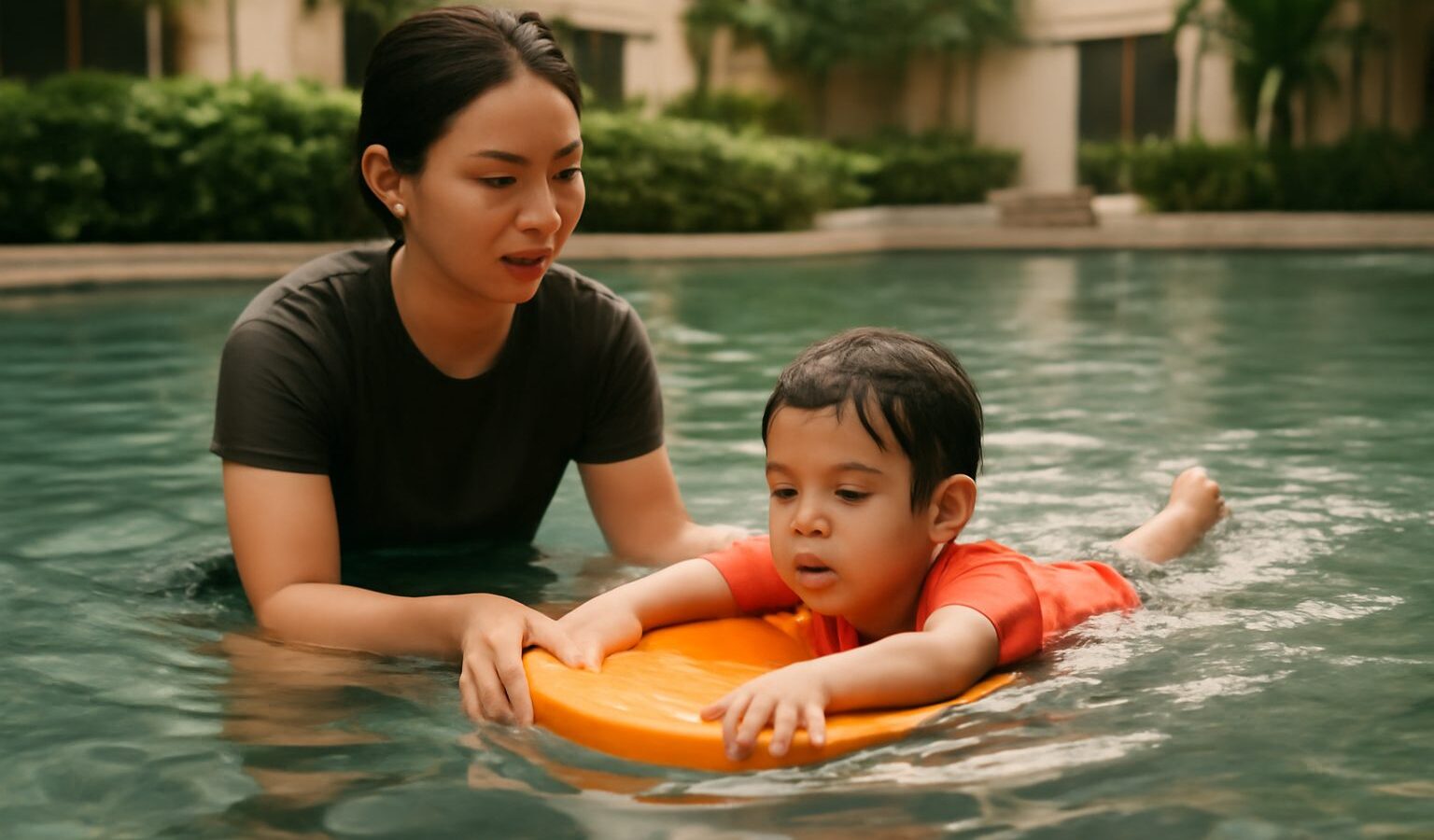
Swimming is one of the great joys of growing up in Singapore, from ActiveSG pools to condominium pools and the occasional trip to the beach. It is also a vital life skill. But before we talk about strokes and lessons, the first thing every parent must understand is this: child swim safety in Singapore rests on constant, active adult supervision, not on a child’s ability to swim. Water safety always comes first. No lesson, float, or level of skill ever replaces a watching adult.
Drowning is silent and fast. It does not look like the dramatic splashing and shouting we see in films. A child can slip under the surface in seconds, without a sound, even in shallow water and even with people nearby. This is why constant supervision is not being overprotective. It is the single most important thing you can do to keep your child safe in and around water.
Water Safety Comes First, Always
Whenever your child is in or near water, a responsible adult must be watching closely, within arm’s reach for babies, toddlers, and weak swimmers. Never leave a child unattended in or near water, not even for a moment to answer the phone or grab a towel. This includes places parents often underestimate: the bathtub at home, an inflatable paddling pool, a bucket, or a pool at a relative’s home. Young children can drown in very little water.
When you supervise, actually supervise. Put your phone away, avoid chatting with your back to the pool, and keep your eyes on your child rather than assuming someone else is watching. At gatherings where several adults are present, it is easy for everyone to assume someone else is in charge, which is exactly when accidents happen. A simple solution is to name a designated water watcher who does nothing but watch the children in the water for a set time, then hands the role to another adult.
Understand What Floats and Aids Can and Cannot Do
Armbands, inflatable rings, and floats can give a false sense of security. They are toys, not safety devices, and they can slip off or deflate. A child wearing them still needs the same close supervision as one without. A properly fitted life jacket is a better choice for open water or boats, but even then it does not replace a watching adult. Teach your child from the start that floats are for fun, and that safety comes from staying near you and following the rules.
Choose Lessons and Safe Places Wisely
Learning to swim genuinely reduces risk, and it is a wonderful skill for life, but it is important to keep expectations realistic. Lessons and barriers reduce risk. They never remove it. Even a confident child swimmer can get into trouble, tire, panic, or misjudge deep water, so supervision continues no matter how well your child swims.
When choosing lessons, look for trained, qualified instructors and small classes where each child gets proper attention. Many parents in Singapore start with parent-and-baby water familiarisation, then move to structured lessons as the child grows. There is no single right age, since children develop at different rates, so follow your child’s readiness rather than a fixed timeline. If you are weighing up your options, signing your child up for swimming lessons in Singapore walks through what to consider.
Where you swim matters too. Choose lifeguarded pools where possible, and always read and follow posted depth and safety signs. At the beach, be aware of currents, sudden drop-offs, and changing conditions, and keep young children in shallow, calm water close to you. Teach older children never to swim alone, never to dive into water of unknown depth, and to get out and tell an adult the moment they feel unwell or too tired.
Layers of Protection at Home and Beyond
The safest approach uses several layers together, so that if one fails, others still protect your child. Barriers are a key layer. If you have access to a private pool, secure fencing with a self-closing, self-latching gate keeps young children from wandering in unsupervised. At home, empty baths, buckets, and paddling pools straight after use, and never leave water standing where a small child can reach it. Keep bathroom doors closed if you have a curious toddler.
Basic rules, taught early and repeated often, become second nature. Simple ones work best: no running near the pool, always ask an adult before going in, and get out slowly using the steps. Talk about these rules calmly and regularly rather than only in the moment. This is part of the wider work of childproofing your home in Singapore, where water is one of several everyday hazards to plan for.
It is also worth every parent and caregiver knowing what to do in an emergency, including how to call 995 quickly and, ideally, basic first aid. Learning infant and child resuscitation gives you skills you hope never to use but will be grateful for if you ever do. You can read more in family first aid and emergency preparedness in Singapore.
Bringing It Together
Teaching your child to swim is a gift, but child swim safety is built on far more than swimming skill. It rests on an adult who is always watching, on safe and lifeguarded places, on qualified instructors, on barriers and simple rules, and on never assuming that lessons make a child drown-proof. Keep supervision constant, treat every body of water with respect, and let your child enjoy the water knowing you are right there. With water safety firmly first, swimming can be one of the happiest and healthiest parts of your family’s life in Singapore.