

A shop in an HDB estate puts your business right where people live. Neighbourhood centres, void deck shops and shophouse rows under HDB blocks draw steady foot traffic from residents, and rents are often seen as more manageable than prime mall space. But if you are searching for an HDB shop for rent, you will find the process works differently from leasing a unit in a private mall or office building.
This guide explains how HDB commercial tenancy works, from tenders and approved trades to subletting rules, and how renting from HDB differs from renting a shop that a private owner holds in an HDB estate. It is general information, not legal advice. Confirm the current terms with HDB before you commit.
Two Ways to Rent a Shop in an HDB Estate
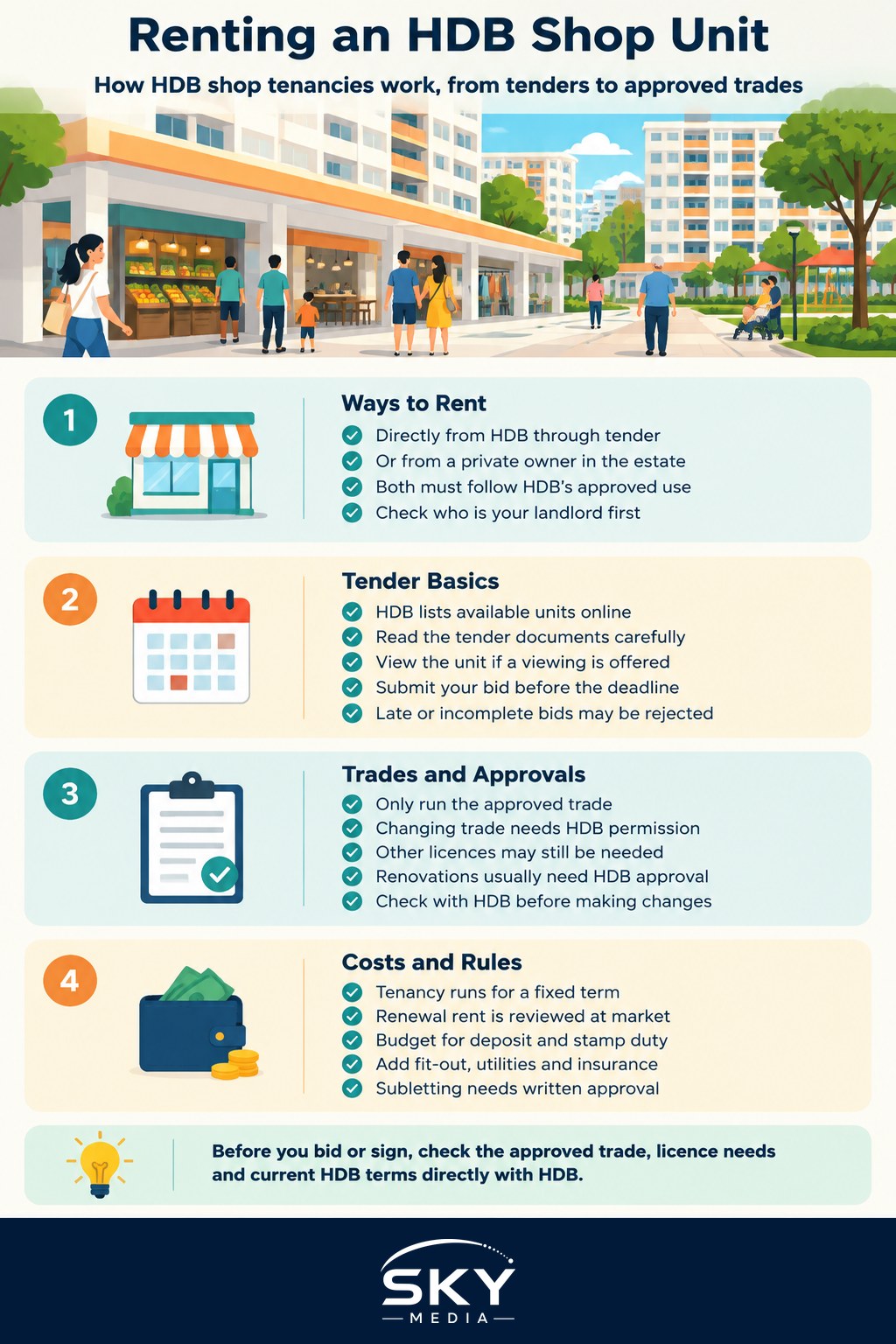
Not every shop in an HDB estate is rented from HDB. There are two main routes:
- Renting directly from HDB. HDB owns and leases many commercial units, including shops, eating houses and other premises. These are offered to the public, typically through tenders, and HDB is your landlord.
- Renting from a private owner. Over the years, many HDB shops were sold to their tenants or other buyers. These owners can lease their units to businesses. You will often see these listed on property portals or through agents.
Both routes share one important feature: the unit can only be used for trades HDB allows for it. Even when a private owner is your landlord, HDB’s rules on the use of the premises still apply.
| Factor | Renting from HDB | Renting from a private owner |
|---|---|---|
| How you get the unit | Usually by tender, with bids submitted by the deadline | Negotiated directly or through an agent |
| Who sets the rent | Your tender bid, then market review at renewal | Agreed between you and the owner |
| Approved trade | Specified in the tender and tenancy | Still bound by HDB’s approved use for the unit |
| Tenancy terms | HDB’s standard tenancy agreement | Owner’s lease, which should respect HDB rules |
| Changes to trade or subletting | Apply to HDB for approval | Owner and HDB approvals may both be needed |
How HDB Shop Tenders Work
HDB publishes available commercial units on its website, along with tender details. Each listing typically includes the location, floor area, the trade or trades allowed, and the tender closing date. To take part:
- Read the tender documents carefully. They set out the approved trade, tenancy period, conditions and how bids are evaluated.
- View the unit if a viewing is offered. Check its condition, frontage, access for deliveries and nearby competition.
- Work out what you can afford. Your bid is your monthly rent commitment. Bid on the numbers your business can sustain, not on excitement about the location.
- Submit by the deadline, in the format required. Late or incomplete bids may be rejected.
Many HDB tenders are awarded mainly on the rent offered, though some are assessed on other criteria too. The tender documents explain the method used for that unit. If your bid succeeds, you will be asked to sign the tenancy agreement and pay the required deposit and other charges stated in the documents.
Approved Trades and Why They Matter
HDB plans each neighbourhood so residents have a balanced mix of everyday services, such as minimarts, clinics, hair salons, food outlets and laundries. Each unit therefore comes with an approved trade or a list of allowed trades.
What this means for you:
- You can only run the trade approved for the unit. Opening a bubble tea shop in a unit approved for a tuition centre, for example, would breach the tenancy.
- Changing trade needs HDB’s permission. If your business evolves, apply to HDB before making the change. Approval is not automatic and depends on factors such as the trade mix in the area.
- Other licences are separate. HDB approval to occupy a unit does not replace licences from other agencies. A food business, for example, needs the relevant licence from the Singapore Food Agency (SFA), and some trades need approvals from other bodies such as the police or NEA.
- Renovations need approval too. Works such as signage, partitions, exhaust systems or plumbing usually need HDB approval before you start.
Before signing anything, check that the business you plan to run fits the unit’s approved trade and that you can obtain every licence it needs.
Tenancy Terms, Renewals and Costs
HDB commercial tenancies run for a fixed term set out in the agreement. When the term ends, HDB may offer a renewal, and the rent at renewal is usually reviewed against prevailing market rents. That can mean an increase if the area has become more popular.
Costs to budget for beyond the monthly rent include:
- Security deposit, as stated in the tender or tenancy documents
- Stamp duty on the tenancy agreement, payable to IRAS
- Renovation and fit-out costs, plus reinstatement when you leave
- Utilities, conservancy or service charges where applicable
- Insurance for your premises, stock and public liability
- Licence fees from other agencies for your trade
HDB, IRAS and the licensing agencies set their own charges, which can change. Check the current figures with each body rather than relying on old listings or hearsay.
Subletting and Sharing Your Shop
Many shop tenants want to share space to cut costs, such as renting a corner to a phone accessories seller, or letting another trade use part of the unit. HDB controls this closely.
- Subletting needs HDB’s approval. Do not sublet any part of an HDB-rented shop without written permission. Unauthorised subletting can lead to penalties or termination of the tenancy.
- The subtenant’s trade must also be allowed. Approval depends on whether the additional trade suits the unit and the neighbourhood.
- You remain responsible. As the main tenant, you answer to HDB for how the premises are used.
- Private owners must follow HDB rules too. If you rent from a private owner, check that any subletting arrangement meets HDB’s requirements as well as the owner’s lease.
If you are renting a shop from a private owner, ask the owner or agent to confirm the approved use in writing, and check any doubts directly with HDB.
Is an HDB Shop Right for Your Business?
HDB shops suit businesses that rely on regular, local customers: neighbourhood food outlets, minimarts, hair salons, tuition centres, clinics, laundries, print and repair shops. They are less suited to destination retail that needs mall traffic, or to trades HDB does not permit in that location.
Before bidding or signing, ask yourself:
- Do residents nearby actually need what you sell?
- How many similar shops are already in the neighbourhood centre?
- Can you sustain the rent if business is slow for the first months?
- Have you checked every licence and approval your trade requires?
If you are also comparing private malls and offices, our guide to renting an office or shop space in Singapore covers those options. Business owners setting up a specific trade may find our guide on how to start a print shop in Singapore useful, and if timing matters to your customers, see our notes on opening a business during the Seventh Lunar Month.
An HDB shop for rent can be an excellent base for a neighbourhood business, as long as you understand the tender, stay within the approved trade and get approval before subletting or making changes. HDB’s commercial properties pages are the authoritative source for current tenders and rules.
Official sources: HDB
Further reading: Renting a Coffeeshop Stall in Singapore: Costs, Leases and What to Check · How to Start a Phone and Laptop Repair Shop in Singapore · Shop Signage Approval in Singapore: What Needs a Permit