

Paper towels are convenient, but in many Singapore homes they disappear by the roll: wiping kitchen counters, mopping up spills, drying hands, polishing the dining table. Switching to a reusable cleaning cloth is one of the simplest swaps a household can make, yet many people try it once, end up with a smelly, grey rag and go straight back to paper.
This guide focuses on getting that single swap right. It covers which reusable cleaning cloth materials suit which jobs, how to keep cloths hygienic in our humid climate, and a realistic routine that does not add hours of laundry to your week.
Why Paper Towels Are Worth Replacing
Paper towels are used once and thrown away. They cannot go into the blue recycling bin once they are soiled with food or grease, so they end up in general waste. Over a year, a household that reaches for paper towels several times a day uses a surprising amount.
A good set of reusable cloths can replace most of that use. The trade-off is that cloths need washing and drying, and in Singapore’s heat and humidity a damp cloth left balled up in the sink can start to smell within hours. The aim is to choose materials and habits that make reuse as easy as tearing off a sheet.
If you are working through several household swaps at once, our overview of reusable swaps for everyday life is a good companion to this guide.
Comparing Reusable Cleaning Cloth Materials
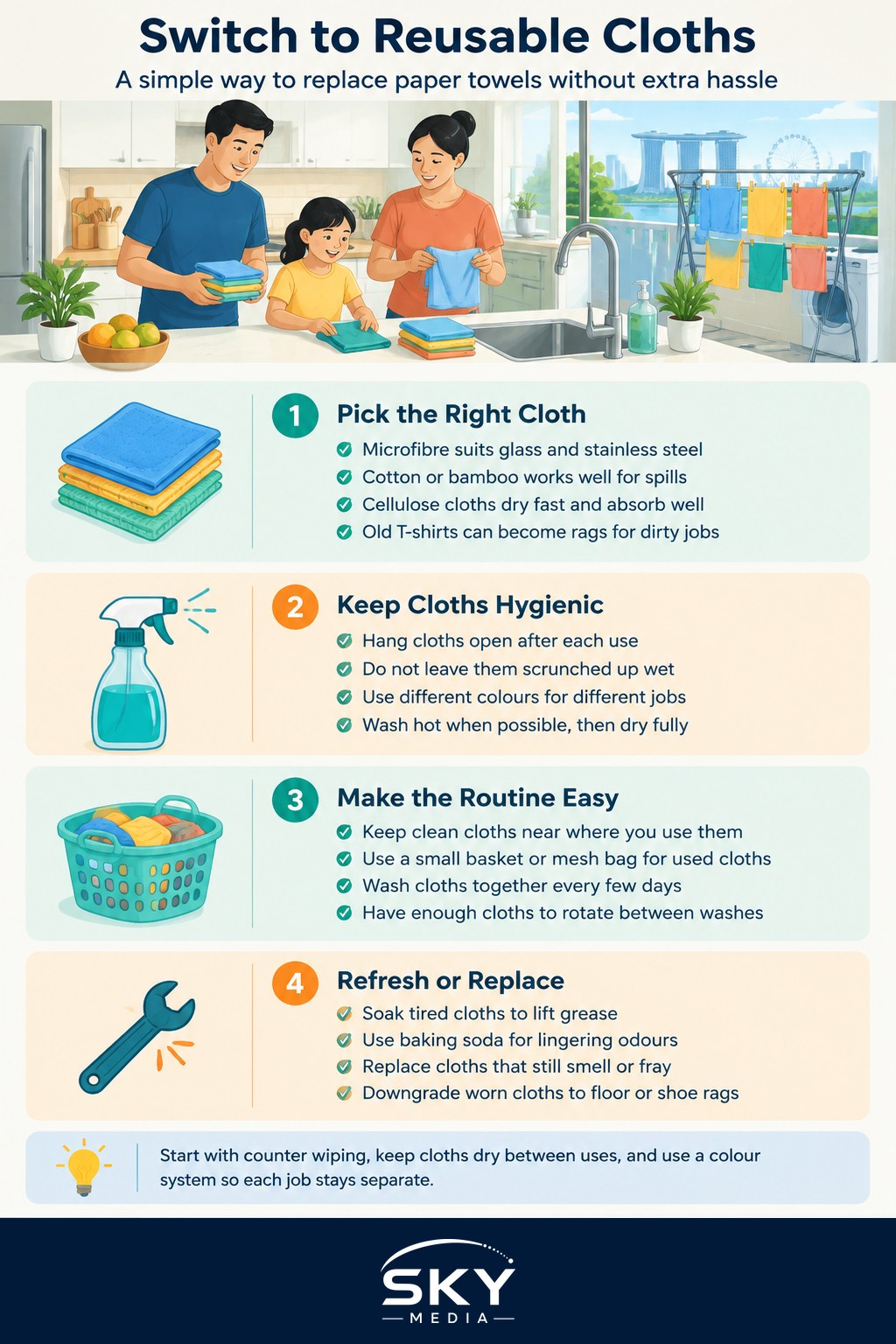
Not every cloth suits every job. Most households end up with two or three types, each with a clear role.
| Cloth type | Best uses | Strengths | Weaknesses |
|---|---|---|---|
| Microfibre cloth | Glass, mirrors, stainless steel, dusting, general wiping | Picks up fine dust and grease well, dries fairly fast | Sheds tiny synthetic fibres when washed, loses grip if washed with fabric softener |
| Cotton or bamboo cloth | Kitchen counters, drying dishes, spills | Absorbent, gentle, natural fibre, easy to boil wash | Slower to dry, can stain |
| Cellulose sponge cloth (often sold as Swedish dishcloth) | Wiping counters, stovetops, sinks | Very absorbent, dries quickly, often compostable at end of life | Wears out faster than fabric, can tear |
| Old T-shirts and towels cut into rags | Dirty jobs, floors, car, shoes | Free and gives old fabric a second life | Edges may fray, less absorbent than purpose-made cloths |
A few practical notes:
- Microfibre is excellent for streak-free glass and stainless steel with just water, which can reduce the need for spray cleaners. Wash it in a laundry bag to reduce fibre shedding, and skip fabric softener, which clogs the fibres.
- Cotton and bamboo handle higher wash temperatures well, which helps with kitchen hygiene.
- Cellulose sponge cloths are a good direct replacement for the paper towel you use to wipe a counter, because they behave similarly and dry quickly when spread out.
Keeping Cloths Hygienic in a Humid Climate
The main complaint about reusable cloths is smell, and the main cause is a cloth that stays damp too long. Bacteria thrive in warm, wet fabric, and Singapore’s humidity slows drying.
Dry cloths between uses. After wiping, rinse the cloth, wring it out firmly and hang it open over the tap, a rail or a hook. Never leave it scrunched in the sink or on the counter.
Use a colour system. Assign colours to jobs so you never wipe the kitchen counter with the cloth that cleaned the toilet. A simple scheme:
- One colour for kitchen counters and dining table
- One colour for dishes and drying
- One colour for bathrooms
- One colour for floors and dirty jobs
Change kitchen cloths often. Many households swap the counter cloth daily, or sooner after wiping up raw meat juices, and put the used one straight into a laundry basket rather than the sink.
Wash hot when possible. Washing cloths with hot water helps remove grease and reduce bacteria. Check the care label, since some microfibre and blended cloths have a temperature limit.
Dry fully. Line drying in sunlight on a ventilated balcony or at the corridor rack helps, but on rainy days use a dryer or a fan to make sure cloths are completely dry before storing.
Keep raw meat separate. For anything involving raw meat or fish juices, many people still prefer a disposable towel or a dedicated cloth that goes straight into a hot wash. This is a sensible place to make an exception rather than risk cross-contamination.
A Realistic Weekly Routine
The swap only sticks if the routine is easy. Here is a simple approach that works for most flats:
- Keep a stack in reach. Store clean, folded cloths in a drawer or basket next to where you used to keep the paper towel roll. If a fresh cloth is as close as paper was, you will reach for it.
- Have a small laundry basket or mesh bag under the sink or near the service yard for used cloths. Let them dry out before they go in, to prevent smells building up.
- Wash as one load. Run cloths together, or with towels, every few days. Our guide to caring for bed linen and towels has tips on wash settings that also suit cleaning cloths.
- Own enough to rotate. You need enough cloths to cover the days between washes, plus a few spares for spills.
Reviving and Refreshing Tired Cloths
Even well-kept cloths can become stiff, greasy or musty over time. Before throwing them out, try a refresh:
- Soak in hot water with a little laundry detergent to lift built-up grease.
- Add baking soda to the wash to help with odours.
- Avoid fabric softener on microfibre and absorbent cloths, since it leaves a coating that reduces absorbency.
- Dry thoroughly in sunlight, which also helps with lingering smells.
The deep-clean methods in our guide on how to strip and refresh your towels and sheets work on cotton cleaning cloths too.
Knowing When to Replace a Cloth
Reusable does not mean forever. Replace a cloth when:
- It still smells after a proper hot wash and full drying.
- It has holes or is fraying so much that it leaves lint behind.
- A microfibre cloth no longer grips dust or leaves streaks even when clean.
- A cellulose sponge cloth has thinned out or started crumbling.
At the end of its life, downgrade a cloth before discarding it. A worn kitchen cloth can become a floor or shoe-cleaning rag. Cellulose sponge cloths labelled as compostable may go into a home compost bin, so check the packaging. Synthetic microfibre goes into general waste.
Making the Swap Stick at Home
Start small. Replace paper for counter wiping first, then hand drying, then spills. Keep a single roll of paper towels for genuinely messy or raw-meat jobs if that makes the household more comfortable. Involve everyone at home, including helpers if you have one, by agreeing on the colour system and where used cloths go.
Within a few weeks, most families find that the roll of paper towels lasts far longer than it used to, and the cloth drawer becomes the natural first stop for every spill.