
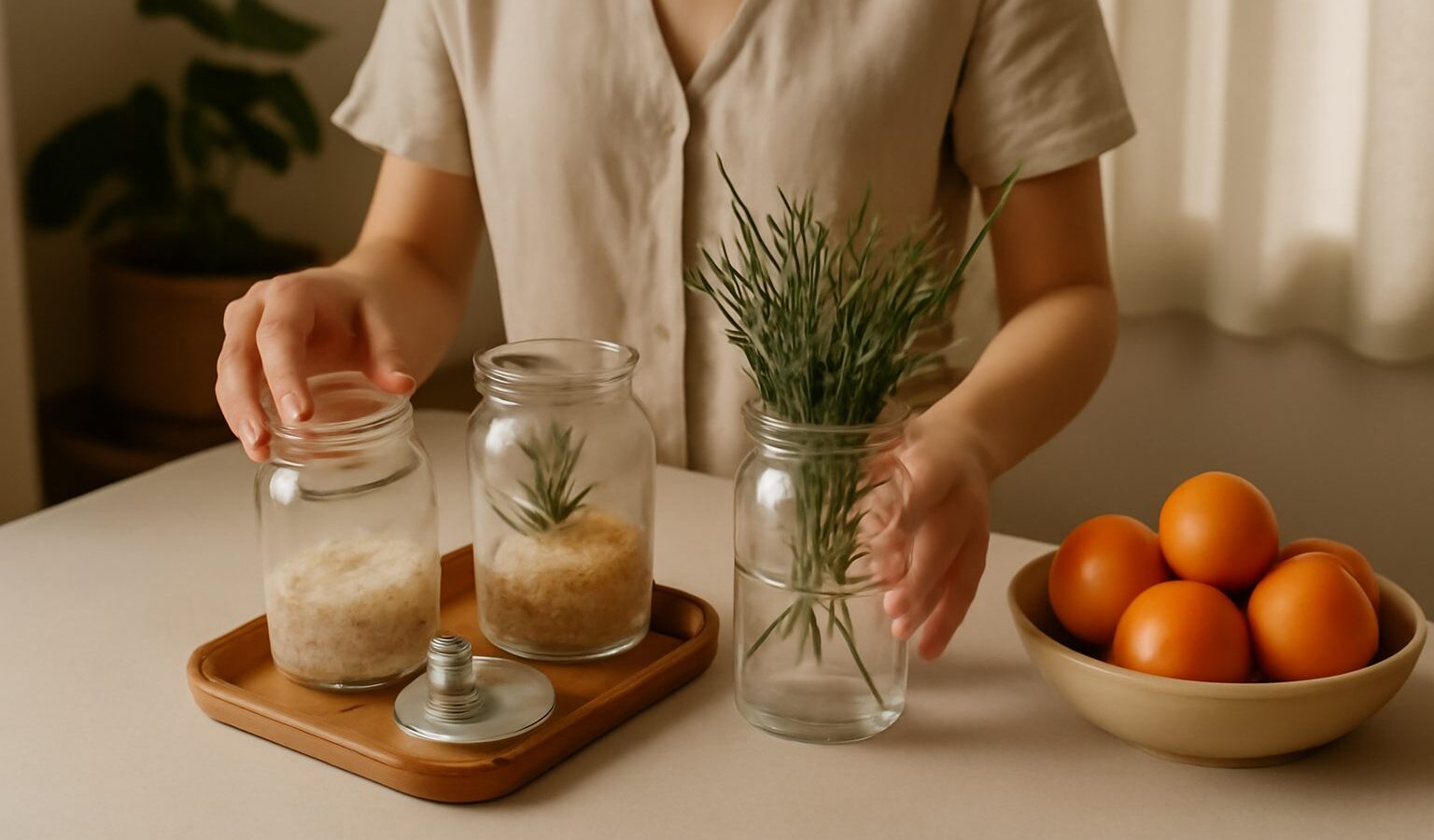
Jam, kaya, sambal, pickles, honey and sauces often come in sturdy glass jars that seem too good to throw away. Reusing them cuts waste, saves money on storage containers and keeps your kitchen tidy. But a jar that held chilli oil for months, or one with a hairline crack, needs some care before it holds your next batch of homemade achar. If you want to reuse glass jars in Singapore homes without worry, the key steps are cleaning properly, checking for damage and choosing sensible uses.
This guide covers safe cleaning, sterilising, storage and practical reuse ideas. It does not cover recycling rules, which are a separate topic.

Check Each Jar Before You Keep It
Not every jar is worth saving. Spend ten seconds inspecting each one.
- Look for chips and cracks. Run a finger gently around the rim and hold the jar up to the light. Chips on the rim can cut lips or let bacteria in under the lid. Cracks can widen when the jar is heated or cooled quickly.
- Check the lid. Metal lids with rust, dents or a peeling inner coating should be replaced or used only for dry, non-food items.
- Smell the seal. Rubber or plastic seals inside lids can hold strong smells such as garlic or fish sauce. If the smell does not wash out, keep that jar for non-food uses.
- Think about size. Keep a few sizes that you actually use. A cupboard full of mismatched jars quickly becomes clutter.
If a jar breaks or you decide to discard a chipped one, wrap it carefully before putting it out. Our guide on how to dispose of broken glass safely in Singapore explains the safest way.
How to Clean Glass Jars Properly
Cleaning is the most important step, especially for jars that held oily or sticky food.
- Empty and soak. Scrape out leftover food, then soak the jar and lid in warm, soapy water for a while to loosen residue.
- Scrub inside and out. Use a bottle brush for the corners and the inside of the rim, where old food hides. Do not forget the thread on the jar neck and the inside of the lid.
- Deal with oil. For jars that held chilli oil or sambal, a squirt of dishwashing liquid with hot water usually works. A little baking soda as a gentle scrub helps with greasy films.
- Remove smells. Fill the jar with water and a spoonful of baking soda, or a splash of white vinegar, and leave it overnight. Leaving the open jar and lid in the sun for a few hours can also help.
- Rinse and dry fully. Rinse well and let the jar air-dry upside down on a rack. Moisture trapped inside a closed jar in Singapore’s humidity can lead to mould.
Removing Stubborn Labels
Soak the jar in warm, soapy water until the paper label peels off. For sticky glue left behind, rub with a little cooking oil, then wash it off with dishwashing liquid. Avoid sharp blades that can scratch the glass.
Sterilising Jars for Food
Clean is good enough for dry goods such as rice, beans or spices. For homemade sauces, jams, pickles or anything wet, sterilising the jar first gives extra protection.
Boiling method. Place clean jars in a large pot, cover with water, bring to the boil and keep boiling for around ten minutes. Lift them out with tongs and let them dry upside down on a clean rack or towel.
Oven method. Place clean, wet jars on a tray in a low oven for a short time until dry. Put metal lids aside and sterilise them by boiling instead, as rubber seals can be damaged by dry heat.
Avoid thermal shock. Glass can crack when it changes temperature suddenly. Do not pour boiling liquid into a cold jar, and do not put a hot jar on a cold, wet surface. Fill warm jars with warm food, or let both cool.
A note on preserving food: making shelf-stable preserves at home is a skill of its own, with specific steps for acidity, heat and sealing. Reused commercial lids may not seal reliably for this purpose. For anything you plan to keep at room temperature for a long time, follow a trusted, tested recipe, and when in doubt, store it in the fridge and eat it soon. For general guidance, the Singapore Food Agency (SFA) shares food safety advice for homes. Our guide on how to store food safely at home also covers fridge times and labelling.
What to Store and What to Avoid
Glass is non-reactive and easy to clean, which makes it a good choice for many uses. Some combinations are still best avoided.
| Use | Safe to reuse a jar? | Tips |
|---|---|---|
| Dry goods such as rice, beans, oats and spices | Yes | Make sure the jar is completely dry, keep in a cool cupboard |
| Homemade sauces, sambal and pickles | Yes, with care | Sterilise first, refrigerate and use within a sensible time |
| Leftovers in the fridge | Yes | Leave space at the top, let hot food cool before sealing |
| Freezing soups or stock | Only with caution | Use straight-sided jars, leave plenty of headspace, as liquid expands and may crack the glass |
| Cleaning products and chemicals | Avoid in food jars | Can be mistaken for food or drink, especially by children |
| Hot oil or boiling liquids | Avoid pouring straight in | Sudden heat can crack the glass |
Always label jars with the contents and the date. A jar of homemade chilli paste looks a lot like a jar of tamarind paste after a few weeks in the fridge.
Practical Reuse Ideas Around the Home
Once your jars are clean and checked, they can replace many plastic containers.
In the kitchen
– Store loose spices, dried chillies, ikan bilis and dried shrimp in airtight jars to keep out moisture and ants.
– Keep overnight oats, chia pudding or salad dressings in small jars for quick breakfasts and lunches.
– Use wide jars to sprout beans or store cut herbs in water in the fridge.
For bulk and refill shopping
– Bring clean, dry jars to refill stores that let you weigh and fill your own containers. Weigh the empty jar first if the shop asks you to.
Around the house
– Organise buttons, hair ties, cotton buds, screws or charging cables.
– Turn small jars into pen holders, plant cuttings holders or a coin jar.
– Make a simple bathroom set for cotton pads and toothbrushes, but keep glass away from slippery wet floors where it might fall.
For gifts
– Fill a nice jar with homemade cookies, granola or pineapple tarts at festive seasons, with a handwritten label.
Safety Habits for Glass in the Home
- Store heavier jars on lower shelves so they do not fall on anyone.
- Keep glass out of reach of young children and away from the edge of counters.
- Never store non-food items in a jar that still has a food label.
- Hand-wash older jars rather than putting them through very hot dishwasher cycles if they have shown signs of wear.
- Retire any jar that develops a chip or crack.
Reusing glass jars is one of the easiest green habits to build. With proper cleaning, a quick check for damage and sensible choices about what goes inside, those empty kaya and jam jars can serve your home for years.