
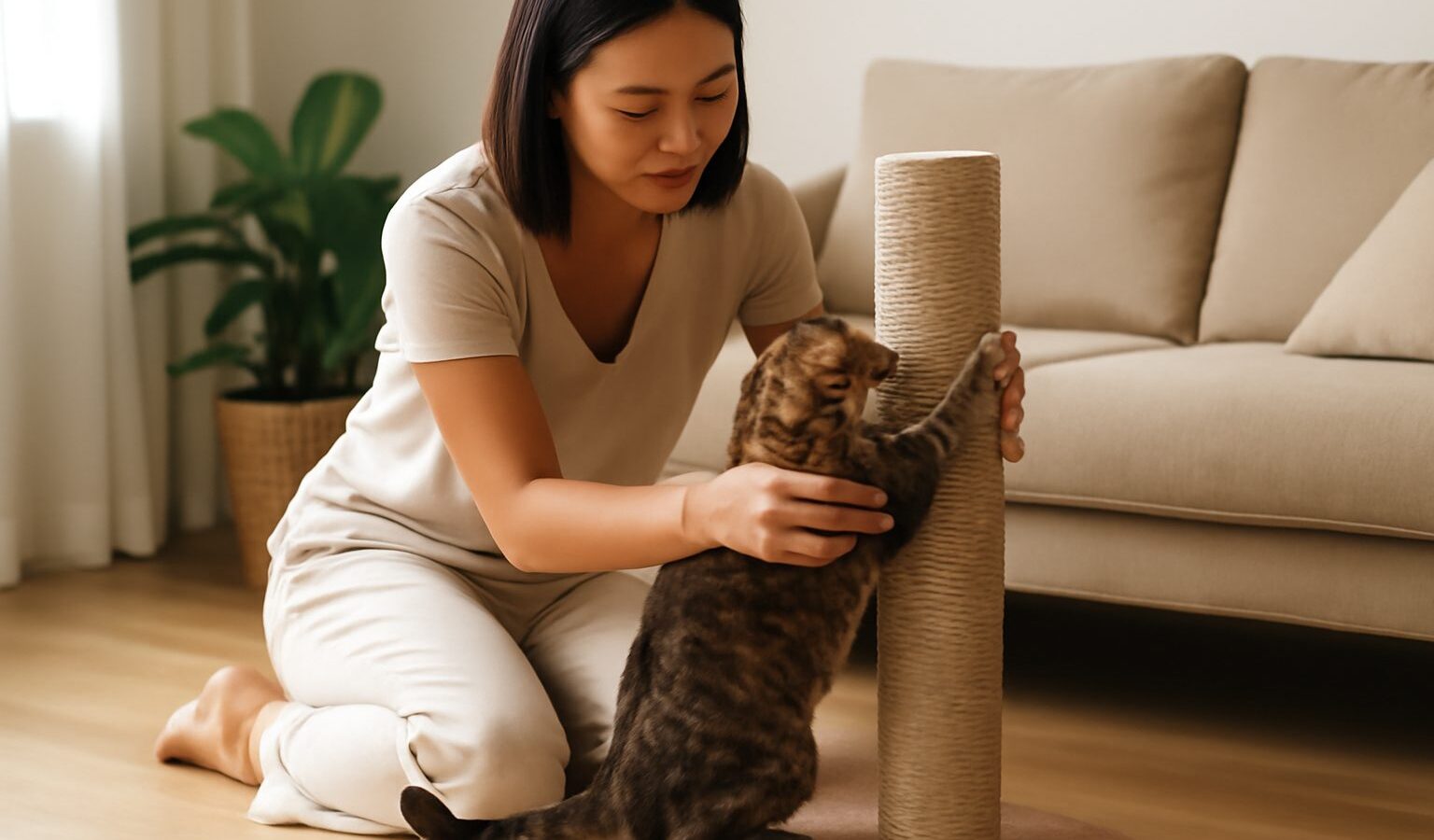
Scratching is one of the most natural and important things a cat does, so trying to stop it altogether is neither possible nor kind. The trick is to give your cat somewhere appropriate to scratch and make it more appealing than your sofa. A well-chosen cat scratching post in Singapore, placed thoughtfully and introduced positively, redirects that instinct away from your furniture and keeps your cat happy and healthy. This guide covers why cats scratch, how to pick the right post, and how to gently teach your cat to use it, all without punishment.
Why Cats Need to Scratch
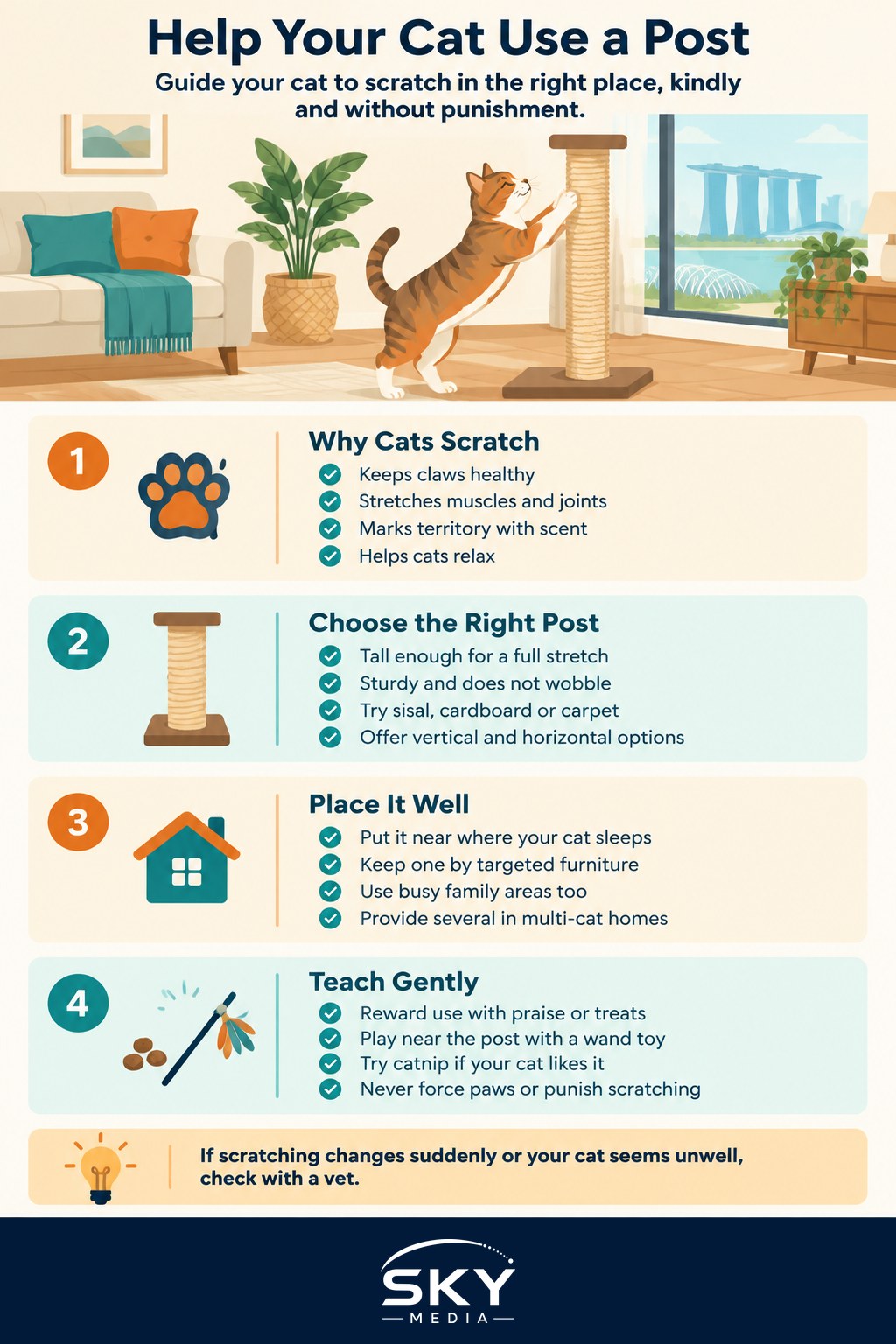
Scratching is not your cat being naughty. It serves several genuine purposes that matter to your cat’s wellbeing:
- It keeps claws healthy by shedding the worn outer layers.
- It stretches and exercises the muscles of the shoulders, back, and legs.
- It marks territory, both with a visible scratch and with scent from glands in the paws.
- It relieves stress and simply feels good.
Because scratching is a deep-seated need, the aim is never to eliminate it but to direct it somewhere acceptable. Declawing is a painful, harmful procedure that removes part of each toe and is widely condemned on welfare grounds, so it is never the answer. If your cat is scratching the furniture, they are not misbehaving; they simply need a better option, and our guide to stopping your cat scratching furniture goes deeper on managing that.
Choosing the Right Post
Many scratching posts fail simply because they do not suit the cat. Cats can be particular, so choose with your cat in mind.
- Height and sturdiness: A post should be tall enough for your cat to stretch out fully and stable enough not to wobble, since a post that tips over will scare a cat off for good.
- Texture: Many cats love sisal rope or coarse fabric, but some prefer cardboard or carpet. Offering a couple of textures helps you learn your cat’s preference.
- Orientation: Some cats scratch vertically, reaching up high, while others prefer horizontal surfaces on the floor. Watch what your cat naturally does and provide both if you are unsure.
In a compact HDB flat or condo, a multi-level cat tree can be a great space-saver, combining scratching, climbing, and a perch by the window. For more on keeping indoor cats content in smaller homes, see our guide to indoor cat enrichment and play.
Placement Is Everything
Even the best post will be ignored if it is hidden away in a spare corner. Cats scratch where it matters to them, so place posts thoughtfully.
Put a post near where your cat sleeps, since cats love to scratch and stretch right after waking. Place another close to the furniture they have been targeting, so the good option is right there when the urge strikes. Sociable cats often like to scratch in busy family areas rather than tucked-away spots. If you have more than one cat, provide several posts around the home so nobody has to compete, which also supports multi-cat household harmony.
Gently Teaching Your Cat
Once you have the right post in the right place, encourage your cat to use it with kindness and never force. Forcing a cat’s paws onto a post can frighten them and create a bad association, so let it be their choice.
Simple, positive ways to build the habit:
- Reward with praise or a treat whenever you see your cat use the post, so scratching there predicts good things.
- Play with a wand toy near the post and let excited scratching happen naturally, then reward it.
- Rub a little catnip on the post, if your cat responds to it, to draw them in.
- Make the furniture less appealing in the meantime, for example with a temporary cover, while you build the new habit.
- Never shout at or punish your cat for scratching, as this causes fear and stress and does not teach them where to scratch instead.
Keep your cat’s claws in good shape too, which reduces damage and snagging. Regular, gentle nail care done positively goes hand in hand with a good scratching routine.
When to Check With a Vet
A sudden change in scratching, such as scratching far more than usual, over-grooming, or targeting one spot, can sometimes signal stress, discomfort, or a skin or health issue rather than normal behaviour. If your cat also seems unwell, is hiding, or shows changes in appetite or toileting, or if scratching seems linked to anxiety, it is worth speaking to your vet. This article is general information and not veterinary advice, so let a licensed vet assess any health or behavioural concern with your individual cat.
Teaching your cat to use a scratching post is really about working with their instincts rather than against them. Give your cat an appealing post in a sensible spot, reward the behaviour you want, and be patient. Your cat gets to scratch, stretch, and mark to their heart’s content, and your furniture gets to stay in one piece. That is a happy outcome for everyone in the home.
Frequently Asked Questions
Why does my cat ignore the scratching post I bought? Usually the post is the wrong height, wobbly, in the wrong spot or covered in a texture your cat dislikes. Try a taller, sturdier post near where your cat sleeps, and offer a second texture or orientation. Reward any interest, and never force the paws onto it.
Is it okay to declaw a cat to protect my furniture? No. Declawing removes part of each toe, is painful and is widely condemned on welfare grounds. Redirect scratching with suitable posts, reward use, make furniture less appealing for a while and keep nails trimmed. Ask your vet for guidance.
Should I get a vertical post or a horizontal scratcher? It depends on your cat. Some scratch up high, others prefer flat surfaces on the floor. Watch how your cat scratches now and offer both if unsure. A cat tree can combine scratching, climbing and a perch in a small flat.
How many scratching posts do I need for several cats? Provide several posts around the home so cats do not have to compete, including in sleeping and busy family areas. Different textures and positions help each cat find a favourite. More options also support harmony in a multi-cat household.
How often should I trim my cat’s nails to reduce damage? Regular, gentle trims help reduce snagging and damage, and many owners do it every few weeks, depending on the cat. Introduce handling slowly with treats. If your cat resists, a vet or groomer can show you the safe way.