
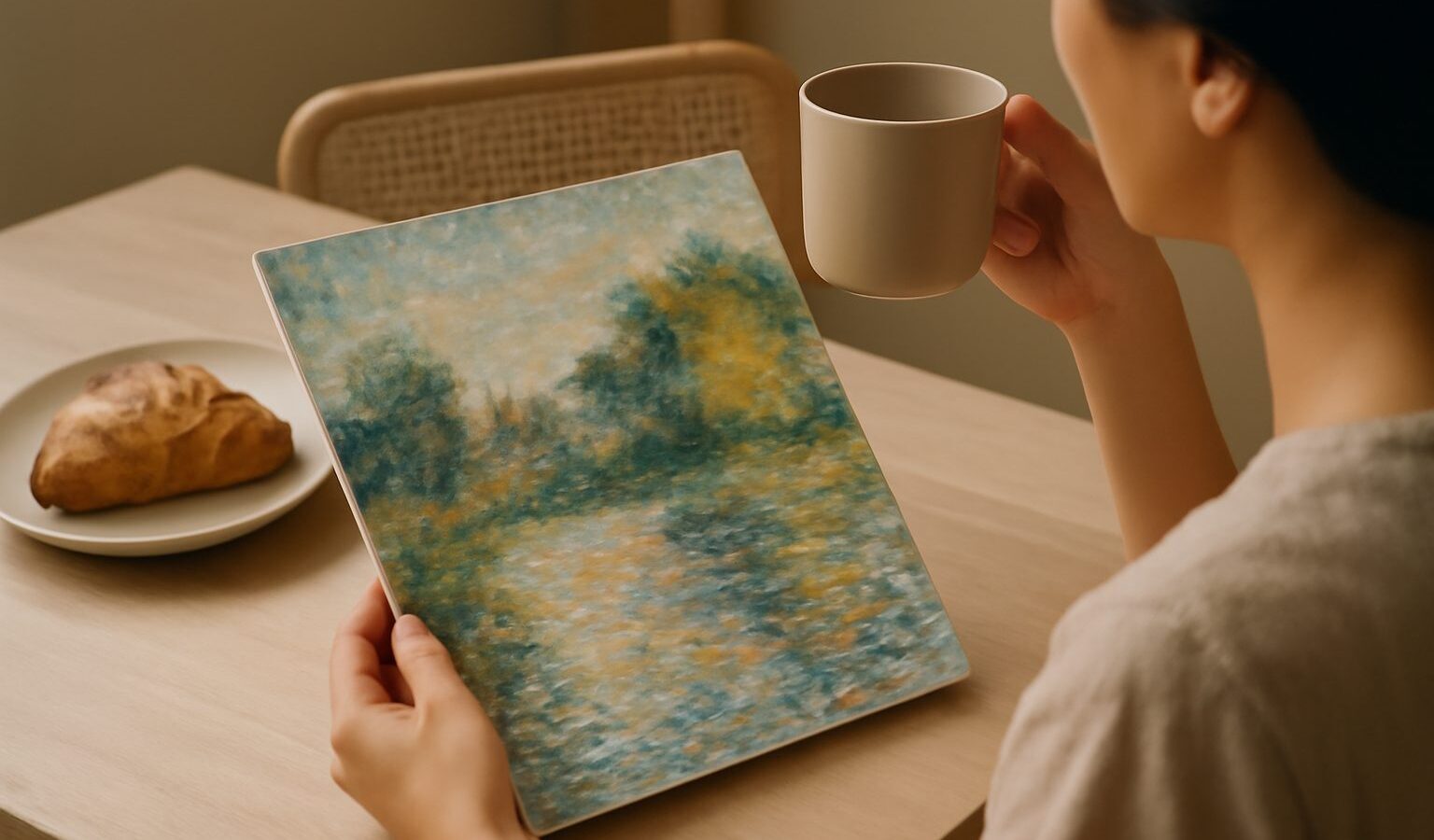
Few art movements are as instantly loved as this one, and learning to appreciate impressionism in Singapore is a joyful way to deepen your relationship with painting. Those shimmering scenes of gardens, rivers, and busy boulevards feel warm and familiar, yet there is far more going on beneath the surface than pretty colours. Impressionism marked a genuine revolution in how artists looked at the world. This guide explains what the movement was, why it mattered, who the key figures were, and how you can begin to enjoy it more fully.

What Impressionism Was
Impressionism emerged in France in the 1860s and 1870s, when a group of young painters grew tired of the polished, formal art favoured by the official academies of the day. Instead of grand historical scenes finished to a glassy smoothness in a studio, these artists wanted to capture a fleeting moment, the way light actually falls on a field at a particular hour, or the flicker of sunlight on moving water.
To do this they changed almost everything about how they worked. They often painted outdoors, directly in front of their subject, a practice known by the French phrase for painting in the open air. They used short, visible brushstrokes and dabs of unmixed colour placed side by side, trusting the viewer’s eye to blend them from a distance. They embraced ordinary modern life, cafes, train stations, boating parties, and quiet domestic corners, rather than kings and myths.
The name itself began almost as an insult. A critic mocked one of the paintings for looking like a mere impression, an unfinished sketch, and the label stuck. The artists eventually wore it with pride. Understanding this rebellious origin makes the work far richer, since what looks gentle to us today was once considered rough and shocking. If you enjoy tracing how styles evolve, it pairs beautifully with understanding art movements as a whole.
The Artists To Know
Several names anchor the movement, and getting familiar with them gives you a helpful map. Claude Monet is perhaps the most celebrated, famous for his series of water lilies, haystacks, and cathedral facades painted again and again at different times of day to study changing light. Pierre-Auguste Renoir brought a soft warmth to figures and lively social scenes. Edgar Degas is known for his dancers and his unusual, almost photographic compositions. Camille Pissarro painted rural life and city streets with great tenderness, and Berthe Morisot, one of the leading women of the group, captured intimate domestic moments with a wonderfully loose touch.
A little later, artists often described as post-impressionists built on these foundations and pushed in new directions, using colour and form more expressively. Knowing that impressionism was a starting point rather than an endpoint helps the whole story of modern painting make sense.
How To Start Appreciating It
You do not need any formal training to enjoy impressionism, but a few simple habits will help you see more.
- Step back, then lean in. From a distance the scene resolves into a clear image. Up close it dissolves into loose strokes and pure colour. Moving between the two is part of the pleasure.
- Look for the light. Ask yourself what time of day it is and where the sun sits. Impressionists were obsessed with capturing a specific moment.
- Notice the everyday subject. Celebrate that these are scenes of real, ordinary life rather than grand drama.
- Give yourself time. Let your eye wander and settle. There is no rush.
If you would like a broader toolkit for looking at paintings, the guidance in how to appreciate visual art is a lovely companion, and learning how to talk about art will help you put your responses into words when you visit a gallery with friends.
Enjoying Impressionism In Singapore
While the great impressionist collections live in museums abroad, Singapore offers plenty of ways to engage with the movement and the wider world of painting. Major international exhibitions occasionally travel here, so it is worth checking current listings at the National Gallery Singapore and other venues to see what is on. High-quality art books, documentaries, and reputable online collections from the world’s leading museums let you study famous impressionist works in fine detail from home.
You can also let the movement inspire your own creativity. Trying a little painting yourself, perhaps through a beginner class, gives you a real feel for how difficult it is to catch changing light with quick strokes. Exploring acrylic painting for beginners is an accessible way to experiment with colour and brushwork in the impressionist spirit.
Above all, remember that appreciating impressionism in Singapore is meant to be relaxed and pleasurable. These artists set out to capture the simple beauty of a passing moment, and the best way to honour that is to slow down and enjoy what you see. Start with one painting that makes you smile, look at it properly, and let your curiosity grow from there.
Further reading: Understanding Surrealism in Art