
Walk into any garden centre and the shelf of feeds can look baffling, with strings of numbers, unfamiliar words and bold promises on every packet. Getting to grips with npk fertiliser Singapore basics takes the mystery out of it, because once you can read the three headline numbers on a label you can choose the right feed for the right plant with confidence. This is a general guide for home growers, not professional horticultural advice, so always follow the specific instructions printed on whatever product you buy.
In our tropical climate the topic matters even more than it does in temperate countries. Plants here grow fast almost all year round, and our frequent heavy downpours flush water straight through pots and garden beds, washing dissolved nutrients away with it. That combination of quick growth and constant leaching means feeding is something local gardeners think about regularly, rather than once a season.
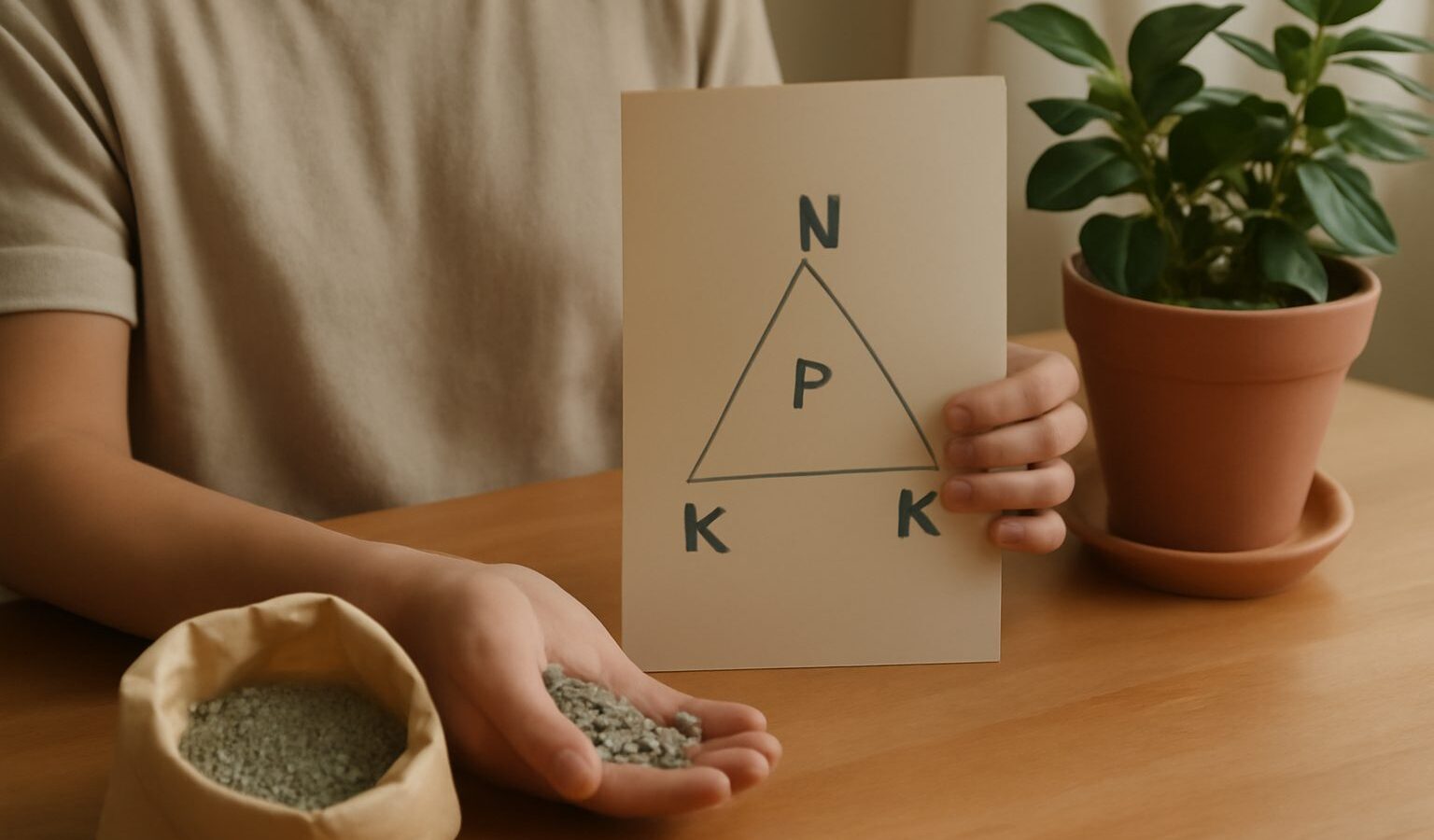
What N, P and K Actually Mean
Every general fertiliser label carries three numbers, such as 10-10-10 or 15-5-20. These are the NPK values, and they always appear in the same order. They tell you the percentage by weight of three major nutrients in the product.
- N is nitrogen. It drives leafy, green growth. A feed high in the first number pushes stems and foliage, which is why lawn feeds and leafy vegetable feeds lead with nitrogen.
- P is phosphorus. It supports roots, and it helps plants set flowers and fruit. A higher middle number suits seedlings establishing roots and plants you want to bloom.
- K is potassium. It is the all-rounder that helps with overall vigour, flowering, fruiting and general resilience. Flowering and fruiting feeds usually carry a strong third number.
So a bag marked 10-10-10 is a balanced, general-purpose feed with equal parts of all three. A tomato or fruit feed might read 5-10-10, leaning away from leaf and towards flowers and fruit. A leafy-green or lawn feed might read 20-5-10, pushing lush foliage. You do not need to memorise formulas. You simply match the emphasis of the numbers to what you want the plant to do.
Fertilisers also contain smaller amounts of secondary nutrients such as calcium, magnesium and sulphur, plus trace elements like iron and manganese. Good labels list these too. If your plants show yellowing between the leaf veins despite regular feeding, a lack of one of these micronutrients, rather than NPK, is often the cause.
Organic Versus Synthetic Feeds
Both organic and synthetic fertilisers can grow healthy plants, and each has its place.
Synthetic or mineral feeds, whether granular or liquid, deliver nutrients in a form plants can take up quickly. They are precise, the NPK numbers tend to be higher, and results show fast. The trade-off is that they do nothing to improve the soil itself, and they are easy to overdo.
Organic feeds such as compost, well-rotted manure, seaweed extracts and slow-release organic pellets work more gently. They release nutrients as soil life breaks them down, so the numbers on the packet are usually lower and the effect is slower but longer lasting. As a bonus they feed the soil biology and improve structure over time, which matters for pots that take a battering from our rain and sun.
Many local gardeners use both: compost and organic matter as the steady background, with an occasional targeted liquid feed when a plant is actively growing or flowering.
Reading the Rest of the Label
Beyond the NPK numbers, a label tells you how much to use and how often. This is the part people skip, and it is the part that matters most. The stated dose is a maximum, not a target to beat.
| Label term | What it is telling you |
|---|---|
| NPK numbers | Percentage of nitrogen, phosphorus and potassium by weight |
| Slow release / controlled release | Feeds gradually over weeks or months from coated granules |
| Liquid / soluble | Fast acting, mixed with water, needs reapplying more often |
| Dilution rate | How much product per litre of water; do not exceed it |
| Frequency | How often to apply; stretch it out rather than shorten it |
| Cautions | Keep away from children, pets and edible crops as directed |
Less Is More, Especially Here
The single most useful rule for feeding is that less is more. It is far easier to fix an underfed plant than an overfed one. When you apply too much fertiliser, mineral salts build up in the soil faster than the roots can use them. This draws moisture out of the roots and causes what gardeners call salt burn, seen as scorched brown leaf edges, wilting even in moist soil, and a white crust on the surface of the mix.
In Singapore there is a helpful natural counterweight. Our heavy rain regularly leaches salts out of pots and beds, which reduces the risk of build-up outdoors. But it cuts both ways, because the same rain washes away the nutrients you want the plant to keep. The sensible answer is to feed little and often at half the recommended strength during active growth, rather than a heavy dose now and then. Sheltered plants and indoor pots that never see the rain need extra care, as salts have nowhere to go, so flush the pot with plain water every month or two to rinse them out.
Always water a plant before you feed it, never when it is bone dry, as fertiliser applied to parched roots is much more likely to burn.
Feeding Safely
Fertiliser is a garden chemical, even the organic kind, so treat it with respect. Store every product in its original container, sealed and out of reach of children and pets. Keep pets and children away from freshly fed soil and from any granules scattered on the surface until they have been watered in. Wear gloves when handling concentrated feeds, and wash your hands afterwards.
For anything you plan to eat, such as herbs, chillies or leafy greens, read the label carefully, because some feeds specify a waiting period between application and harvest, and some products are not intended for edible crops at all. When in doubt, choose a feed clearly marked as suitable for vegetables and follow its guidance to the letter.
Get comfortable with those three little numbers, feed with a light hand, and let our generous climate do the rest. Your plants will grow steadily and strongly without the setbacks that overfeeding brings.
Explore more
How to Fertilise Plants
Understanding Soil and Potting Mix
Making Your Own Potting Mix
Making Compost at Home