
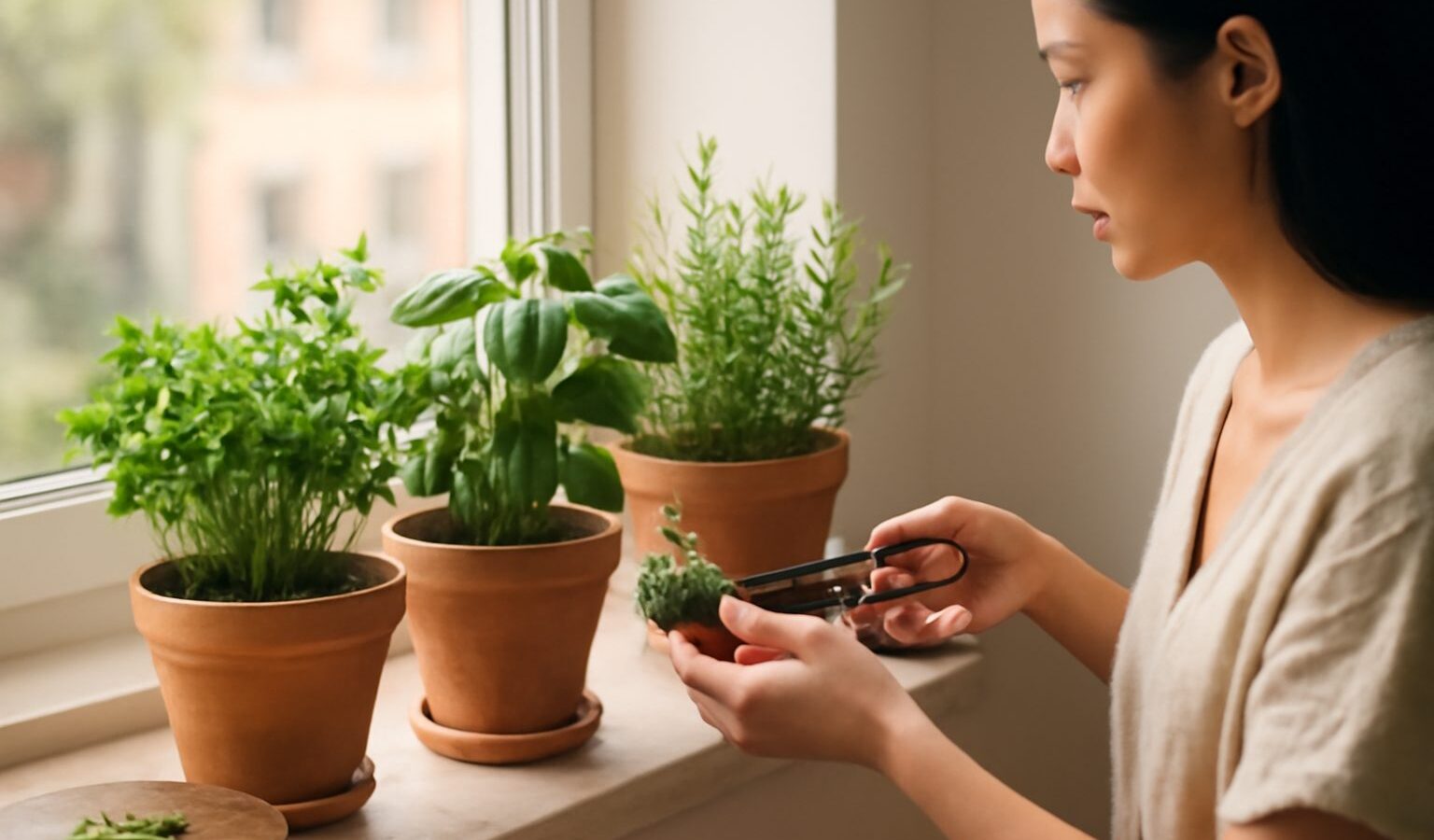
Fresh herbs within arm’s reach of the stove make every meal better, and you do not need a garden to grow them. A windowsill herb garden singapore cooks can keep alive year-round turns a sunny ledge into a tiny, productive patch. The trick is being honest about how much light your window really gets and choosing herbs that genuinely enjoy our heat, rather than fighting to keep temperate herbs alive.
This guide covers light, drainage and containers, then gives realistic herb picks and simple care so your windowsill stays green and useful.
Light: The Make-or-Break Factor
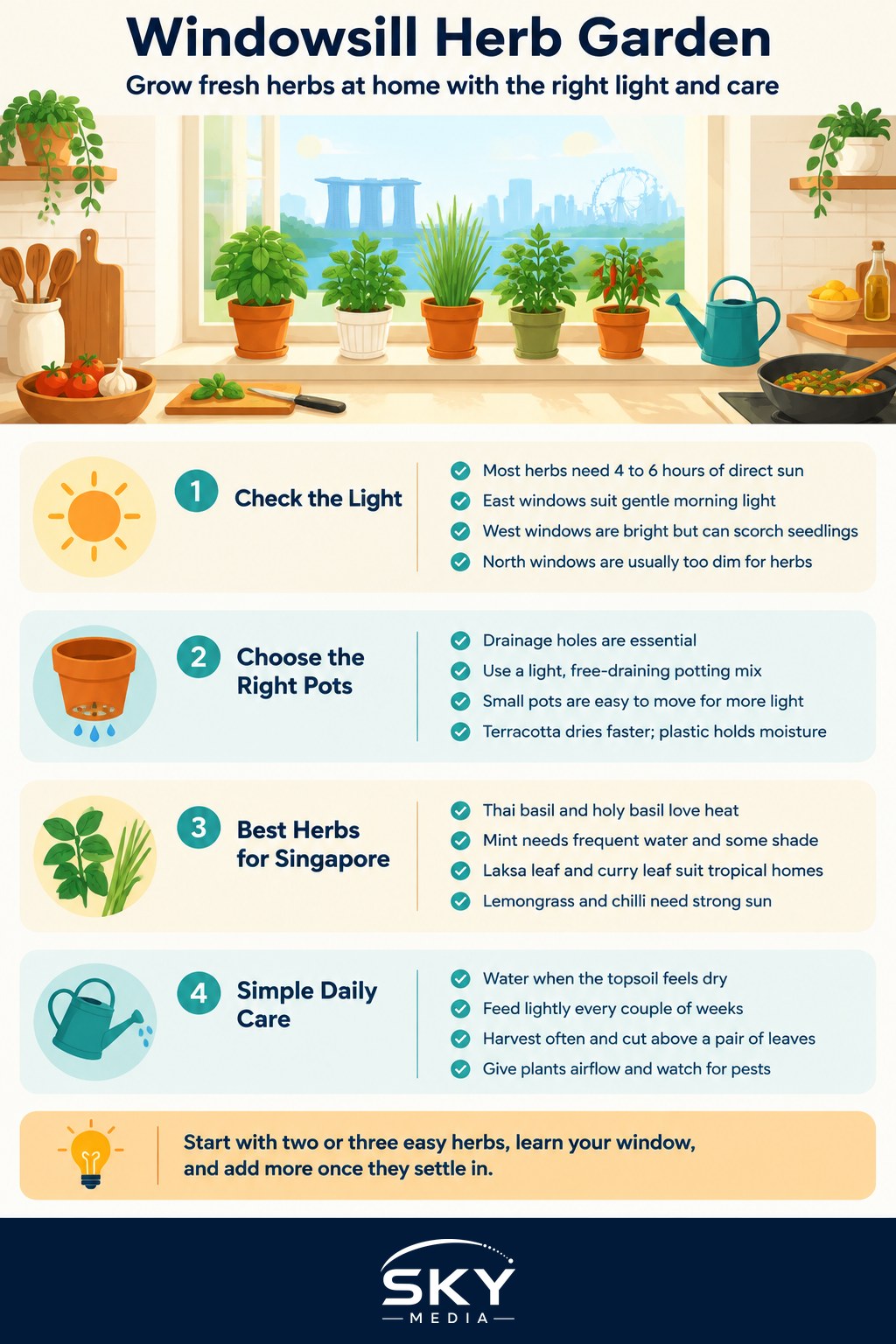
Herbs are sun plants. Most want at least four to six hours of direct light a day, and a windowsill herb garden singapore homes can support depends entirely on which way your window faces. An east-facing window catches gentle morning sun and suits leafy herbs. A west-facing window gets strong afternoon light, which is excellent but can scorch tender seedlings, so watch for wilting. North-facing windows are usually too dim for herbs to thrive, and you may need to move pots outside to a balcony ledge for part of the day.
Be realistic here. If your only window is shaded by a corridor or a neighbouring block, choose the most shade-tolerant herbs, accept slower growth, or add a small grow light. Herbs stretched thin and pale are simply telling you they want more sun.
It helps to observe your window across a full day before committing. Sit a pot on the ledge and note when the sun actually reaches it and for how long. Overhangs, awnings and neighbouring blocks cast shade that shifts through the day, so a ledge that looks bright at noon may get little direct sun at all. A few days of watching saves you weeks of watching a herb sulk in the wrong spot.
Containers and Drainage
Whatever you grow, drainage is essential. Herbs hate sitting in soggy soil, which rots their roots quickly in our warm, wet climate. Choose pots with holes at the base and stand them on a tray to catch runoff, keeping your windowsill clean.
Use a light, free-draining potting mix rather than heavy garden soil. Small individual pots let you move herbs to chase the sun and replace any that fade, while a long trough planter makes better use of a wide ledge. Terracotta breathes and dries faster, which suits thirsty herbs but means more frequent watering; plastic holds moisture longer. Either works, so pick what fits your ledge and your watering habits.
Honest Herb Picks for Our Climate
Not every herb belongs on a Singapore windowsill. Temperate favourites such as coriander, dill and parsley tend to bolt or wilt in sustained heat, though coriander can do well in cooler months or a shadier spot. Rather than set yourself up for disappointment, lean on herbs that love the tropics.
Reliable choices include:
- Basil, especially Thai and holy basil, which flourish in heat and cut-and-come-again harvesting.
- Mint, vigorous and forgiving, though it prefers a little afternoon shade and plenty of water.
- Laksa leaf, also called Vietnamese mint, a true tropical performer for local dishes.
- Curry leaf, happy in a sunny pot and endlessly useful in the kitchen.
- Lemongrass, which grows into a clump and enjoys full sun.
- Chilli, technically a fruit but a windowsill staple that thrives in strong light.
Here is a quick guide to matching herbs to your window and care level.
| Herb | Light needed | Watering | Notes |
|---|---|---|---|
| Thai basil | Full sun | Regular | Pinch tips to keep bushy |
| Mint | Part sun | Frequent | Give its own pot; it spreads |
| Laksa leaf | Part to full sun | Frequent | Loves humidity |
| Curry leaf | Full sun | Moderate | Slow but long-lived |
| Lemongrass | Full sun | Regular | Needs a larger pot |
| Chilli | Full sun | Moderate | More sun means more fruit |
Everyday Care
Water when the top of the soil feels dry, usually every day or two in the heat, and more often for mint and terracotta pots. Water in the morning so foliage dries through the day. Feed lightly with a diluted liquid fertiliser every couple of weeks, since herbs in small pots exhaust their soil quickly.
Harvest often. Regular snipping keeps herbs like basil and mint bushy and productive, while letting them flower signals the plant to slow down leaf growth. Always cut above a pair of leaves so the plant branches out. Watch for aphids and whitefly on the undersides of leaves, and rinse them off with water or a mild soap spray before they spread.
Good airflow is your friend indoors. In still, humid air, herbs can develop mildew and their roots can stay soggy for too long. Crack the window when you can, avoid crowding pots so leaves are not pressed together, and let the surface of the soil dry slightly between waterings. If a herb starts to look leggy, with long bare stems and few leaves, it usually wants more light, so move it to your brightest ledge or trim it back hard to encourage fresh, compact growth.
Keeping It Going
A windowsill herb garden rewards small, steady attention rather than big effort. Rotate pots so every plant gets its share of light, top up soil as it settles, and replace any herb that has run its course with a fresh cutting or seedling. Mint, basil and laksa leaf root easily in water, so you can multiply your favourites for free.
With the right light, good drainage and herbs suited to our climate, a windowsill herb garden singapore kitchens can rely on will keep giving you fresh flavour all year. Start with two or three easy herbs, learn your window, and grow your collection from there.
Explore more
- How to Grow Herbs at Home
- Growing Mint and Basil
- Container Gardening for Small Spaces
- How to Start a Small Edible Garden
Frequently Asked Questions
Can I repot a herb I bought in a pot from the supermarket? Yes, and it often helps. Supermarket herbs are usually packed densely in small pots with little drainage. Split the clump into a few portions, plant each in a pot with drainage holes and fresh potting mix, and give them bright light and light watering to settle.
Is it better to grow windowsill herbs from seed or from cuttings? Cuttings are faster for mint, basil and laksa leaf, which root easily in water. Seeds cost less and give many plants, but take longer to reach a harvest. Choose cuttings if you want quick results and seeds if you want a larger batch.
Can windowsill herbs grow in an air-conditioned room? They can, but it is harder. Cool air slows growth and the soil dries more slowly, and most herbs still want several hours of sun. Place the pots at the brightest window, water only when the top feels dry and avoid the direct aircon draught.
How do I look after windowsill herbs while I am away? Water them well before you leave and move them out of harsh sun. Pots in terracotta dry faster, so shift thirsty herbs such as mint to a shadier spot. For longer trips, ask someone to check them, and tip out any water left in the tray.
What size pot do windowsill herbs need? Most herbs grow well in small individual pots, but bigger ones such as lemongrass need a larger container with room to clump. A deeper pot holds moisture more steadily. Whatever the size, make sure there are drainage holes and a tray underneath.
Further reading: Building a Herb Spiral · How to Keep Herbs Alive on a Singapore Kitchen Counter · How to Start a Bin Centre Herb Garden in Singapore