
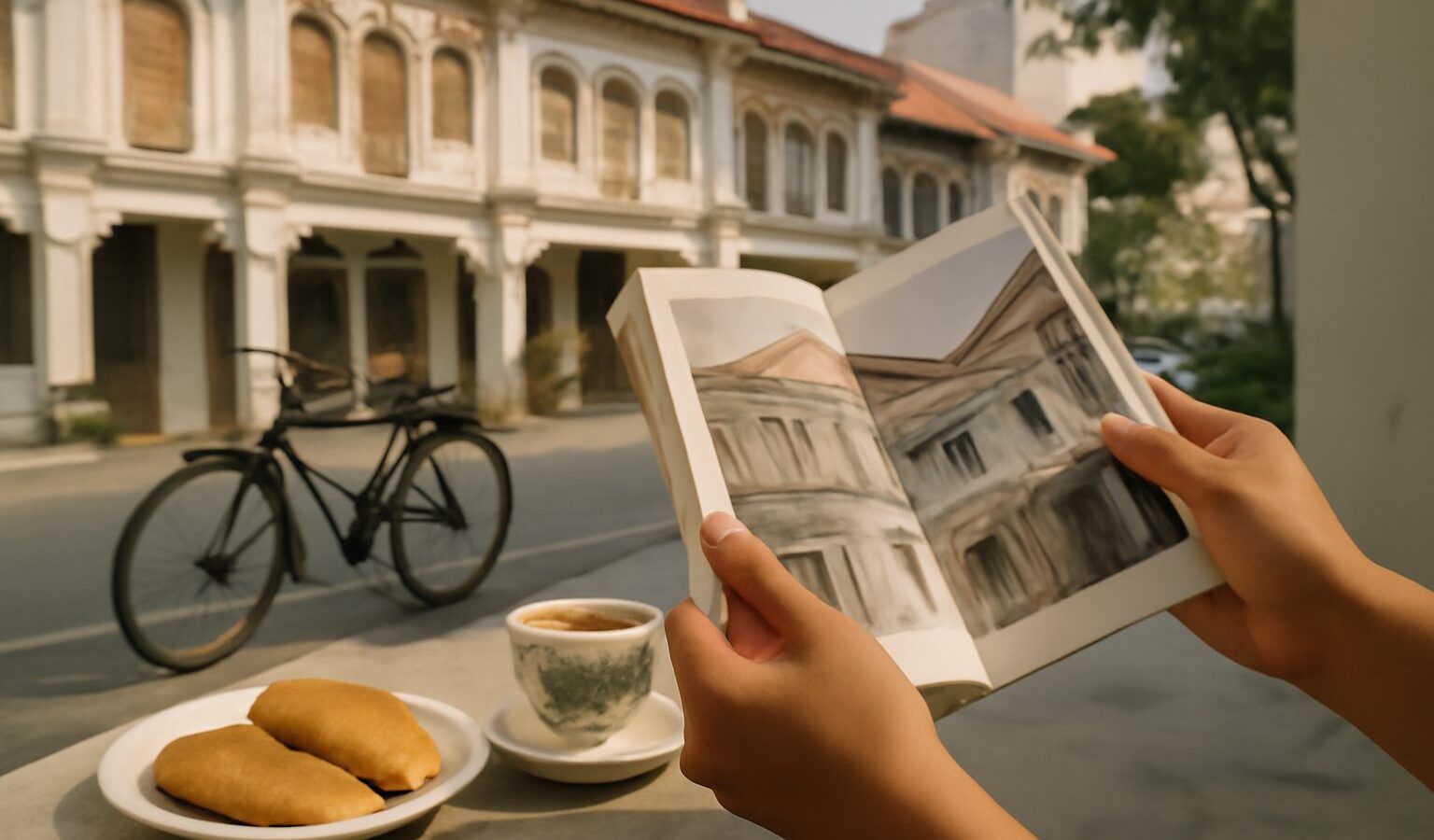
Balestier is one of those Singapore neighbourhoods that many people drive through without really stopping. Stretched along a long, straight road just north of the city, it rewards anyone who slows down and looks up at the old buildings. Exploring Balestier heritage in Singapore means reading a district that has stayed stubbornly itself while newer condominiums rose around it. This is a place of working shophouses, long-running eating houses, lighting shops, hardware stores and a handful of quiet landmarks that most visitors miss entirely. It is not polished for tourists, and that is exactly its charm.
This guide walks you through what gives Balestier its character, the food it is known for, and how to wander it respectfully and enjoyably.
The Shape of the Neighbourhood
Balestier is defined by its main artery, Balestier Road, which runs long and low with rows of two- and three-storey shophouses on either side. The area sits close to the central districts but has never quite been absorbed into them. It kept its own rhythm, and that shows in the mix of trades along the road.
A few things stand out when you walk it:
- Working shophouses. Unlike some conserved streets that have turned fully into cafes and boutiques, many Balestier shophouses still house their original kinds of businesses. You will see lighting shops with chandeliers stacked to the ceiling, hardware and tile shops, coffee suppliers and old-style eating houses.
- A lighting trade cluster. Balestier became known over the years as a place people go to buy lamps, fittings and home lighting. Whole stretches glow at night from the display windows.
- A blend of old and new. Newer residential towers now stand behind and above the shophouse rows, so the district holds both the old low-rise streetscape and a growing residential crowd.
Because so much of the built fabric survives, Balestier is a good place to read Singapore’s shophouse architecture in the wild rather than in a museum. Look for the five-foot ways, the decorative plaster on the upper facades, and the shuttered timber windows, and you get a sense of how these buildings were designed to work in a hot, wet climate.
Old Trades and Everyday Heritage
Part of what makes Balestier feel like heritage in motion is the survival of traditional trades. Where many parts of Singapore have shifted entirely to offices and malls, Balestier still has businesses that have run in more or less the same way for a long time.
You may come across shops dealing in provisions, dried goods, joss materials and religious items, alongside more modern eateries and services. This layering is the point. Heritage here is not a single preserved monument but the accumulation of many small enterprises that have quietly stayed open. The details vary from shop to shop, and businesses do open and close over time, so treat any specific stall as something to verify on the day rather than assume.
The district also carries a few community landmarks tucked among the commercial rows, including places of worship and community associations that have long served residents. As with any living neighbourhood, practices and tenants change, so it is worth checking current details before you plan a visit around any one site.
What Balestier Is Known For at the Table
For many Singaporeans, the word Balestier brings food to mind before anything else. The district has a reputation for a few local dishes in particular, and the eating houses here tend to be unpretentious, long-running and busy at the right hours.
The name most associated with the area is bak kut teh, the peppery pork rib soup. Balestier is often mentioned in the same breath as the Teochew-style, clear and pepper-forward version, eaten with rice, dough fritters (you tiao) dipped into the broth, and refills of soup. It is a dish built for slow mornings and hearty appetites, usually washed down with tea.
Balestier is also known for chwee kueh, the small steamed rice cakes topped with salty preserved radish (chai poh). They are a classic breakfast or snack, soft underneath and savoury on top. Beyond these, the general Balestier food scene runs to the familiar comforts of an older Singapore neighbourhood: kopitiam coffee and toast, noodle stalls, roast meats and the kind of tze char cooking you settle into for dinner.
A few pointers for eating around Balestier like a local:
- Go early for the breakfast classics. Chwee kueh and bak kut teh are often best in the morning, and popular pots of soup can run out.
- Keep it simple. These are everyday dishes. Order the signature item, add rice and a drink, and you are set.
- Expect turnover. Stalls and eating houses change hands, so ask locals or check current listings rather than relying on a name you half-remember.
Here is a quick comparison of the dishes Balestier is most linked with, to help you decide what to try first.
| Dish | What it is | Best time to eat | How locals enjoy it |
|---|---|---|---|
| Bak kut teh | Peppery pork rib soup, Teochew style | Morning to midday | With rice, you tiao dipped in soup, and tea, soup refilled |
| Chwee kueh | Steamed rice cakes topped with preserved radish | Breakfast or as a snack | Eaten warm with the savoury chai poh and a dab of chilli |
| Kopitiam kopi and toast | Local coffee with kaya toast and eggs | Early morning | Soft-boiled eggs with dark sauce and pepper, toast dipped in |
Wandering Balestier Respectfully
Balestier is a lived-in, working neighbourhood rather than a curated attraction, and it is nicest when you treat it that way. The businesses along the road are there to serve residents, so browse the lighting and hardware shops with the same courtesy you would extend anywhere, and remember that eating houses want tables turned over during a busy rush.
A relaxed way to see the district is to walk one side of Balestier Road slowly and the other side on the way back, looking up at the shophouse facades as you go. Give yourself time to notice the older signboards, the tiled shopfronts and the way some buildings still carry traces of their original use. If you visit a place of worship or a community site, dress modestly, keep your voice down, and follow any signs about photography and conduct.
The neighbourhood does not shout, and part of enjoying it is matching its pace. Come hungry, come curious, and let the ordinary details do the talking.
Explore More
If Balestier drew you in, keep going with our guide to Singapore shophouse architecture to read these buildings more closely, and our guide to Singapore architecture styles for the bigger picture. For the food side, our dialect food guide and kopitiam culture guide put dishes like bak kut teh and kopitiam breakfasts in context.