

Hougang is a large town in Singapore’s north east, and it holds one of the most distinctive community identities in the country. For generations, Hougang has been closely associated with the Teochew community, and this cultural imprint remains part of what makes Hougang heritage in Singapore so memorable. Beneath the modern flats and neighbourhood centres lies a history of river valleys, farming villages and a strong dialect community that shaped local life.
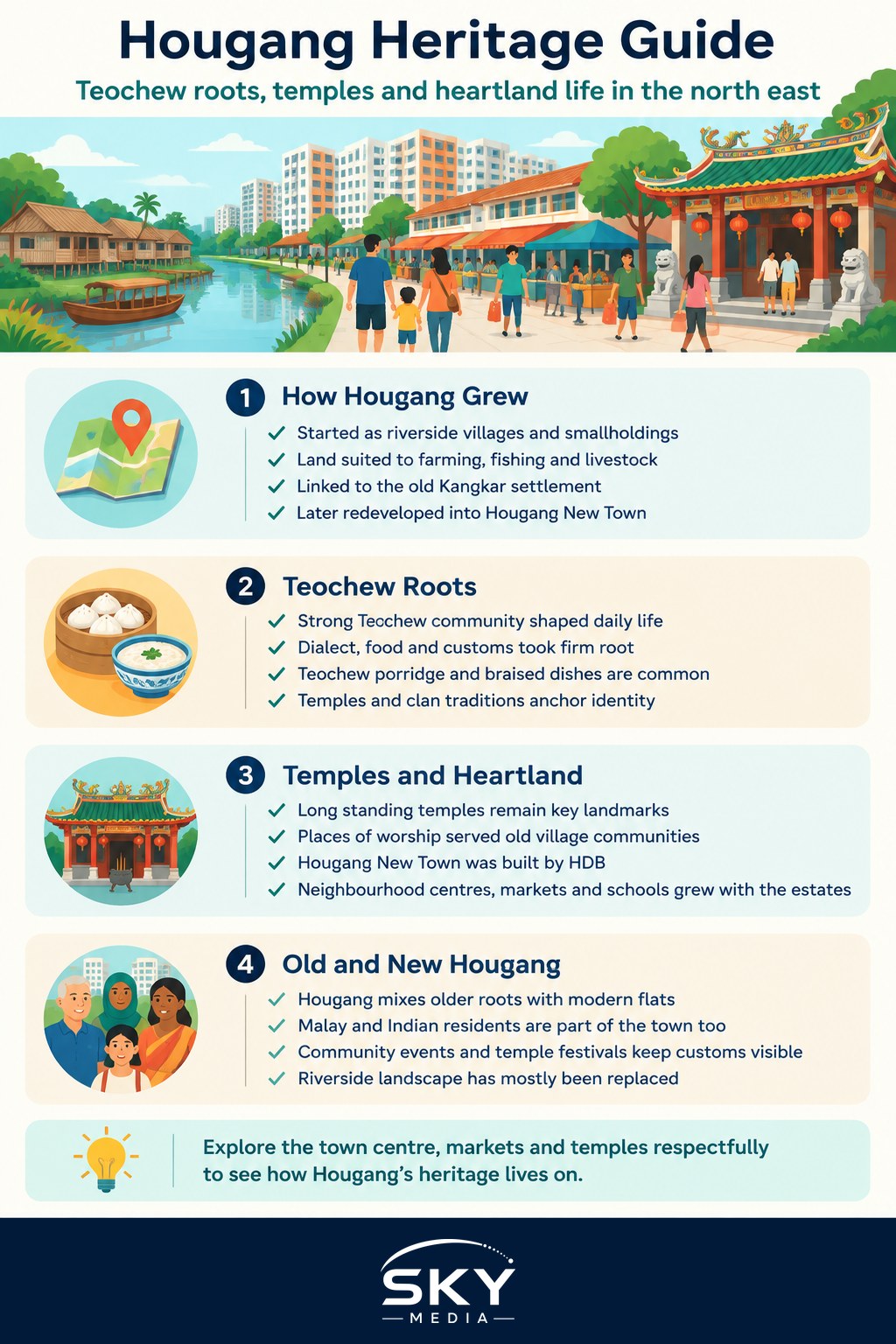
History and How Hougang Developed
The name Hougang is often understood to mean something like the back of the river or the rear of the port in Teochew, reflecting the area’s position along the waterways of the north east. In earlier times this was a rural landscape of rivers, streams and low lying land, well suited to farming, fishing and rearing livestock. Villages grew along the water and the country roads, and the area became known for its agricultural output.
The district was historically referred to in connection with the old Kangkar area, a riverside settlement associated with fishing and the fish trade. Over time, as roads improved and the population grew, Hougang developed into a cluster of villages and smallholdings before the modern town was planned. The rural character persisted well into the twentieth century, later giving way to the comprehensive redevelopment that produced Hougang New Town.
Strong Teochew Roots
What sets Hougang apart is the depth of its Teochew heritage. The north east drew many Teochew settlers who farmed, fished and traded, and their dialect, food and customs took firm root here. Hougang became widely recognised as a stronghold of Teochew culture, and this identity carried through into the modern town. Teochew porridge, braised dishes and other specialities are part of the everyday food landscape, and Teochew temples and clan traditions have long anchored community life.
This concentration of a single dialect group gives Hougang a strong sense of place, a theme that connects to the wider story of how different communities settled across the island, explored in our overview of Singapore’s ethnic enclaves.
Heritage Landmarks, Temples and Old Estates
Temples and places of worship are among the most enduring markers of Hougang’s past. The area is home to long standing temples and religious sites that served the villages and continue to draw devotees today, including sites connected to Chinese and Christian communities in the north east. These places of worship carried their congregations through resettlement and remain living links to the older Hougang.
As for housing, Hougang New Town was developed by the Housing and Development Board, with major building activity from around the late 1970s and into the 1980s. The town grew around neighbourhood centres, markets and schools, following the familiar heartland pattern. The communal spaces that came with these estates, such as void decks and wet markets, are part of the shared national experience described in our piece on HDB heartland and void deck culture in Singapore.
Community and Cultural Roots
Beyond the Teochew majority, Hougang has always been home to a mix of communities, including other Chinese dialect groups, Malay and Indian residents, and a broad cross section of Singaporeans in the newer flats. The result is a town that balances a strong traditional identity with the everyday diversity of a modern heartland. Community events, temple festivals and the local food scene keep older customs visible in daily life.
What Remains and What Has Changed
The transformation from village to town was thorough. The old kampongs, farms and riverside settlements were cleared during redevelopment, so the rural landscape and most village structures no longer stand. What remains is a powerful cultural continuity, the Teochew food, the temples, the community memory and the sense that Hougang has a character of its own. The waterways that gave the area its name have largely been channelled and managed, but the north east still carries the feel of a district shaped by rivers and by a close knit community.
How to Explore Hougang
To experience Hougang heritage in Singapore, spend time around the town centre and neighbourhood markets, where Teochew food and local traditions are easiest to encounter. Seek out the long standing temples in the area to appreciate the religious heritage that survived resettlement, keeping in mind that these are active places of worship to be visited respectfully. For a broader sense of how such heartland towns came to be, our guides to Toa Payoh heritage and Bedok heritage offer useful comparisons, while Kampong days in Singapore captures the village world that Hougang grew out of.
Frequently Asked Questions
What does the name Hougang mean? It is often understood to mean something like the back of the river or the rear of the port in Teochew, reflecting the area’s position along the waterways of the north east. The exact origin of place names can be debated.
What is the Kangkar area associated with? Kangkar is an old riverside settlement associated with fishing and the fish trade, and the district was historically referred to in connection with it. As roads improved and the population grew, the area became a cluster of villages and smallholdings.
Where can I try Teochew food in Hougang? Spend time around the town centre and neighbourhood markets, where Teochew food and local traditions are easiest to find. Teochew porridge and braised dishes are part of the everyday food scene. Check current listings, as stalls and hours change.
Why did so many Teochew settle in the north east? The north east drew many Teochew settlers who farmed, fished and traded along its rivers and low-lying land. Their dialect, food and customs took firm root, and Hougang became widely recognised as a stronghold of Teochew culture.
Are Hougang’s old temples open to visitors? These are active places of worship, so they should be visited respectfully. Dress modestly, keep your voice low and check each temple’s own arrangements. They carried their congregations through resettlement and remain living links to the older Hougang.
Further reading: Yueh Hai Ching Temple: A Historic Teochew Temple on Phillip Street · The Teochew Community Heritage