
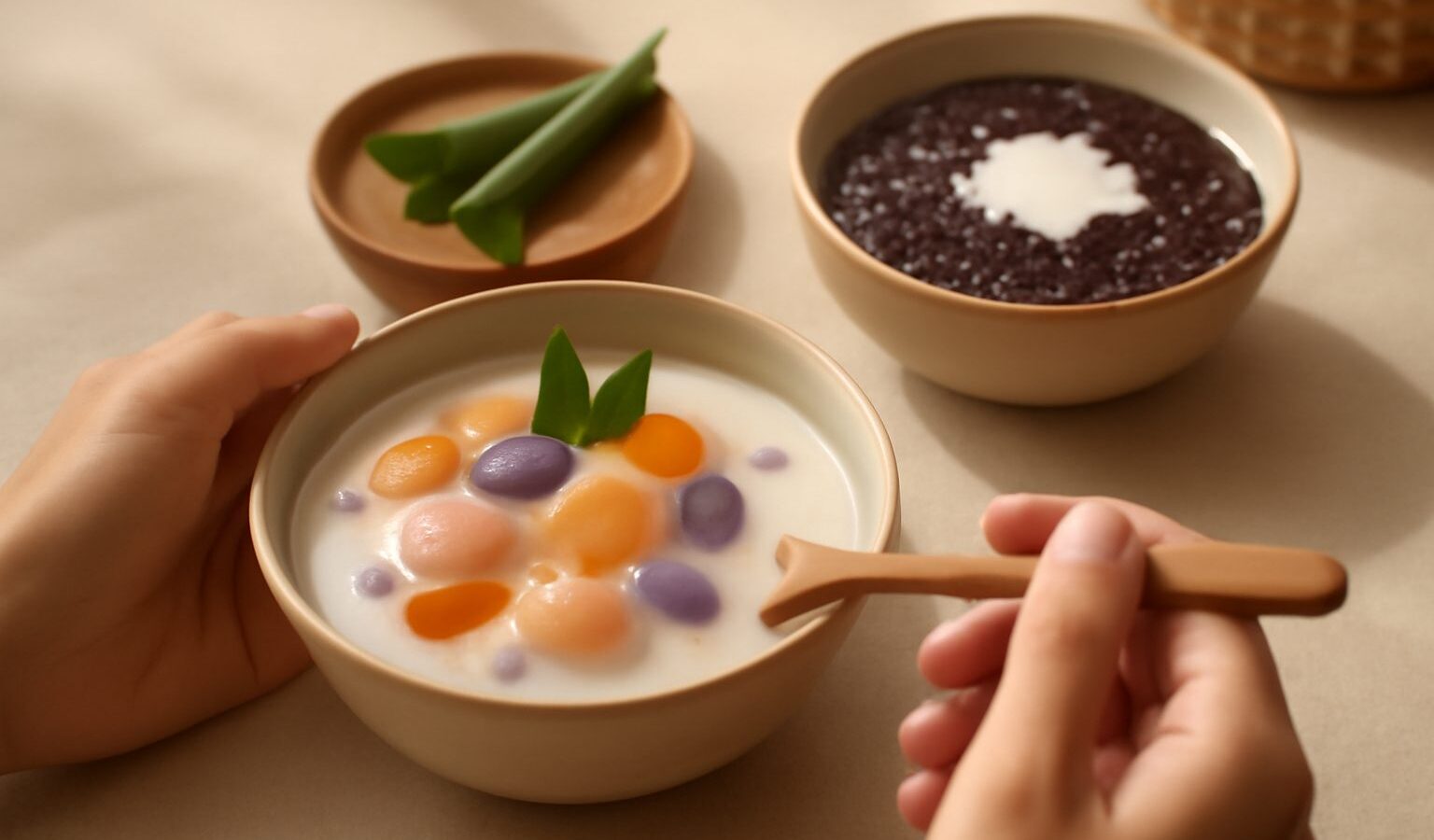
Few things comfort quite like a warm bowl of bubur cha cha, that cheerful Peranakan sweet soup studded with cubes of purple and orange sweet potato bobbing in silky coconut milk. Alongside it sits pulut hitam, the deep, dusky porridge of black glutinous rice that finishes with a swirl of coconut cream. Together these two desserts capture the gentle, unhurried spirit of local sweets, the kind you eat slowly at the end of a meal or on a rainy afternoon. This guide walks through what goes into each, where they come from, and how to enjoy them at their best.
Both desserts belong to the wider family of coconut-based puddings and soups found across Singapore, Malaysia and the region. They are humble by design, built on inexpensive roots, grains and pulses, yet they carry real depth of flavour and a comforting, almost nostalgic quality. You will find them at dessert stalls in hawker centres, at Nonya kitchens and kueh shops, and made lovingly at home.
What Is Bubur Cha Cha
Bubur cha cha is a Peranakan dessert soup, at home in both warm and chilled forms. The name is playful, and the dish itself has a certain festive charm, with its colourful medley of ingredients suspended in a fragrant coconut broth. The base is coconut milk, gently sweetened with sugar and perfumed with pandan leaves, which lend that unmistakable green, grassy aroma so central to local desserts.
Into this go cubes of steamed sweet potato, often both orange and purple varieties for colour, along with yam, which brings a soft, starchy bite. The signature touch is the chewy tapioca pearls, sometimes called sago in casual speech, and small squares of chewy tapioca jelly tinted in soft pastel shades. Some versions add black-eyed beans, banana or even sweetcorn. The result is a bowl full of contrasting textures, creamy soup against tender roots and springy pearls.
Bubur cha cha can be served warm, which suits a cool evening, or over ice on a hot day. Both are lovely. Warm, it feels soothing and homely. Chilled, it becomes refreshing and light, the coconut turning almost silky against the cold.
What Is Pulut Hitam
Pulut hitam, also known as black glutinous rice porridge or bubur pulut hitam, is a slow-cooked dessert built around black glutinous rice. The grains are simmered patiently with water and pandan until they soften and burst, releasing their starch and turning the whole pot a rich, dark purple. Sugar, often the deep caramel notes of gula melaka or palm sugar, sweetens the porridge, giving it a rounded, almost toffee-like warmth.
The finishing flourish is a generous pour of thick, lightly salted coconut milk, which curls across the dark surface in ribbons of white. That contrast of sweet, nutty rice against creamy, faintly savoury coconut is the whole point. The rice retains a pleasant chew, so each spoonful has body, while the coconut smooths everything into a comforting whole.
Like bubur cha cha, pulut hitam is enjoyed warm or cold. Warm, it is deeply cosy. Chilled, it makes an excellent, satisfying dessert to round off a heavier meal. Some cooks add a handful of white glutinous rice or a little sago to vary the texture.
Origins and Cultural Notes
Both desserts sit within the Peranakan and Malay culinary traditions that shaped so much of Singapore’s sweet repertoire, drawing too on Chinese and wider regional influences. Coconut, pandan and palm sugar form a shared language of flavour across these communities, which is why these bowls feel at once specific and universal.
Bubur cha cha carries a particularly festive association in Peranakan homes, sometimes appearing during celebrations and gatherings. Pulut hitam, meanwhile, is a everyday classic across the region, as likely to appear at a simple dessert stall as at a family table. Treating these dishes with respect means acknowledging the generations of home cooks and hawkers who kept them alive, adjusting them to taste while holding to their essential character.
Ingredients and Allergen Notes
Both desserts are naturally plant-based, which makes them a welcome option for vegetarians and many vegans, provided no non-vegetarian additions are made. That said, coconut is a major component of each, so anyone with a coconut allergy should avoid them or check carefully. Pandan, sweet potato, yam and glutinous rice are the other main players.
Those with a nut allergy should note that while coconut is not a botanical nut, some people react to it, and stalls may prepare other nut-containing desserts nearby. Gluten is generally not a concern in the traditional recipes, though it is always wise to check current information at any specific stall, as ingredients and preparation vary from kitchen to kitchen.
Here is a simple comparison to help you choose between the two.
| Feature | Bubur Cha Cha | Pulut Hitam |
|---|---|---|
| Base | Coconut milk soup with pandan | Black glutinous rice porridge |
| Key ingredients | Sweet potato, yam, tapioca pearls | Black glutinous rice, palm sugar |
| Texture | Creamy soup, chewy pearls, soft roots | Thick, chewy, nutty grains |
| Colour | Colourful, pastel and purple cubes | Deep dark purple |
| Coconut finish | Blended into the soup | Poured over the top |
| Served | Warm or chilled | Warm or chilled |
How To Enjoy Them
The best way to approach either dessert is unhurried. Bubur cha cha rewards a good stir before eating, so the roots and pearls distribute evenly and every spoonful carries a little of each texture. If you like it chilled, ask for it over ice and enjoy how the coconut thickens against the cold.
Pulut hitam is at its finest when the coconut cream is added just before eating, so you can decide how much to stir in. Some prefer to keep the white cream in ribbons for contrast, others swirl it fully for a uniform, creamy bowl. A pinch of salt in the coconut is what makes the sweetness sing, so a well-made version tastes balanced rather than cloying.
Both are gentle, restorative desserts that suit almost any occasion. Order one after a rich meal to cool and cleanse, or on its own as an afternoon treat. However you take them, warm or cold, these two coconut classics offer a quiet kind of pleasure that keeps generations coming back for another bowl.