
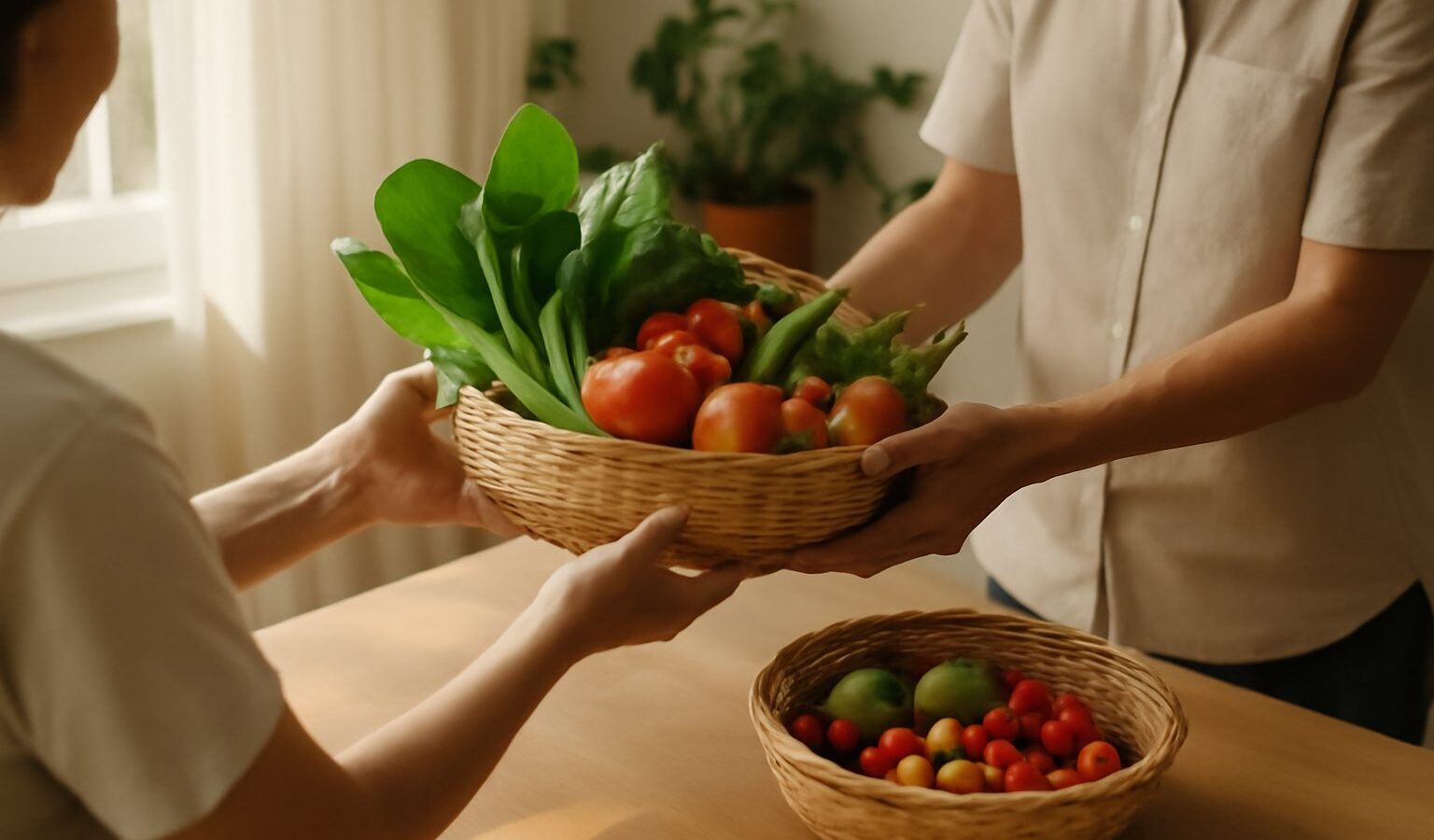
Anyone who grows food at home eventually hits the same happy problem. The chilli plant fruits all at once, the papaya tree drops three ripe fruits in a week, or the kangkong in the community plot grows faster than your family can eat it. Letting it rot feels wrong, but giving food away also comes with questions about safety, etiquette and where to take it. If you have been wondering how to share homegrown produce Singapore neighbours will actually use, this guide covers practical, safe options, so your harvest feeds people instead of the bin.
Why Surplus Happens and How to Plan Ahead
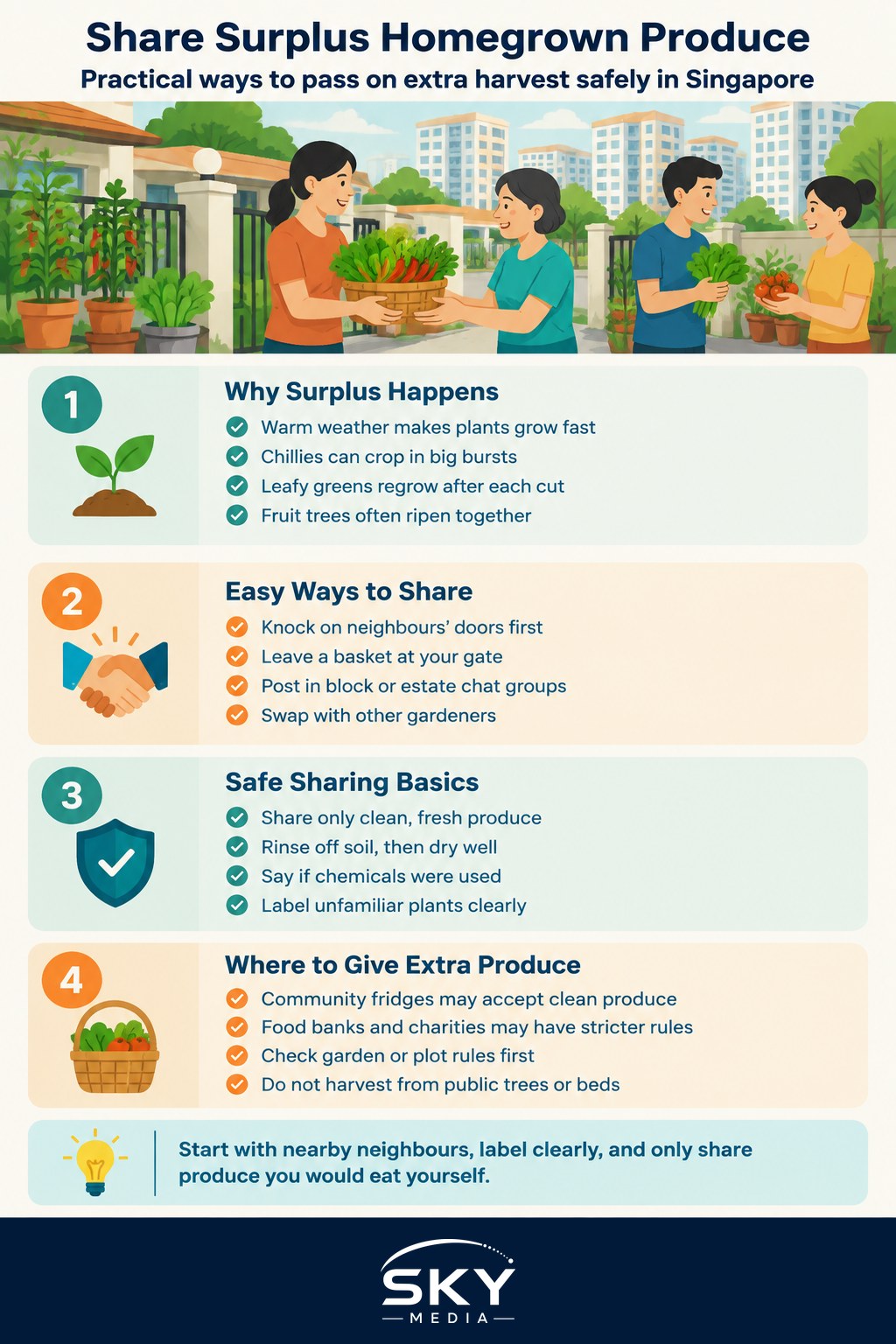
Singapore’s warm, wet climate means many edible plants grow quickly and crop in bursts. Some common culprits:
- Chillies and bird’s eye chillies, which can produce dozens of pods at a time.
- Leafy greens such as kangkong, sweet potato leaves and Brazilian spinach, which keep regrowing after each cut.
- Fruit trees in landed homes, such as papaya, banana, mango or jambu, which ripen in clusters.
- Herbs like pandan, lemongrass, basil and mint, which spread quickly once established.
A little planning reduces waste before it starts. Stagger your sowing every few weeks so greens mature in smaller batches, harvest leaves young and often, and note which plants tend to glut so you can line up takers in advance. Once you know a surplus is coming, you have more options than a rushed giveaway on harvest day.
Simple Ways to Share With Neighbours
The easiest recipients are usually the people next door.
- Knock on doors along your corridor or street. A small bag of chillies or a bunch of herbs is a friendly way to meet neighbours, especially if you are new to the block.
- Leave a labelled basket by your gate. In landed estates, a “free, please take” basket outside the gate works well for fruit. Keep it off the public walkway and bring it in at night.
- Use your estate or block chat groups. Many neighbourhoods have WhatsApp, Telegram or Facebook groups. Post a photo, the quantity and a pick-up window, and ask people to collect rather than you delivering door to door.
- Share through your residents’ network. Residents’ Committees and Residents’ Network groups sometimes run community events where produce swaps fit in naturally.
- Swap rather than just give. Offer chillies for someone else’s limes or curry leaves. Swaps build a small local exchange that keeps going.
If you live in an HDB flat, remember that corridors are shared spaces with fire safety rules. Do not leave baskets or crates where they block the corridor or escape route. A quick message asking neighbours to collect from your door is the better option.
For leafy herbs specifically, our guide on how to share surplus homegrown herbs covers bundling, drying and gifting ideas in more detail.
Comparing Your Sharing Options
| Option | Best for | What to watch | Effort |
|---|---|---|---|
| Neighbours and block chat groups | Small to medium quantities, any produce | Agree a clear pick-up time | Low |
| Gate basket at a landed home | Fruit that keeps a day or two | Keep it tidy and off the walkway | Low |
| Community fridge or food sharing point | Clean, packed produce in good condition | Follow each fridge’s posted rules | Medium |
| Community garden or allotment swap | Gardeners trading crops | Check the plot rules for your site | Medium |
| Food charity or soup kitchen | Large, steady surpluses | Many cannot accept homegrown food, so ask first | Higher |
Community Fridges, Food Banks and Charities
Singapore has a number of community fridges and food sharing points, often run by volunteers, religious groups or neighbourhood organisations. They can be a good home for extra produce, but each one sets its own rules. Many ask that items be clean, packed and fresh, and some do not accept cut or cooked food. Read the notice on the fridge or the organiser’s page before you drop anything off, and never leave food that is wilting or bruised.
Food banks and charities are a different matter. Organisations that distribute food to families often have strict food safety processes and may only take packaged or commercially sourced items. Some welcome fresh produce in larger quantities, others cannot accept it at all. Contact them first instead of turning up with a bag of papayas.
Keeping Shared Produce Safe
When you give food away, you are taking on a small responsibility for the person eating it. A few habits keep everyone safe:
- Only share what you would eat yourself. Skip anything mouldy, damaged or insect-eaten.
- Be honest about how you grew it. If you used any pesticide or fungicide, tell recipients what it was and when it was applied, or do not share that harvest. If you grew it without chemicals, say so too.
- Rinse off soil and pests, but let produce dry before packing so it does not rot in the bag.
- Label what is unfamiliar. Not everyone recognises Brazilian spinach or a moringa branch. A short note with the name and a simple cooking tip helps.
- Think about allergies and sensitivities. Some people react to certain plants or need to avoid particular foods for health reasons. Name the plant clearly so they can decide.
- Avoid sharing from contaminated spots. Plants growing close to busy roads, drains or areas with unknown soil history are best kept for ornamental use.
- Share quickly. Tropical heat shortens shelf life. Our tips on keeping produce fresh in Singapore for longer help you hold a harvest until it can be collected.
Rules for Community Gardens and Public Land
If you grow in a community garden or rent an allotment plot, your sharing may be covered by the site’s rules. NParks, the national parks agency, runs the Community in Bloom programme and allotment gardens, and plot holders agree to certain conditions. Selling produce, for example, is generally not what these plots are meant for, while sharing with fellow gardeners and neighbours is part of the spirit. Check the current terms for your specific garden with its organiser or NParks.
On public land, do not plant edibles in common areas, roadside verges or park beds without permission, and do not pick fruit from trees in public spaces. Trees in parks and along roads are managed by NParks or the relevant agency, and harvesting from them is not allowed without approval.
Turning Surplus Into Something That Keeps
Sometimes there is simply no taker on the day. Rather than discard it, preserve it so you can share later:
- Chillies can be frozen whole, dried or blended into sambal and given in small jars.
- Herbs such as lemongrass and pandan freeze well and can be shared in portion packs.
- Fruit can become jam, smoothie packs or dried slices.
- Greens can be blanched and frozen for soups.
Homemade preserves make thoughtful gifts during festive visits, as long as you label the contents and date. If you ever plan to sell homemade food rather than give it, that falls under Singapore Food Agency rules, so check with SFA first.
Sharing produce is a small act, but it turns a garden into a neighbourhood connection. Start with the people around you, keep food safety in mind, and your surplus becomes something everyone looks forward to.
Explore more: Buying Local Produce in Singapore
Frequently Asked Questions
Can I sell my extra vegetables and fruit instead of giving them away? Giving food away and selling it are treated differently. Once money changes hands, you may be running a food business, which is regulated by the Singapore Food Agency (SFA). Before selling anything grown at home, ask SFA what applies to your situation.
What is the best way to pack chillies and herbs for neighbours? Dry the produce after rinsing, then use a paper bag or a reusable container lined with a paper towel so moisture does not build up. Bundle herbs loosely with a rubber band, and add a small note with the plant name and how soon it should be used.
Is it okay to leave produce at a neighbour’s door if they are not home? It is better to message first and agree a time. Tropical heat spoils leafy greens quickly, and a bag left outside can attract pests or block a shared corridor. Hanging a bag on the door handle for a short, agreed window is a safer compromise.
What if my neighbours do not want my homegrown produce? Do not take it personally, as some people prefer to buy food they know the source of. Offer smaller amounts, say how you grew it, or try other outlets such as a produce swap or a preserved item like chilli sambal that keeps longer.
How can I start a regular produce swap in my estate? Start by posting in your block or estate chat group and asking who else grows food. Agree a monthly time and a shared spot, such as a void deck table with permission, and keep a simple rule that everything is labelled with the plant name and harvest date.