
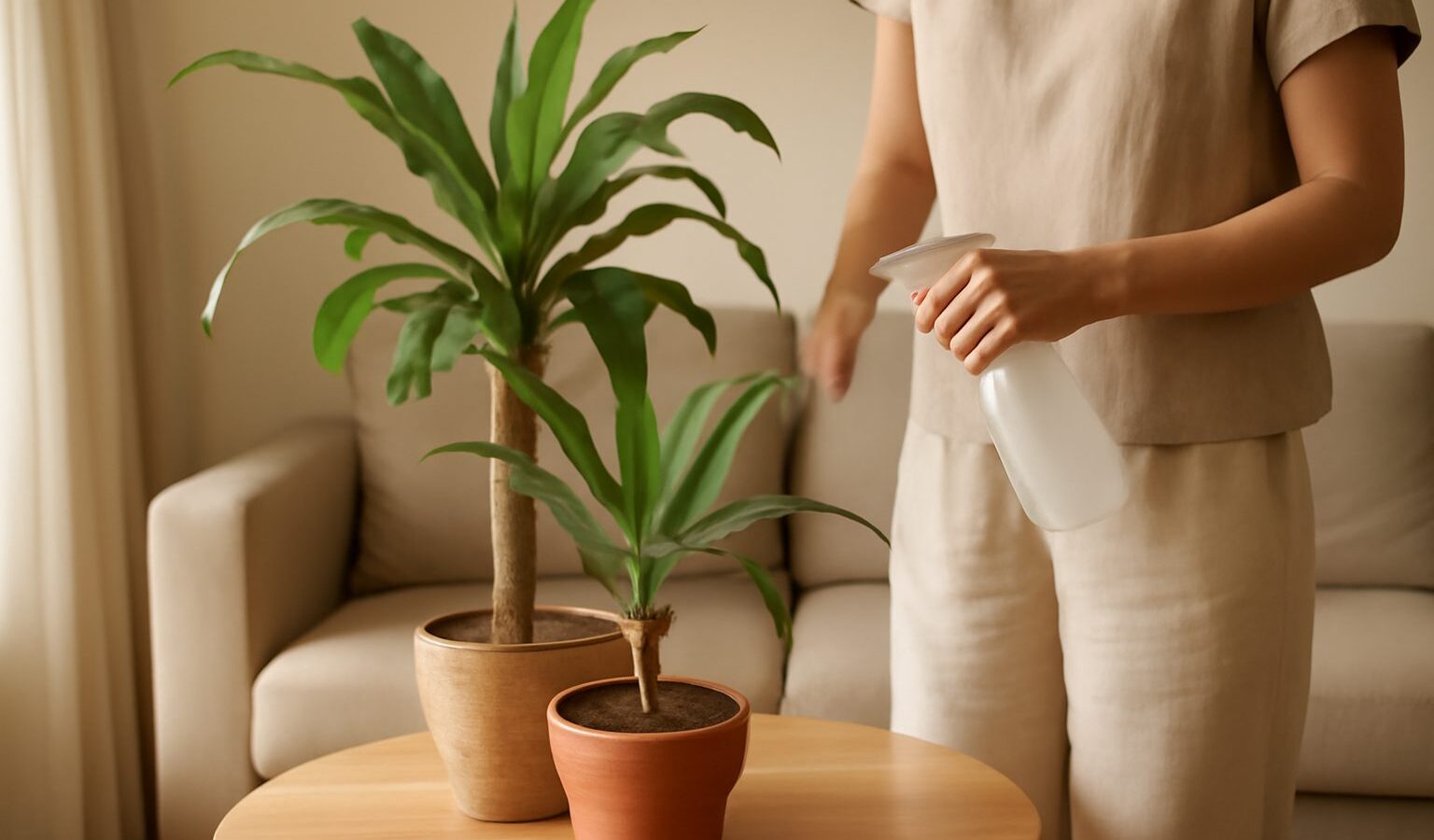
If you want an upright, leafy plant that quietly tolerates flats, corridors and busy schedules, dracaena care is one of the friendliest places to start. The dracaena family gives you the chunky corn plant (Dracaena fragrans), the thin-leaved song of India, the red-edged dragon tree and the sturdy mass cane, all with a similar temperament. They cope with the average indoor spot, forgive a missed watering, and grow tall and sculptural over the years, which is exactly what a small Singapore home needs when floor space is precious but vertical space is not.
This guide keeps things practical for our climate: steady heat, high humidity outdoors, and the drying blast of aircon indoors. Get the light, water and feeding roughly right, and a dracaena will reward you for a very long time.
Where To Place Your Dracaena Indoors
Dracaenas prefer bright, indirect light. A spot a metre or two back from an east or north facing window is ideal, or beside a bright window that never gets harsh midday sun. In our strong tropical light, a full afternoon blast through unshaded glass will scorch the leaves, leaving pale, bleached patches, so filter it with a sheer curtain if the sun lands directly on the plant.
They also tolerate lower light better than most, which makes them handy for a shady corridor, a bathroom with a frosted window, or the darker end of a living room. In dim spots they simply grow more slowly and the variegation fades, so if the colours matter to you, keep them brighter. Turn the pot a quarter every couple of weeks so the plant grows evenly rather than leaning towards the light.
Keep dracaenas away from the direct draught of an aircon vent or a fan. Constant moving air dries the foliage fast and is a common reason for crispy tips indoors. A stable, softly lit corner suits them far better than a bright but breezy one.
Watering, Humidity And Soil
Overwatering is the main way people lose a dracaena, so let the top few centimetres of mix dry out before you water again. Push a finger in: if it feels damp, wait. When you do water, water thoroughly until it runs from the drainage holes, then tip away anything that collects in the saucer. Dracaenas resent sitting in water, and soggy roots quickly turn to root rot in our warmth.
Do not leave water standing in the saucer between waterings. In Singapore any pool of stagnant water can breed Aedes mosquitoes, so empty saucers promptly, change the water in any propagation jar at least weekly, and follow current NParks and NEA guidance to prevent breeding. This small habit protects your neighbours as much as your plant.
Use a free-draining potting mix, ideally an indoor blend loosened with a handful of perlite or fine bark so water moves through rather than pooling. Outdoor humidity here is generous, but aircon and fans strip moisture from the air, which shows up as brown leaf tips. Grouping plants together, standing the pot on a tray of damp pebbles (kept topped up and refreshed), or an occasional misting all help. Many dracaenas are also sensitive to fluoride and salts in tap water, another cause of tip browning, so letting water stand overnight or using cooled boiled water can make a visible difference.
Feeding And Everyday Grooming
Dracaenas are slow, steady growers and do not need heavy feeding. During the brighter months, a balanced liquid fertiliser at half the label strength once a month is plenty. Ease off if growth slows or the plant is sitting in a dim spot, because unused fertiliser salts build up in the soil and worsen the very leaf-tip browning you are trying to avoid. Flushing the pot with plain water every couple of months helps wash those salts through.
Grooming is simple. Wipe the leaves now and then with a damp cloth to clear dust, which keeps them glossy and lets the plant breathe. If a leaf tip goes brown, snip just the dead part off following the natural leaf shape and leave the healthy green. When a corn plant or mass cane grows too tall for the room, you can cut the thick cane back to a height you like; it will usually sprout a fresh tuft of leaves just below the cut, and you can root the top as a cutting.
Note on safety: dracaenas are toxic to cats and dogs if eaten and can cause vomiting and other upset, so keep them well away from pets. They are not edible for people either, and the sap can irritate skin, so wear gloves when pruning and keep the plant out of reach of young children.
Choosing The Right Dracaena For Your Space
The dracaenas sold here look quite different but want almost the same care, so pick by the look and the spot you have. The quick comparison below covers the ones you are most likely to find at a plant nursery or garden centre.
| Dracaena type | Look and habit | Light it likes | Best spot in a flat |
|---|---|---|---|
| Corn plant (Dracaena fragrans) | Thick cane, broad arching leaves | Bright indirect, tolerates medium | Living room floor corner |
| Song of India | Slim leaves edged cream to yellow | Bright indirect for best colour | Beside a curtained window |
| Dragon tree (marginata) | Spiky thin leaves, red edges | Bright, takes some direct morning sun | Balcony corner, out of harsh sun |
| Mass cane | Stout cane, dark green tuft | Low to medium, very forgiving | Shady corridor or office nook |
Whichever you choose, start with a healthy plant that has firm canes and no mushy patches, and give it a few weeks to settle before you judge it. New leaves are the sign it has adjusted to your home.
Fixing Common Dracaena Problems
Brown, crispy tips are the classic dracaena complaint and usually point to dry air, salt or fluoride build-up, or erratic watering. Steady your routine, flush the pot, and consider standing your water overnight. Yellowing lower leaves are often just age, as older leaves are shed naturally, but widespread yellowing with soggy soil means you are watering too often. Let the mix dry out more between drinks and check that the pot drains freely.
Soft, drooping canes with a sour smell signal root rot, the point of no return for many pots. If you catch it early, unpot the plant, cut away black mushy roots with clean scissors, and repot into fresh, barely moist mix in a pot that is not too large. Pale, washed-out leaves mean too much direct sun, so move the plant back from the glass. Sticky residue or fine webbing hints at pests such as scale, mealybugs or spider mites, which thrive in dry indoor air. Wipe them off, rinse the plant, and treat with insecticidal soap or neem if needed, following the product label exactly and keeping it away from children and pets.
Balcony and corridor growers should secure tall pots against wind and knocks, keep runoff off neighbours below, and follow HDB, town council and MCST rules for shared spaces. With a settled spot and a light hand on the watering can, your dracaena will stay handsome for years.
Explore more
Ready to fill out your indoor jungle? Pair a dracaena with the taller, feathery options in our guide to growing indoor palms, or learn how to arrange several statement plants together when creating an indoor jungle. For placement and finishing touches around the home, our notes on styling plants in your home will help your dracaena look its best.