
The western reaches of Singapore, from Clementi down to the West Coast, may be known today for their neat housing estates, campuses and expressways, but beneath the modern surface lies a rich and layered past. This was once a landscape of kampongs, plantations, coastal villages and mangrove-fringed shores, gradually reshaped by reclamation and development. Tracing the story of clementi heritage singapore residents value means looking past the tidy blocks to the water, the soil and the communities that came before.
From Kampongs and Plantations to Estates
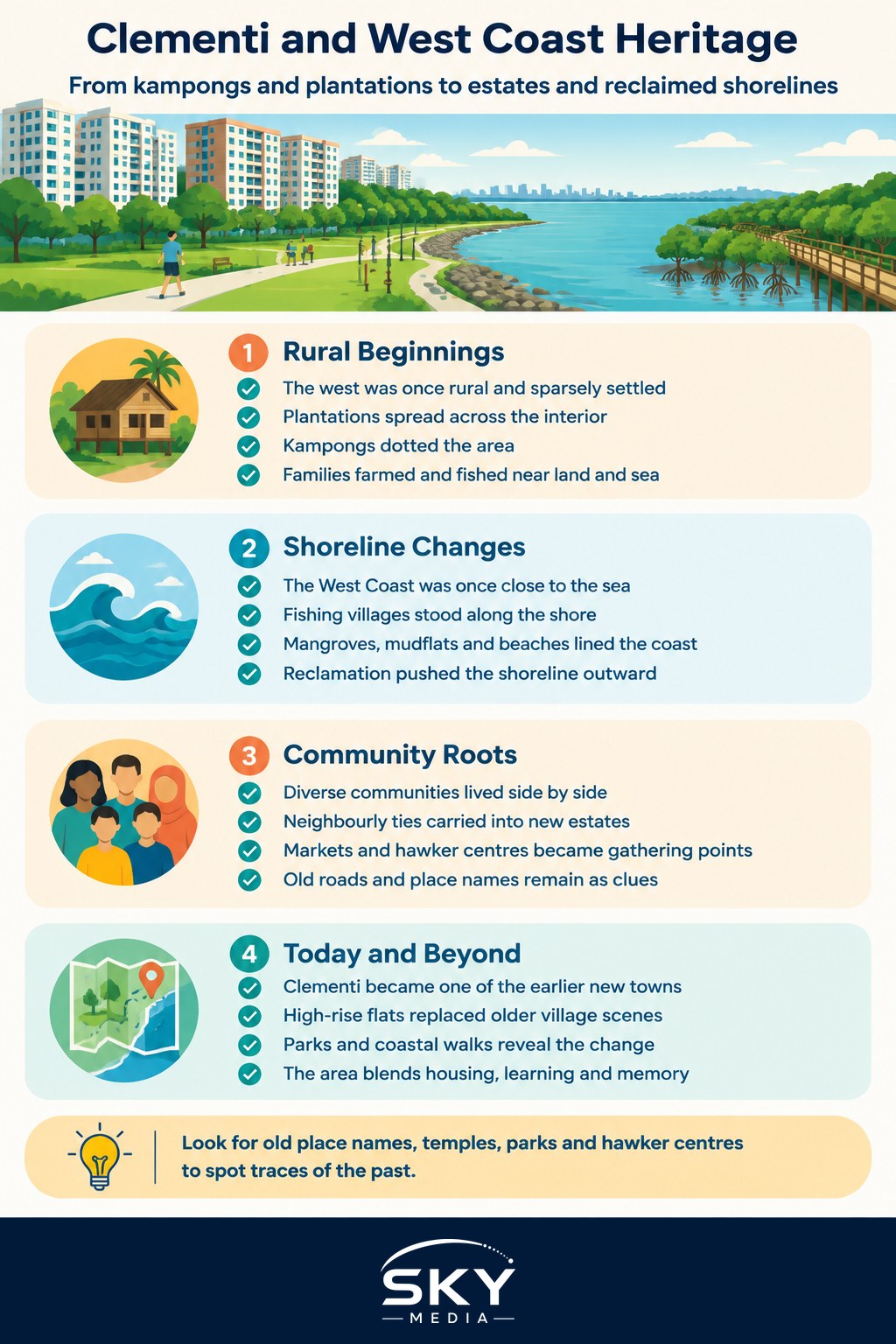
For much of its history, the western part of the island was rural and sparsely settled compared with the bustling town centre. Plantations spread across the interior in the colonial era, growing crops that shaped the land and drew workers to live nearby. Scattered kampongs, or traditional villages, dotted the area, home to Malay, Chinese and other families who farmed, fished and made their livelihoods close to the land and sea.
Life in these kampongs followed the rhythms of the countryside, with wooden houses raised on stilts, communal wells and a strong sense of neighbourliness. Over the second half of the twentieth century, this rural world gave way to planned public housing and new towns. Clementi grew into one of the earlier new towns of its part of the island, its high-rise flats replacing the older village scenes almost entirely.
Though the physical kampongs are gone, their memory lingers in place names, in the recollections of older residents, and in the way communities carried their bonds into the new estates. This transformation is part of the larger national story told in accounts of the conservation of heritage buildings in Singapore, where the tension between growth and memory plays out across the island.
The West Coast and the Changing Shoreline
One of the most dramatic changes in this region has been to the coastline itself. The West Coast was historically a place of fishing villages and coastal activity, where the sea was close and central to daily life. Mangroves, mudflats and beaches marked the meeting of land and water.
Large scale land reclamation reshaped the shore over the decades, pushing the coastline outward and creating new land for housing, industry and recreation. What were once seafront kampongs found themselves further inland as the map was redrawn. This reclamation is a recurring theme along Singapore’s coasts, and the West Coast is one of the clearest examples of how the island quite literally grew.
Today the West Coast area offers green spaces and park land where families gather, a gentler successor to the working shoreline of the past. Walking here, it is worth remembering that much of the ground underfoot did not exist a few generations ago, and that the sea once lapped much closer.
Community Roots and What Remains
The communities of the west were diverse, drawing together people of different backgrounds who lived and worked side by side. As the kampongs were cleared and residents rehoused in new flats, those communities did not simply vanish. Many neighbourly ties carried over, and community life reformed around markets, hawker centres, schools and places of worship in the new estates.
Traces of the older landscape survive in fragments. Old roads and place names hint at former villages and plantations. Temples, shrines and religious sites that once served kampong communities can still be found in the wider western region, quiet reminders of the faith and culture that anchored village life. For those curious about how migrant and local communities settled across the island, the story connects to the broader picture of Singapore’s ethnic enclaves and how identity took root in different districts.
The presence of a major university and research institutions has also given the area a distinct character, blending residential calm with academic and scientific life. Yet even this modern layer sits atop older ground, a continuation of the west’s long habit of reinvention.
Exploring the Area Today
Visitors and residents keen to sense the heritage of the west can do so through its parks, coastal walks and the ordinary streets of Clementi and its neighbours. The contrast between reclaimed parkland and dense housing tells its own story of transformation. Community hubs and hawker centres remain gathering points where the neighbourly spirit of the old kampongs echoes on.
While specific dates and details of former villages can be hard to pin down and are best treated with care, the broad arc is clear. The western fringe moved from rural kampong and plantation, through reclamation and clearance, to the planned estates of today. Understanding that arc deepens any walk through the area.
For a wider view of how Singapore has weighed development against memory, you may also enjoy reading about the island’s national monuments, which preserve chapters of the past even as the city grows around them. The heritage of Clementi and the West Coast is not always visible at first glance, but it is there in the land, the shoreline and the communities who call it home.
Frequently Asked Questions
Are there any kampongs left in Clementi or the West Coast? The physical kampongs are gone, replaced by planned public housing and new towns. Their memory survives in place names, old roads and the recollections of older residents. Some temples and shrines that served village communities can still be found in the wider western region.
How much of the West Coast shoreline is reclaimed land? Large-scale reclamation pushed the coastline outward over the decades, so much of the ground underfoot did not exist a few generations ago. Exact figures are best checked with official agencies. What is clear is that former seafront kampongs ended up further inland.
Where can I see traces of the old west today? Parks, coastal walks and the ordinary streets of Clementi and its neighbours are good places to start. Old roads and place names hint at former villages and plantations. Hawker centres and community hubs also keep the neighbourly spirit of the kampongs alive.
What happened to kampong residents when the villages were cleared? They were rehoused in new flats, but the communities did not simply vanish. Many neighbourly ties carried over, and community life re-formed around markets, hawker centres, schools and places of worship in the new estates.
What did people do for a living in the old west? The area was largely rural, with plantations spread across the interior and kampongs home to Malay, Chinese and other families. Residents farmed, fished and worked close to the land and sea. Plantation work also drew labourers to live nearby.
Further reading: Siglap and Upper East Coast Heritage in Singapore · The Rail Corridor and Railway Heritage Guide · West Coast Park: A Complete Family Visitor Guide