

For many dogs, grooming is stressful. Being brushed, having paws held, ears touched, or nails trimmed can feel strange or even frightening if they were never taught that these things are safe. The kindest and most effective answer is dog grooming desensitisation in Singapore, gently teaching your dog to feel calm and even happy about handling and grooming tools. This is not about forcing your dog to tolerate it, but about changing how they feel, one small, positive step at a time. With patience, grooming can become a relaxed routine you both cope with easily.
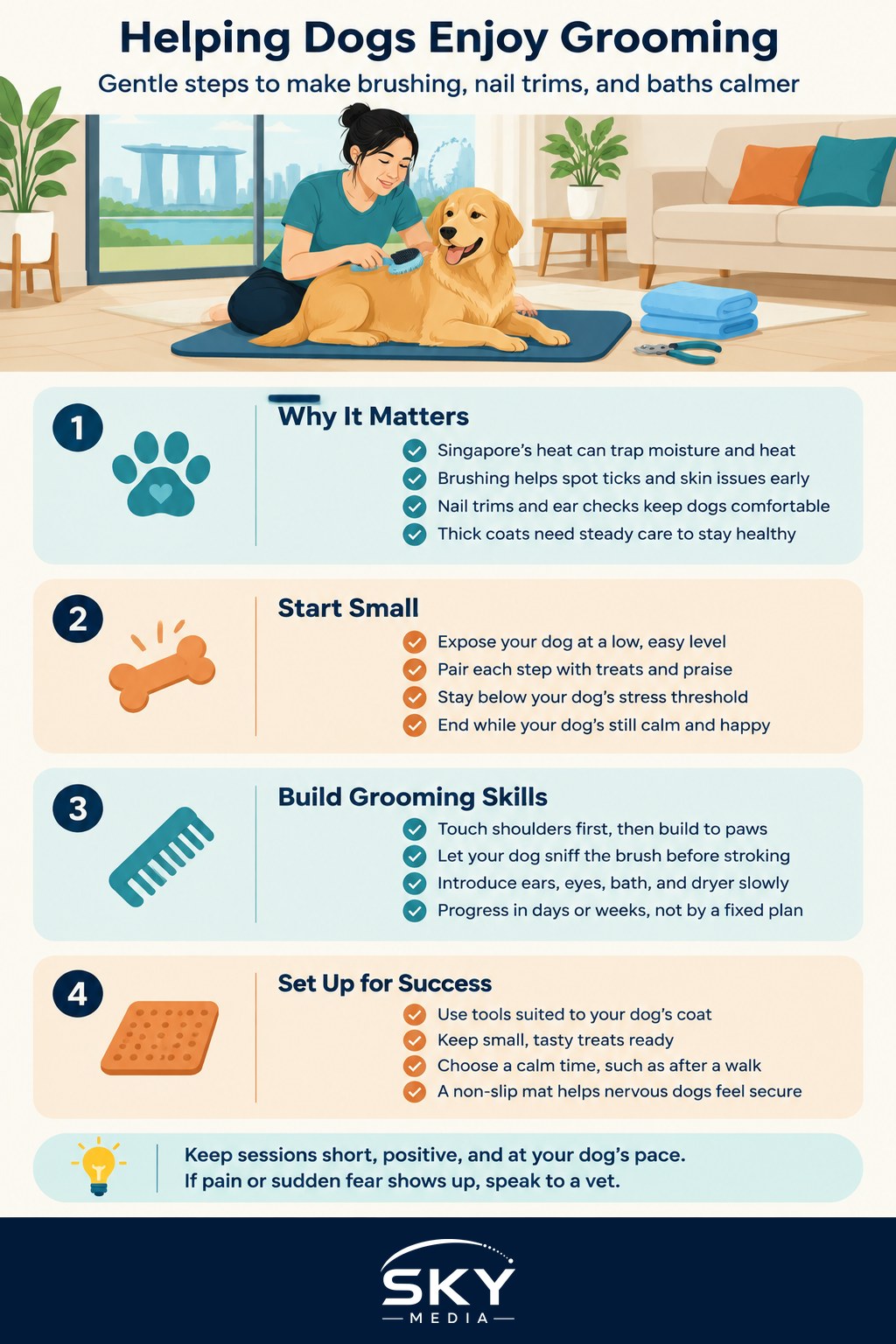
Why Grooming Matters in Singapore
Regular grooming is not just about looks. In Singapore’s hot, humid climate, coats can trap moisture and heat, and skin problems, matting, and parasites are common concerns. Brushing removes loose hair and helps you spot ticks, fleas, lumps, or irritation early. Nail trims keep your dog comfortable, and ear checks catch infections before they worsen. Thick-coated and long-haired dogs especially need consistent care to stay cool and healthy.
The problem is that a dog who dreads grooming becomes harder to handle each time, which makes owners avoid it, which makes the coat and nails worse. Desensitisation breaks that cycle by building positive associations, so grooming feels safe rather than scary.
The Foundations of Desensitisation
Desensitisation means exposing your dog to something they find worrying at a low, comfortable level, then very gradually increasing it while pairing it with good things such as treats and praise. The golden rule is to always keep your dog under their stress threshold. If your dog is relaxed and taking treats, you are on the right track. If they freeze, pull away, or refuse food, you have gone too fast and should ease back.
Keep sessions short and upbeat, just a few minutes at a time, several times a week. End on a good note while your dog is still enjoying it. Never force, hold down, or punish a frightened dog, since that teaches them grooming is something to fear and can damage your bond. Learning to read your dog’s body language helps you spot the earliest signs of discomfort so you can adjust before your dog becomes upset.
Step by Step Through the Body
Break grooming into small pieces and work on each one gently.
- Handling all over: With your dog relaxed, briefly touch a shoulder, then treat. Build up to touching paws, ears, tail, and belly, always pairing touch with a reward.
- Paws and nails: Start by simply holding a paw for a second, then treat. Progress to touching a nail with the clipper or grinder without cutting, rewarding each time, before ever trimming a single nail. Our guide to trimming your dog’s nails walks through the safe technique once your dog is comfortable being handled.
- Brushing: Let your dog sniff the brush, reward, then stroke once with it and reward. Gradually build to longer brushing sessions.
- Ears and eyes: Gently lift an ear flap, look inside, reward. This makes routine checks and cleaning far easier.
- Bath and dryer: Introduce the sound of running water and the dryer from a distance first, rewarding calm, before working closer over several sessions.
Go at your dog’s pace, not a fixed timetable. Some dogs progress in days, others need weeks, and that is perfectly normal.
Tools, Treats, and Timing
Choose grooming tools suited to your dog’s coat and have small, tasty treats ready. A non-slip mat gives nervous dogs secure footing. Time sessions for when your dog is calm, perhaps after a walk in the cooler part of the day, rather than when they are wound up. If you use a professional groomer, keeping your dog comfortable with handling at home makes salon visits much less stressful, and you can read more about dog grooming in Singapore to understand what to expect there.
For an anxious dog, teaching a general sense of calm helps too. Practising settle and relax gives your dog an “off switch” they can use on the grooming mat.
When to Involve a Vet
If your dog reacts to grooming with sudden aggression, extreme fear, or if they flinch and yelp when a specific area is touched, there may be pain, a skin condition, an ear infection, or another medical issue behind it. In that case, please have your vet examine your dog, because no amount of training will fix a problem that is physical. This article is general information and not veterinary advice, so let a licensed vet diagnose and treat any health concern.
Desensitising your dog to grooming is a gift of patience that pays off for the rest of their life. Keep it gentle, keep it positive, and let your dog set the pace. Over time, brushing, nail trims, and baths can shift from a battle to a calm, trusting routine that keeps your dog cool, clean, and comfortable in Singapore’s climate.
Frequently Asked Questions
How do I trim a nervous dog’s nails without a fight? Build up slowly: let your dog sniff the clippers or grinder, reward calm, then touch a nail without cutting before trimming one. Keep sessions short. If your dog panics or you fear cutting the quick, a groomer or vet can help.
Should I take my dog to a professional groomer or do it at home? Both work. Home grooming suits regular brushing, nails and ear checks, while a groomer helps with clipping, bathing and tricky coats. Desensitising your dog to handling first makes salon visits much less stressful.
How long does it take to desensitise a dog to a hairdryer? There is no set timetable. Some dogs adapt within days, others need weeks. Start with the dryer switched off and at a distance, reward calm, then add sound and move closer, always staying below your dog’s stress threshold.
What if my dog bites or snaps during grooming? Stop, keep everyone safe and do not punish, since fear is usually behind it. Pain or skin trouble can also cause snapping, so have a vet examine your dog. A qualified reward-based behaviourist can help you rebuild trust.
Can I use treats to help my dog enjoy baths? Yes, a lick mat with a lick-safe spread on the wall or a few small treats can make bath time positive. Use a non-slip mat, lukewarm water and keep it calm. Go at your dog’s pace and stop before stress builds.