
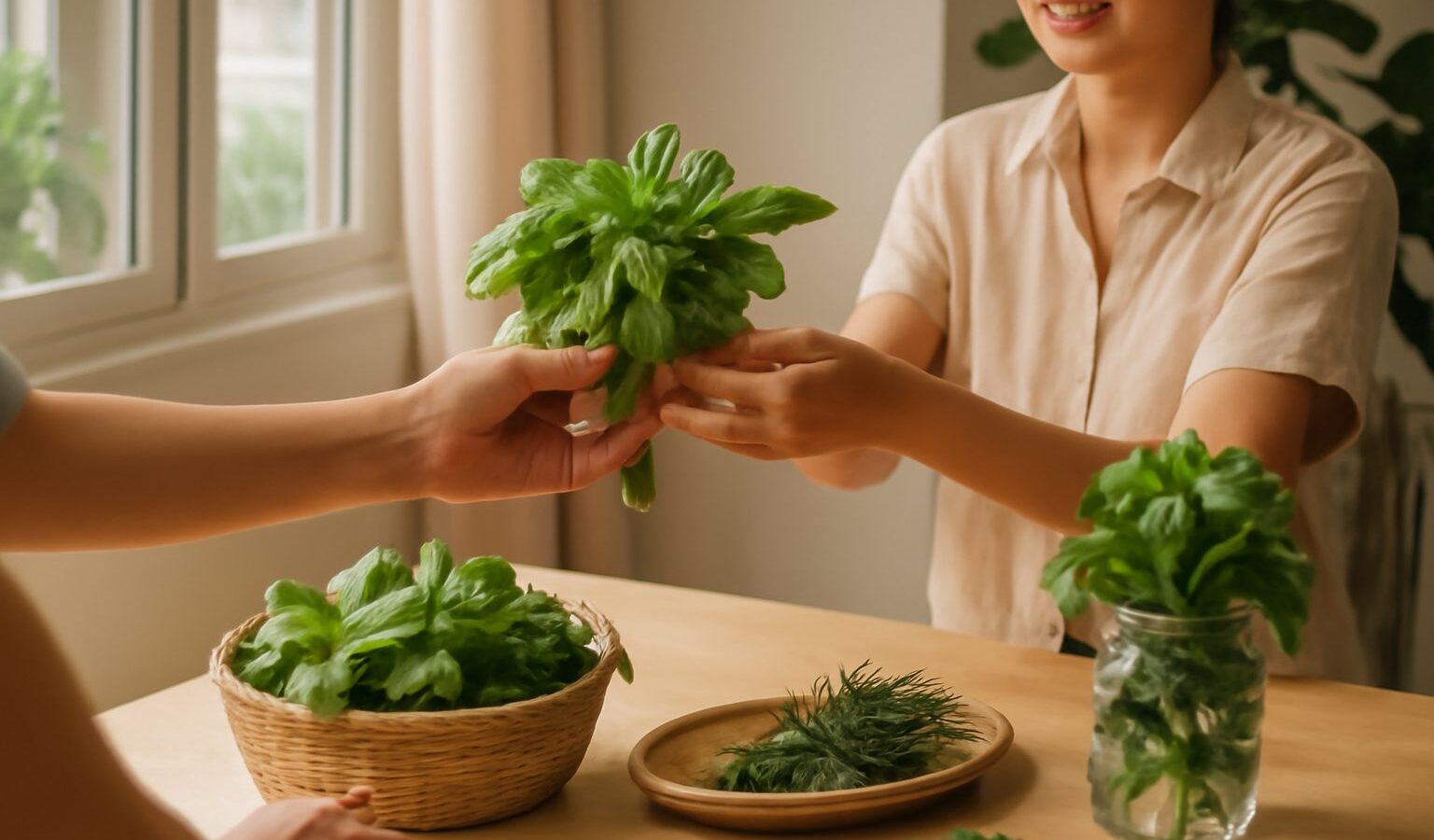
Anyone who grows herbs on an HDB corridor, condo balcony or community garden plot knows the problem. One week the basil is sulking, the next it has bolted into a small shrub and you have far more leaves than any household can use. If you want to share homegrown herbs in Singapore instead of watching them wilt in the fridge, the good news is that our dense neighbourhoods, active community gardens and online groups make it easier than you might think.
This guide focuses on one thing: getting surplus herbs out of your pot and into someone’s kitchen while they are still fresh. It covers who to share with, how to package and hand over herbs safely, and how to plan your growing so you produce less waste in the first place.
Why Small-Scale Garden Waste Adds Up
A handful of mint leaves seems trivial, but small gardens waste food in a predictable way. Herbs grow in flushes, especially in Singapore’s warm, humid climate where plants like basil, Thai basil, mint and laksa leaf can surge after a few rainy days. Most households use only a few sprigs at a time, so the rest either goes limp in the fridge or gets left on the plant until it turns woody or flowers.
Sharing keeps food out of the bin, keeps your plants productive (regular harvesting encourages bushier growth) and builds neighbourly ties, since a bag of curry leaves is an easy way to start a corridor conversation.
If you have not yet decided what to grow, our guide to fresh herbs explains which varieties are worth the space and how local cooks use them.
Who to Share Surplus Herbs With
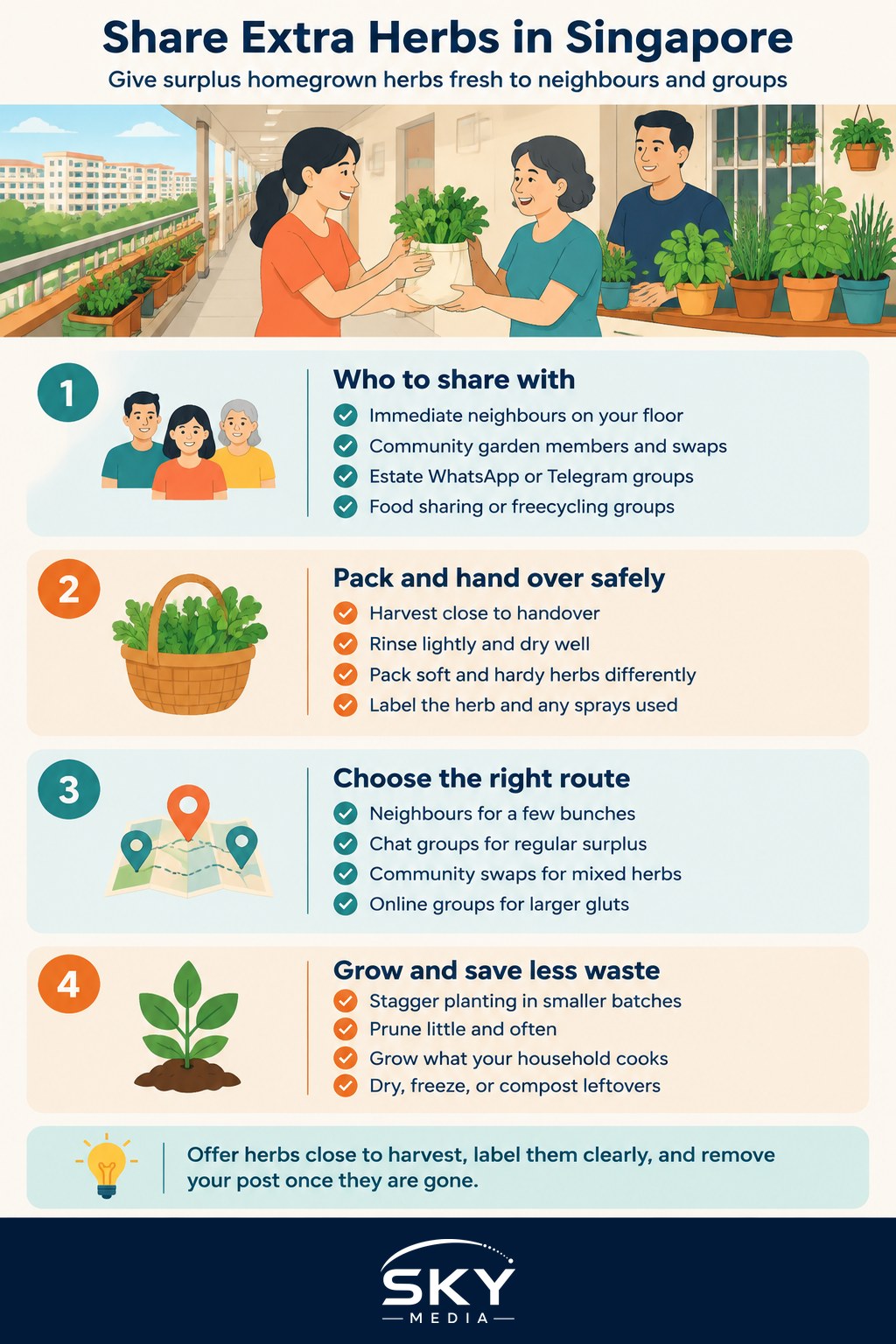
The best sharing networks are the ones closest to you. Start small and widen the circle only if you still have more than you can give away.
Immediate neighbours. In HDB blocks and condos, the people on your floor are the easiest recipients. A short note on your door or a friendly word at the lift lobby is often enough. Many aunties and uncles grow herbs too, so you may end up swapping rather than simply giving.
Community garden members. Many neighbourhoods have community gardens under NParks’ Community in Bloom programme, often run by residents’ committees or volunteer groups. Members frequently trade produce informally. If you garden at home, ask whether the group welcomes surplus from non-members; some are happy to have extra herbs at their gatherings.
Residents’ networks and chat groups. Block or estate WhatsApp and Telegram groups are a natural place to post “free basil, collect from unit lobby today”. Keep posts short, give a pick-up window, and remove the post once the herbs are gone.
Online sharing and freecycling groups. Singapore has active community groups on social media where people give away surplus food and household items for free. Search for food sharing or freecycling groups in your area and read each group’s rules before posting, since some restrict fresh produce.
Workplaces, schools and religious or community centres. Colleagues often appreciate a jar of fresh herbs in the pantry. Community centres sometimes run green or gardening interest groups that host swaps; check with your local centre for what is currently running.
How to Package and Hand Over Herbs Safely
Fresh herbs are perishable and are going to someone else’s kitchen, so a little care goes a long way.
- Harvest close to handover. Cut in the cool early morning if you can, when leaves are firm and full of moisture.
- Rinse lightly and dry. Shake off soil and insects. Pat dry so leaves do not rot in the bag.
- Pack for the herb type. Soft herbs such as coriander, mint and basil keep better standing in a cup of water or wrapped in a slightly damp paper towel. Hardy herbs such as rosemary, curry leaves and lemongrass can go loosely into a paper bag or reused container.
- Label what it is. Many herbs look alike to non-gardeners. A simple label such as “Thai basil” or “Vietnamese coriander (laksa leaf)” avoids confusion.
- Mention what you sprayed, if anything. If you used any pest treatment, even an organic one, say so plainly so the recipient can decide.
- Use contactless pick-up where possible. A bag hung on your gate or left at a lobby table with a note is convenient for both sides. Do not leave herbs out in the afternoon sun.
Never share plants or leaves you cannot identify with confidence, and be cautious about giving away anything a recipient might mistake for an edible herb.
Choosing the Right Sharing Route
Different routes suit different amounts of surplus and different levels of effort. Use the table below to decide.
| Sharing route | Best for | Effort needed | Things to watch |
|---|---|---|---|
| Neighbours on your floor | A few bunches at a time | Low, just a knock or note | Respect privacy, do not insist |
| Estate chat group | Regular weekly surplus | Low to medium, post and arrange pick-up | Follow group rules, set a clear pick-up time |
| Community garden swap | Variety exchange with other growers | Medium, attend sessions | Ask whether non-members can join |
| Online food sharing group | Large one-off gluts | Medium, coordinate with strangers | Meet in public or use lobby pick-up |
| Office or school pantry | Steady small amounts | Low | Check if food sharing is allowed on site |
Swapping Cuttings and Seeds, Not Just Leaves
Sharing does not have to stop at harvested leaves. Many popular herbs root easily from cuttings, which means one plant can seed a whole corridor of gardens.
- Mint, Thai basil, sweet basil and Indian borage often root in a glass of water within a short time, so you can give away rooted cuttings ready to pot.
- Pandan and lemongrass produce side shoots or offsets that can be separated and passed on.
- Seeds from flowering herbs such as basil and coriander can be dried, labelled and swapped at community garden sessions.
Some community groups and libraries have hosted seed swaps; ask your local community garden or residents’ network whether one runs near you. If you take part, only share seeds and cuttings of common culinary herbs, and keep them clean of soil pests.
Plan Your Garden to Produce Less Surplus
Sharing is great, but the most efficient fix is growing closer to what your household actually uses.
- Stagger your planting. Sow a small pot of basil or coriander every few weeks instead of one large batch, so harvests come in steady waves.
- Prune little and often. Regular light pruning keeps plants compact and productive rather than flushing all at once.
- Grow what you cook. If your family uses curry leaves daily but rarely touches rosemary, give more space to the curry leaf plant.
- Match herbs to your light. Plants in the wrong spot stress, bolt and then flush unpredictably. Our guides to growing herbs indoors and growing Mediterranean herbs help you place each herb where it does best.
Preserve What You Cannot Share
Sometimes everyone on your floor already has basil. When that happens, preserve rather than discard.
- Dry hardy herbs such as rosemary, thyme and oregano in a dry, airy spot indoors.
- Freeze soft herbs chopped into ice cube trays with a little oil or water, ready to drop into soups and sauces.
- Blend into pastes, such as a simple pesto or a herb and garlic paste, and freeze in small portions.
- Compost the rest. Woody stems and spent leaves can go into a home compost bin or a community garden’s compost if they accept it.
For step-by-step methods, see our guide to preserving and drying your herbs.
Sharing Etiquette That Keeps Networks Going
Offer rather than push, be reliable about pick-up times, return borrowed containers promptly, and pass the favour on when your neighbour’s chilli plant has a glut. With a little planning and a few friendly messages, your surplus becomes someone else’s dinner, and your small garden becomes part of a neighbourhood that wastes less.
Frequently Asked Questions
Can I give homegrown herbs to neighbours if I use pest spray? Yes, but say so plainly. If you used any pest treatment, even an organic one, tell the recipient so they can decide whether to use it. Rinsing lightly before handover is a good habit either way.
What herbs can I root from cuttings to give away? Mint, Thai basil, sweet basil and Indian borage often root in a glass of water within a short time. Pandan and lemongrass produce side shoots that can be separated and passed on. Keep cuttings clean of soil pests.
How do I keep soft herbs fresh until the recipient collects them? Stand soft herbs such as coriander, mint and basil in a cup of water, or wrap them in a slightly damp paper towel. Hardy herbs can go loosely into a paper bag. Harvest close to handover, and keep them out of afternoon sun.
Is it okay to post free herbs in an estate chat group? Yes, it is a natural place to do it. Keep the post short, give a pick-up window and remove it once the herbs are gone. Follow the group’s rules, and a lobby pick-up is convenient for both sides.
What can I do with surplus herbs nobody wants? Preserve them. Dry hardy herbs like rosemary and thyme, freeze chopped soft herbs in ice cube trays with a little oil or water, or blend into pastes and freeze small portions. Woody stems can go into compost.
Further reading: How to Share Surplus Homegrown Produce in Singapore