
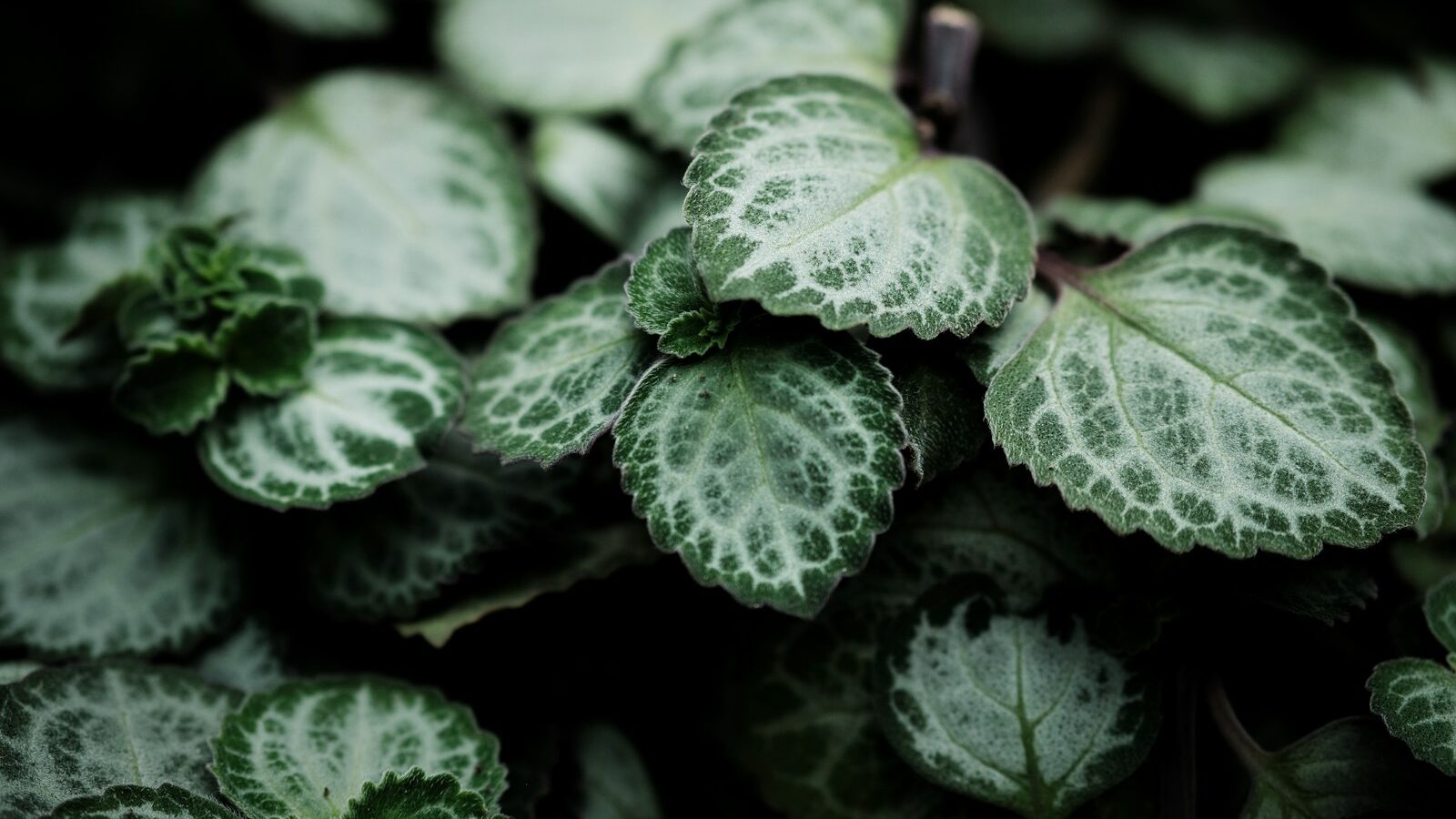
If you have ever brushed past a pot of thick, fuzzy leaves on an HDB corridor and caught a sharp smell somewhere between oregano, thyme and camphor, you have probably met the Mexican mint plant. Known botanically as Plectranthus amboinicus (some references now place it under Coleus), it goes by many names: Indian borage, Cuban oregano, country borage, and in Malay, daun bangun-bangun or daun pudina in some households. In Chinese it is often called 左手香 or 到手香, a nod to how the scent clings to your fingers after a single touch.
Despite the name, it is not a true mint. It belongs to the same wider family, but it behaves much more like a soft succulent: it stores water in its leaves and stems, tolerates neglect, and roots almost anywhere. That makes it one of the easiest herbs to keep alive in Singapore’s heat, and a good choice for anyone who has struggled with fussier herbs.
Why Mexican Mint Suits Singapore Balconies and Corridors
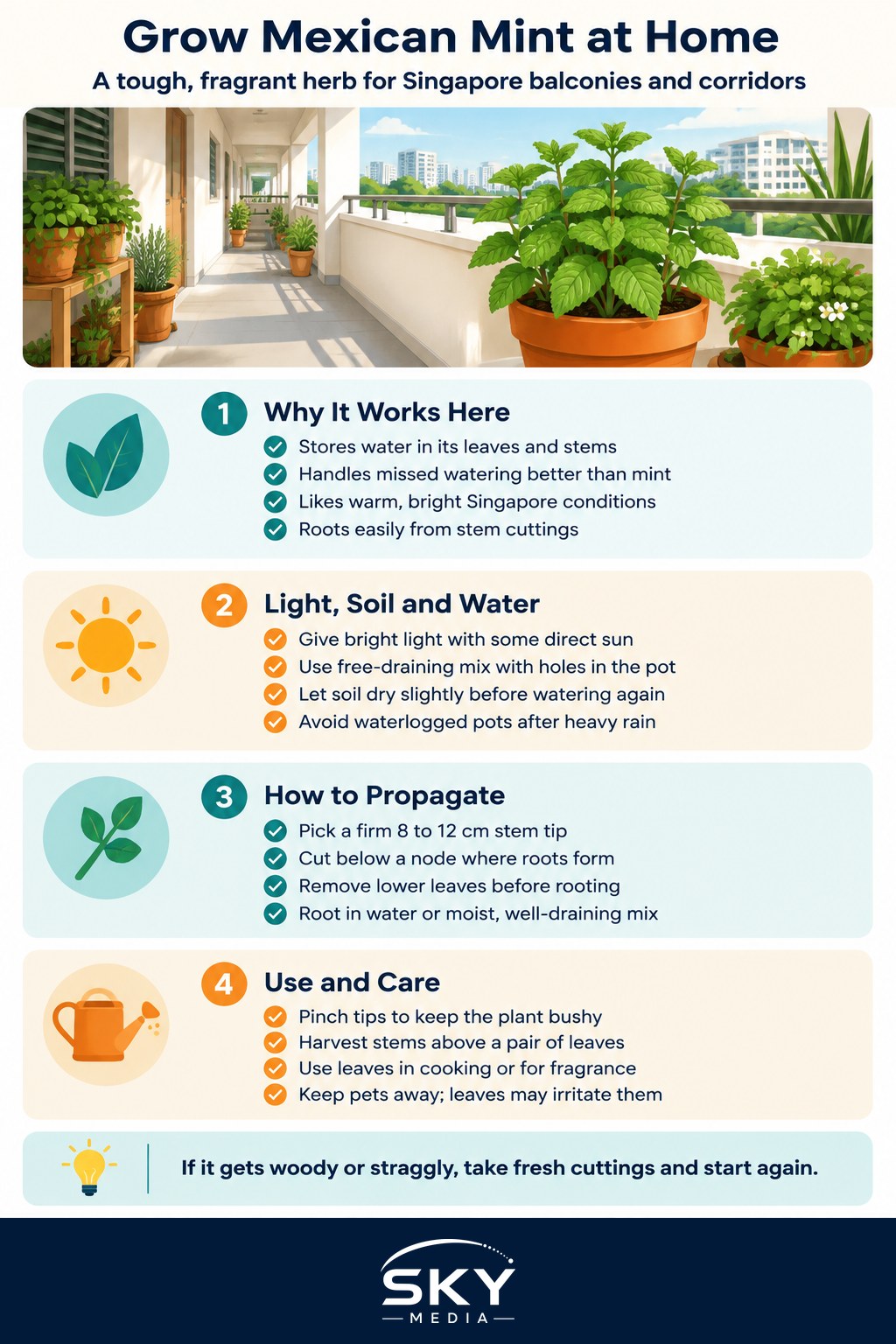
True mints and basil like steady moisture and can sulk or rot in our heavy rain and humidity. Mexican mint is built differently. Its fleshy leaves hold water, so it shrugs off a missed watering or two, and it grows well in the warm, bright conditions that most Singapore homes can offer year round.
A few traits make it especially forgiving:
- Drought tolerance. It prefers to dry out slightly between waterings, which suits busy households and people who travel.
- Fast growth. In good light it fills a pot within a few months, so you can harvest regularly.
- Easy propagation. A snipped stem will usually root in water or damp soil within a couple of weeks.
- Few serious pests. The strong aromatic oils seem to deter many common pests, although it is not immune.
If you already grow true mints, our guide to growing mint and basil covers those thirstier herbs. Mexican mint is the one to choose when you want something tougher.
Light, Soil, Pots and Watering
Light. Aim for bright light with some direct sun. A west or east facing corridor ledge, a balcony railing planter or a sunny window works well. Four or more hours of direct sun keeps the plant compact with thick leaves. In deep shade it grows leggy and pale, with longer gaps between leaves.
Soil. Drainage matters more than richness. A general potting mix lightened with perlite, pumice, or a cactus and succulent mix works well. Heavy garden soil or mixes that stay soggy are the main cause of trouble, because waterlogged roots and stems can rot quickly.
Pots. Always use a pot with drainage holes. Terracotta helps the mix dry faster, which suits this plant. A medium pot is plenty for one plant; it spreads sideways and can trail over the edge, which looks attractive in hanging baskets.
Watering. Water thoroughly, then let the top few centimetres of soil dry before watering again. In Singapore that might mean every two to four days on a hot, sunny ledge, and much less often during rainy spells. Push a finger into the soil rather than following a fixed schedule. If the plant sits outdoors during the monsoon months, check that the pot is not standing in a saucer of water, and tip saucers out after heavy rain to avoid mosquito breeding.
Feeding. It does not need much. A light dose of balanced liquid fertiliser or a sprinkle of slow-release pellets every month or two during active growth is enough. Too much nitrogen gives soft, floppy growth with weaker scent.
How to Propagate Mexican Mint From Cuttings
This is where the plant shines. One healthy plant can supply friends and neighbours for years.
- Choose a stem. Pick a firm, healthy tip about 8 to 12 cm long, with several pairs of leaves.
- Cut below a node. Snip just below the point where leaves join the stem, since roots form from these nodes.
- Strip the lower leaves. Remove leaves from the bottom few centimetres so they will not sit in water or soil and rot.
- Let it rest (optional). Some growers leave the cutting in shade for a few hours to a day so the cut end dries slightly. This reduces rot, especially if you are rooting straight into soil.
- Root it. Either stand it in a glass of clean water on a bright windowsill, changing the water every few days, or push it into a moist, well-draining mix.
- Pot it up. Once water-rooted cuttings have roots a few centimetres long, move them into soil. Water lightly and keep them out of harsh midday sun for the first week.
Rooting usually takes one to three weeks, depending on warmth and light.
Pruning, Harvesting and Common Problems
Pinch out the growing tips regularly. This encourages the plant to branch, keeps it bushy rather than sprawling, and gives you a steady supply of leaves. Harvest by snipping stems just above a pair of leaves rather than plucking single leaves from the base.
Most problems trace back to water or light:
| Symptom | Likely cause | What to do |
|---|---|---|
| Soft, mushy or black stems near the soil | Overwatering or poor drainage | Cut away healthy tips to re-root, repot into grittier mix, water less often |
| Long, thin stems with small pale leaves | Not enough light | Move to a brighter spot, prune back, and pinch tips to encourage bushier growth |
| Brown, crispy patches on leaves | Sudden strong sun or very dry soil for too long | Acclimatise gradually, water deeply when the top soil is dry |
| White cottony clumps on stems | Mealybugs | Wipe off with a cotton bud dipped in diluted rubbing alcohol, or rinse and repeat over several days |
| Yellowing lower leaves | Old leaves ageing, or roots sitting wet | Remove the yellow leaves and check drainage |
If a plant gets very woody and straggly after a year or two, the simplest fix is to take fresh cuttings and start again. They root so readily that renewal is easier than rescue.
Home Uses of Mexican Mint Leaves
The leaves have a bold, pungent taste, so a little goes a long way. Common household uses include:
- Cooking. In parts of the Caribbean and Latin America the leaves are used like a robust oregano in stews, bean dishes and marinades. In South and Southeast Asian kitchens, cooks add them to fritters, chutneys, rice dishes and fish curries. Try a few chopped leaves in place of oregano and adjust to taste.
- Fragrance. Because the scent is so strong, a pot near a doorway or on a corridor ledge adds an aromatic welcome, and fits well alongside other scented herbs in a fragrant garden.
Many families also have traditional remedies using the leaves, such as for coughs or insect bites. These are folk practices rather than proven treatments, so treat them as such, and see a doctor or pharmacist for any health concern. If you are pregnant, breastfeeding, taking medication, or giving it to young children, check with a healthcare professional before consuming it regularly. The plant can also be mildly irritating to pets that chew it, so keep it out of reach of curious cats and dogs.
Companion Herbs for a Low-Effort Herb Corner
Mexican mint grows happily alongside other sun-loving, tough plants with similar needs. Chillies and curry leaf like the same bright, warm spot and free-draining soil, so they make natural neighbours. See our guides on growing chilli plants and growing a curry leaf plant to build a compact kitchen herb corner that copes with Singapore weather.
If you are placing pots along a common corridor, keep them neat, stable and clear of walkways and fire escape routes, and follow your Town Council’s guidance on corridor use.
Start with a single cutting from a friend or a nursery, give it sun and gritty soil, and you will likely have more Mexican mint than you know what to do with by the end of the year.
Further reading: Growing Sweet Leaf (Mani Cai) at Home in Singapore