
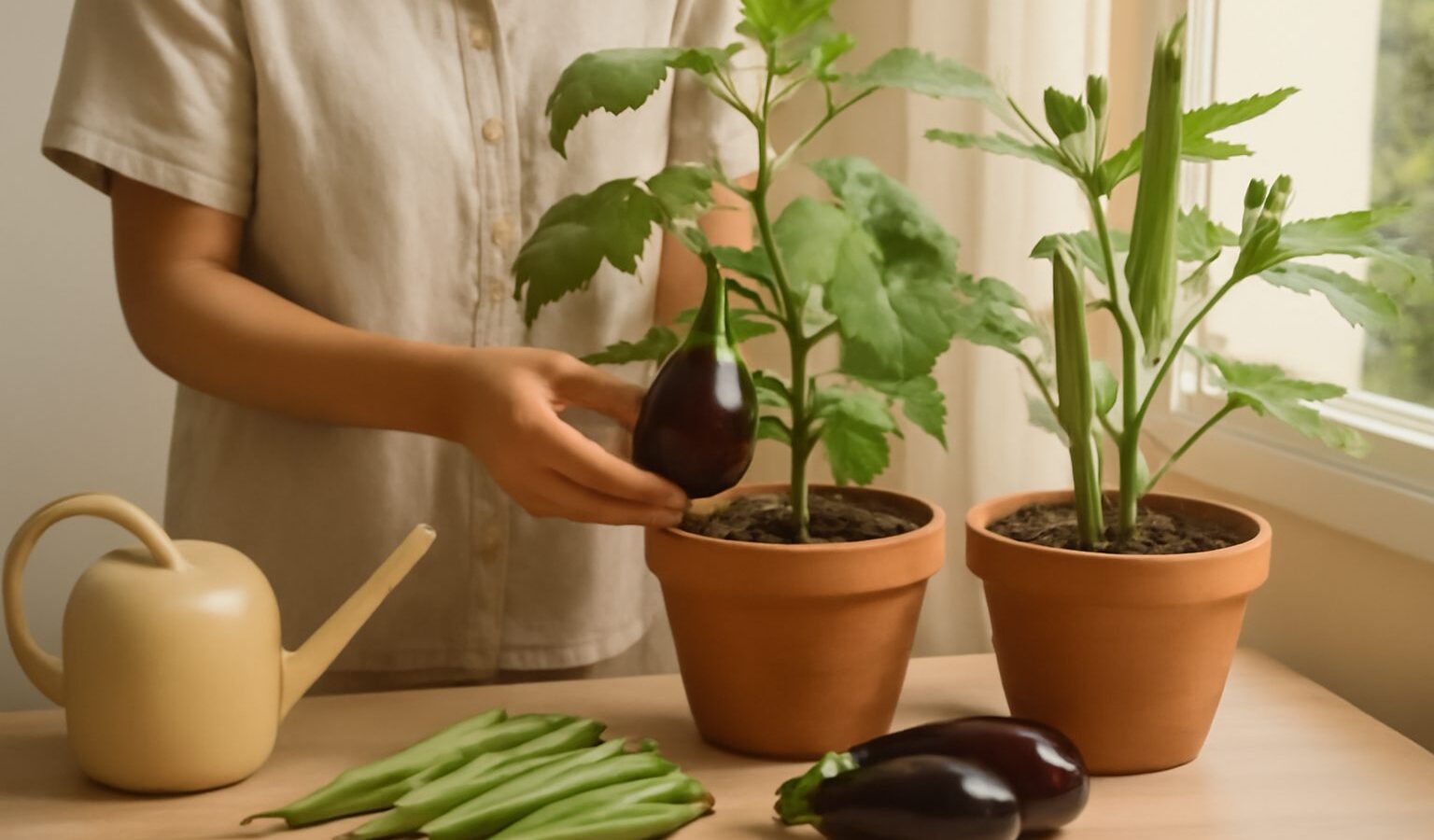
If leafy greens have you hooked and you fancy a proper fruiting crop next, okra and brinjal are a brilliant pair for our climate. Growing okra, known locally as lady’s finger, alongside brinjal, or eggplant, gives you two heat loving vegetables that positively thrive in Singapore’s year-round warmth and strong sun. Both are handsome plants that can carry on producing for months from a large pot on a sunny balcony. This guide covers the pots, sun, water and feeding they need, the pests to watch for, and how to harvest so the plants keep setting fruit well into their run.
Why These Two Suit Singapore’s Heat
Okra and brinjal are true tropical sun lovers, which is exactly why they do so well here when many temperate vegetables sulk. They both come from hot regions, so our relentless heat and humidity, which stresses lettuces and coriander, is close to their idea of perfect. Given enough light and a big enough pot, they will grow into sturdy, productive plants over a long season.
The main difference from leafy greens is time and space. These are fruiting crops, so they take longer to reward you, roughly two to three months to the first harvest, and they need more root room and more sun. That makes them a natural step up for a gardener who has had success with faster greens and wants something more substantial. Buy young plants or named seed from a garden centre or a reputable online seller, so you know the variety and that it is grown for eating.
Pots, Sun and Soil for Fruiting Crops
Sun is the single biggest factor. Both plants want the brightest spot you have, ideally six or more hours of direct sun a day. A west or south facing balcony that bakes in the afternoon, which would fry tender greens, is just right for these two. In too little light they grow leggy and set few or no fruit, so do not tuck them into a shady corner.
Give them room at the roots. A deep pot of at least twenty five to thirty centimetres across and a similar depth, holding around fifteen to twenty litres of mix, suits one plant. Larger is better, as a cramped root ball dries out fast and limits the crop. Use a good quality potting mix enriched with compost or well rotted organic matter, and make sure every pot drains freely so monsoon rain cannot waterlog the roots. Brinjal in particular grows tall and top heavy once fruiting, so a stake or a small cage keeps it upright, and on higher floors it must be secured against wind. Follow your HDB, town council or MCST rules for balconies and shared ledges.
Watering and Feeding for a Long Harvest
Because they grow large and fruit over months, okra and brinjal drink a lot in our heat. Keep the mix evenly moist, watering thoroughly whenever the top two to three centimetres feel dry, which in a sunny spot often means daily. Try not to let a fruiting plant dry out completely and then flood it, as swings in moisture cause brinjal to drop flowers and okra to toughen. Water at the base in the morning where you can, and tip away anything that pools in the saucer so it neither rots the roots nor gives Aedes mosquitoes a place to breed. Empty or refresh any standing water at least weekly, in line with current NEA and NParks guidance.
Fruiting crops are hungry crops. Feed every week or two with a balanced liquid fertiliser, then shift to one higher in potassium, the kind sold for tomatoes and fruiting vegetables, once flowers appear, to encourage a good set of pods and fruit. Follow the labelled strength rather than overdoing it, since too much feed grows lush leaves at the expense of fruit and can scorch leaf edges.
Comparing Okra and Brinjal at a Glance
The two crops grow side by side happily but differ in a few useful ways. Use the table to plan your pots and your patience, then start with whichever appeals most before growing both.
| Feature | Okra (lady’s finger) | Brinjal (eggplant) |
|---|---|---|
| Plant size | Tall and upright, slim | Bushy, spreading, top heavy |
| Time to first harvest | About 2 months | About 2 to 3 months |
| Support needed | Usually self supporting | Staking helps once fruiting |
| Harvest window | Pick pods every 1 to 2 days | Pick fruit as it colours up |
| Main watch point | Pods toughen if left too long | Drops flowers if stressed |
Common Pests and Problems
Both plants attract a few familiar pests. Aphids and whitefly gather on soft new growth and the undersides of leaves; knock them back with a firm spray of water, then insecticidal soap or a neem based spray if they persist. Fruit and shoot borers can tunnel into brinjal, so remove and bin any wilting shoot tips or damaged fruit promptly to break their cycle. Check plants often and act early, always starting with the least toxic method. If you do use a stronger product, follow the label exactly, keep it away from children, pets and other food crops as directed, and ventilate the space.
Beyond pests, the usual grumbles are flowers that fall without setting fruit, often from heat stress, uneven watering or too little light, and misshapen pods or fruit, which can follow patchy pollination or a hungry plant. Steady watering, full sun and regular feeding fix most of these. If fruit set is poor on a still, sheltered balcony, a gentle shake of the flowering stems each morning helps move pollen along.
Harvesting and Eating Safely
Harvest young for the best eating. Okra pods are most tender at around seven to ten centimetres long, and picking them every day or two keeps the plant producing; left too long, pods turn woody and the plant slows down. Brinjal is ready when the fruit is glossy, firm and well coloured for its variety, before the skin dulls and the seeds harden. Cut fruit and pods off with scissors or secateurs rather than tugging, to avoid tearing the stems.
Always wash your harvest before cooking, and eat only the fruit and pods, which are the edible parts. The leaves and stems of brinjal, like other members of its plant family, are not for eating, so stick to the fruit. Both crops are best cooked rather than raw. Keep picking regularly, feed and water steadily, and a single pair of well grown plants can keep your kitchen supplied for months. Start with one plant, learn how it behaves on your balcony, and build from there.
Explore more
Ready for more edibles that love our heat? Try our guides to growing Chinese vegetables at home for faster leafy crops and growing passionfruit and edible vines for a climbing harvest. To flavour all that home grown veg, grow a curry leaf plant nearby too.