
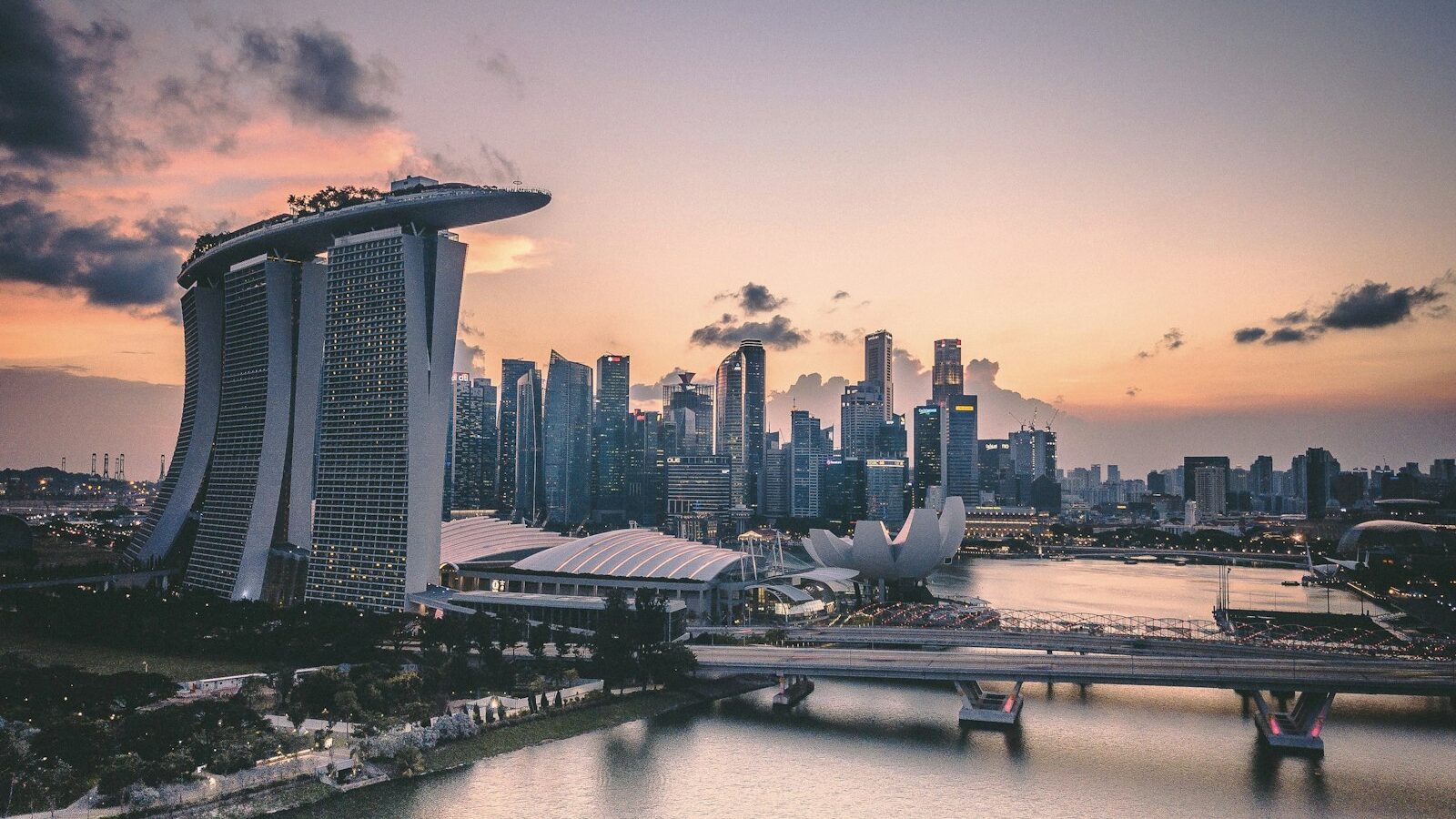
A wide-angle lens opens up your frame so you can fit sweeping landscapes, tight interiors and towering architecture into a single shot. If you have ever backed into a wall trying to capture a whole room, or wished you could squeeze the entire skyline into one photo, this is the tool you need. Here is how to choose one that fits your camera and your style.
What a wide-angle lens actually does
A wide-angle lens has a shorter focal length than a standard lens, which means it captures a broader field of view. Instead of framing a narrow slice of the scene, it pulls in far more of what is in front of you. This makes near objects feel large and dramatic while pushing the background further away, exaggerating a sense of depth and scale.
On a full-frame camera, anything roughly below 35mm is considered wide, while ultra-wide lenses sit at around 24mm and below. On a crop-sensor (APS-C) body, the same lens behaves as though it were longer, so you will want a lens designed with a shorter focal length to get the same wide effect. Micro Four Thirds cameras apply an even bigger crop factor, so check the equivalent focal length before you buy.
Focal length ranges and what they suit
The number on the barrel tells you how wide you will go. Different ranges suit different jobs.
- Moderate wide (around 28mm to 35mm equivalent): Natural-looking and easy to use for street, travel and environmental portraits. Distortion is gentle.
- Wide (around 24mm equivalent): A popular all-rounder for landscapes and interiors with more drama but still manageable.
- Ultra-wide (around 14mm to 20mm equivalent): Huge, immersive views for grand scenery, cramped rooms and creative shots. Straight lines can bend noticeably near the edges.
Zoom versions cover a span such as a wide-to-standard range, giving you flexibility without swapping lenses. Prime wide-angle lenses fix you at one focal length but often deliver sharper results and wider apertures for the money.
Prime versus zoom: the core trade-off
Deciding between a prime and a zoom is one of the biggest choices you will make. Each has clear strengths.
| Feature | Prime wide-angle | Zoom wide-angle |
|---|---|---|
| Focal length | Fixed | Variable range |
| Maximum aperture | Usually wider | Usually narrower |
| Size and weight | Often smaller | Often larger |
| Flexibility | Lower, you move your feet | Higher, reframe instantly |
| Value for sharpness | Strong | Good, varies by model |
If you shoot in low light, want the shallowest depth of field or value a compact kit, a prime is worth considering. If you photograph a changing scene where reframing quickly matters, such as travel or events, a zoom earns its place. For a deeper look at this decision across all lens types, our guide on understanding camera lenses is a useful companion.
Aperture and low-light performance
The maximum aperture, shown as an f-number, controls how much light the lens gathers. A wider aperture (a smaller f-number) lets you shoot in dim conditions and helps in astrophotography, where fast ultra-wide lenses are prized for capturing stars. Wide-angle lenses naturally keep much of the scene in focus, so you may not need a very wide aperture purely for background blur. Still, a brighter lens gives you more room to work indoors, at blue hour and under Singapore’s frequent overcast skies.
Distortion, sharpness and edge quality
Wide-angle lenses bend reality a little. Two things to watch for:
- Barrel distortion makes straight lines curve outward, most visible near the frame edges. Modern lenses correct much of this in software, but higher-quality glass starts cleaner.
- Edge softness means the corners look less crisp than the centre. Cheaper lenses often struggle here, which matters for landscapes where fine detail runs to the edges.
If you shoot architecture and want dead-straight lines, look at how a lens handles distortion, or consider a specialised design built to minimise it.
Image stabilisation and weather sealing
Image stabilisation counteracts small hand movements, letting you shoot at slower shutter speeds without blur. It is less critical on wide lenses than on telephotos, because wide framing hides shake better, but it still helps for handheld video and dim interiors. Note that many cameras now include in-body stabilisation, which works with any lens.
Weather sealing is a set of gaskets that keep out dust and moisture. In Singapore’s humidity and sudden downpours, a sealed lens gives real peace of mind for outdoor work. Even so, no lens is fully waterproof, and drying gear properly still matters. Our advice on caring for your camera in Singapore’s humidity covers how to keep any lens in good shape.
Mount compatibility and third-party options
A lens only works if it fits your camera’s mount and is designed for your sensor size. Before buying, confirm three things: the brand’s mount name, whether the lens covers your sensor (a lens built for crop sensors may vignette on a full-frame body), and whether autofocus is supported on your model.
You are not limited to your camera maker’s own lenses. Several respected third-party manufacturers produce excellent wide-angle glass, often at friendlier prices or with unusual focal lengths and apertures. These can be superb value, though it is worth checking that autofocus and stabilisation behave well on your specific body, since first-party lenses sometimes integrate more smoothly.
Buying tips for Singapore shooters
A few practical pointers to guide your purchase:
- Match the lens to your real subjects. If you mostly shoot interiors and cityscapes, prioritise an ultra-wide with good distortion control. For general travel, a moderate wide zoom is more versatile.
- Handle before you buy where you can. Weight and balance vary a lot, and a lens that feels good in hand gets used more.
- Budget in tiers. Entry-level wide lenses are capable for casual use, mid-tier options add sharpness and build quality, and premium lenses deliver the best corners, brightest apertures and toughest sealing.
- Factor in filters. Some ultra-wide lenses have bulbous front elements that will not take standard screw-on filters, which matters if you use polarisers or neutral-density filters.
- Buy from reputable sellers so you get a valid warranty and genuine glass.
Bringing it all together
Choosing a wide-angle lens comes down to knowing what you shoot, how wide you truly need to go and where you are willing to spend. Nail the focal length for your subjects, decide between the flexibility of a zoom and the sharpness of a prime, and check that the mount and sensor coverage match your camera. Get those right and you will have a lens that transforms crowded rooms and vast landscapes into images with real impact. Take your time, rent or borrow if you can, and enjoy seeing the world open up.
Explore more: Understanding camera lenses: prime vs zoom · Choosing your first camera in Singapore · Caring for your camera in Singapore’s humidity